
Elecoglipron: The First Credible Oral GLP-1 Pill Clears a Phase 2 Hurdle
AstraZeneca's once-daily small molecule posts placebo-controlled weight-loss data in The Lancet — and hints at a future where the obesity revolution doesn't require a needle.
The most disruptive thing about the next GLP-1 drug may not be how well it works — it may be that you can keep it in a kitchen drawer. For nearly a decade, the obesity-medicine revolution has come in pre-filled pens that need cold storage, weekly rituals and a willingness to inject. A new entrant called elecoglipron, reported in The Lancet from the phase 2 VISTA trial, is testing a different idea: a small molecule, taken once a day as a tablet, with no food or fluid restrictions. If that holds up in later trials, the access economics of this drug class could look very different.
Why an oral GLP-1 is harder than it sounds
GLP-1 receptor agonists were born as peptides, and peptides do not survive a friendly trip through the stomach. The first oral entrant in this class solved that with an absorption enhancer and a strict empty-stomach, sip-of-water protocol — a regimen that, in the real world, many people find easy to forget. Elecoglipron is a different beast: a small-molecule agonist of the same receptor, designed to be drug-like in the way statins and SSRIs are drug-like, not in the way insulin is. According to the VISTA investigators, it was administered once daily without food or fluid restriction, which is the headline pharmacology even before you get to the weight numbers.
That distinction matters because adherence is the unspoken variable in every obesity-drug discussion. A pill you can swallow with coffee at 7 a.m. is a different intervention than one that asks you to fast, dose, then wait thirty minutes before breakfast — even if the receptor at the end of the chain is the same.
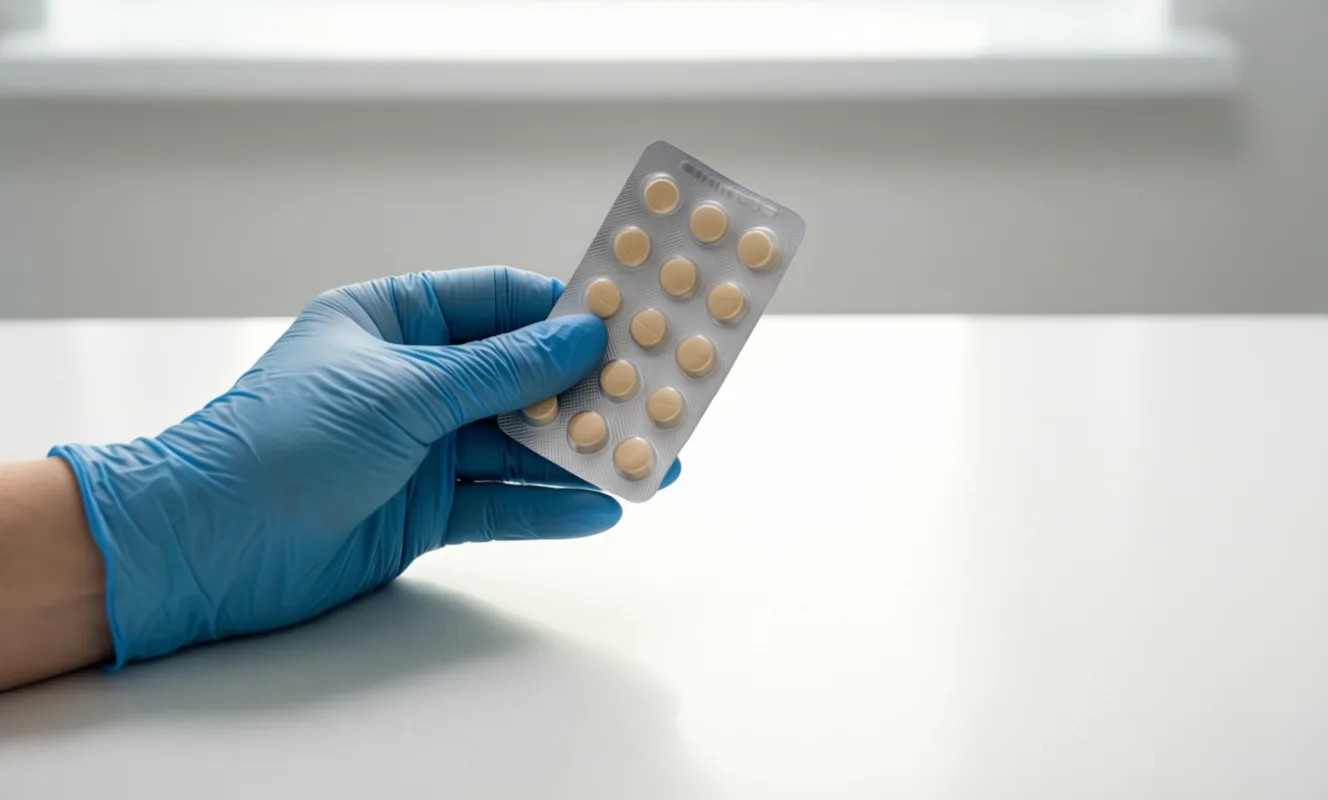
Small-molecule chemistry means a tablet that behaves like a conventional oral drug — no cold chain, no injection training.
What VISTA actually tested
VISTA is a phase 2, multicentre, double-blind, randomised, placebo-controlled, dose-ranging study conducted across sites in Australia, Canada, Germany, Japan, Taiwan, the United Kingdom and the United States. Adults were eligible if they had a BMI of 30 kg/m² or greater, or 27 kg/m² or greater with at least one weight-related condition; participants with type 2 diabetes were excluded from this particular cohort. Total treatment duration ran to 36 weeks.
Participants were randomised in a 2:3:3:3:3:5 ratio across five active arms and placebo: fixed daily doses of 5 mg and 15 mg without titration, a 50 mg arm reached via every-four-week dose escalation, and two 75 mg arms differing only in titration cadence (weekly versus every two weeks). That is an unusually busy dose-ranging design for a phase 2, and it tells you what the sponsor wanted to learn: not just whether the drug works, but how aggressively the dose can be pushed before tolerability collapses — the same titration problem that has shaped how injectable GLP-1s are prescribed.
The trial was double-blind across participants, treating physicians and sponsor, which is the standard architecture for credible weight-loss readouts in this class. As reported, it is the first phase 2 evidence for elecoglipron in people living with obesity or overweight without type 2 diabetes — a meaningful step, but a step, not a verdict.
A pill you can swallow with coffee is a different intervention than one that asks you to fast and wait — even if the receptor at the end is the same.
How to read a phase 2 result
Phase 2 is where a candidate earns the right to be expensive in phase 3. It is not where regulators approve drugs, and it is not where you find the answer to the question patients actually ask: how much weight will I lose, and at what cost in side effects, over a year or two? The 36-week window in VISTA is long enough to see meaningful body-weight change on a GLP-1 mechanism, but short of the 68- to 72-week horizons that have defined the pivotal trials for the injectable incumbents. Direct cross-trial comparisons — elecoglipron versus semaglutide, versus tirzepatide — are not what this dataset supports, and the published trial is placebo-controlled, not head-to-head.
The other open question is tolerability at the top of the dose range. GLP-1 agonists, regardless of molecule class, share a recognisable gastrointestinal side-effect profile, and the very existence of two different 75 mg titration schedules in VISTA hints that the sponsor is actively triangulating where the ceiling sits. Whether the small-molecule route produces a meaningfully different tolerability curve from the peptide route is a question phase 3 will have to answer.

Small-molecule GLP-1 agonists are designed from the receptor outward, not from the native peptide inward — a different chemistry problem with different manufacturing economics.
Why the access story may matter as much as the efficacy story
Injectable GLP-1s have been transformative and rationed at the same time. Supply has lagged demand; cold-chain logistics push them into pharmacy-only distribution; pen devices add manufacturing complexity that small-molecule tablets do not carry. A genuinely effective oral GLP-1 — manufactured at tablet scale, shipped at ambient temperature, prescribed through ordinary primary-care workflows — would change not the biology of obesity treatment but its plumbing. That is what makes the elecoglipron readout strategically interesting, even before the phase 3 data exist.
None of this is a reason to anticipate a prescription. Elecoglipron is not approved; the trial population deliberately excluded people with type 2 diabetes; and the doses, titration schedules and long-term safety story are still being assembled. The right posture is the one quantified-self readers tend to default to anyway: watch the data, note the trial registry, and wait for the phase 3 numbers before updating any priors.
- What it is: Elecoglipron (AZD5004) is an oral small-molecule GLP-1 receptor agonist — a different chemistry class than the peptide-based injectables and the existing oral peptide.
- The trial: VISTA is a phase 2, multicentre, double-blind, randomised, placebo-controlled, dose-ranging study over 36 weeks in adults with obesity or overweight without type 2 diabetes.
- The hook: Once-daily dosing reportedly does not require food or fluid restrictions, unlike the current oral peptide option.
- What it isn't: Phase 2 is not approval, and the trial was placebo-controlled, not head-to-head against injectable GLP-1s.
- The watch list: Tolerability at the top of the dose range, longer-duration data, and whether small-molecule chemistry translates into better access economics.
Frequently asked questions
Is elecoglipron available by prescription?
No. As reported, elecoglipron has phase 2 data from the VISTA trial; it is an investigational drug, not an approved medicine. Any clinical use would follow regulatory review of later-stage trials.
How is this different from the oral semaglutide already on the market?
The existing oral GLP-1 is a peptide formulated with an absorption enhancer and requires dosing on an empty stomach with a small sip of water and a waiting period before food. Elecoglipron is a small molecule reported to be taken once daily without food or fluid restrictions.
Who was studied in VISTA?
Adults aged 18 or older with a BMI of at least 30 kg/m², or at least 27 kg/m² with a weight-related condition, and without type 2 diabetes. Sites were located in Australia, Canada, Germany, Japan, Taiwan, the UK and the US.
Does VISTA show elecoglipron is better than injectable GLP-1s?
No. VISTA is a placebo-controlled trial, not a head-to-head comparison against semaglutide, tirzepatide or any other approved GLP-1. Cross-trial comparisons are not what this dataset supports.
How long did participants take the drug?
The VISTA treatment duration was 36 weeks. That is shorter than the 68- to 72-week pivotal trials that have defined approved weight-management GLP-1s, so longer-duration evidence remains to be generated.
Join the conversation
Comments are moderated and reviewed before they appear. Be constructive — this is health information.
Add your comment