GTP, Not Just ATP: The Overlooked Energy Currency Behind Aging Neurons
Scientists watching a new fluorescent sensor inside Alzheimer's-model mouse neurons spotted a quieter fuel crisis — and a possible way to refill the tank.
Okay, real talk: most of us learned exactly one thing about cellular energy in school. ATP. The little molecule your mitochondria crank out so your cells can do, well, everything. But what if ATP isn't the whole story? What if there's a quieter cousin — call it the cell's second battery — that's been doing some of the most important housekeeping in your brain, and slowly running flat as you age? That's the question a team of researchers just put under a microscope, literally, in aging Alzheimer's-model mice. And the early answer is wild.
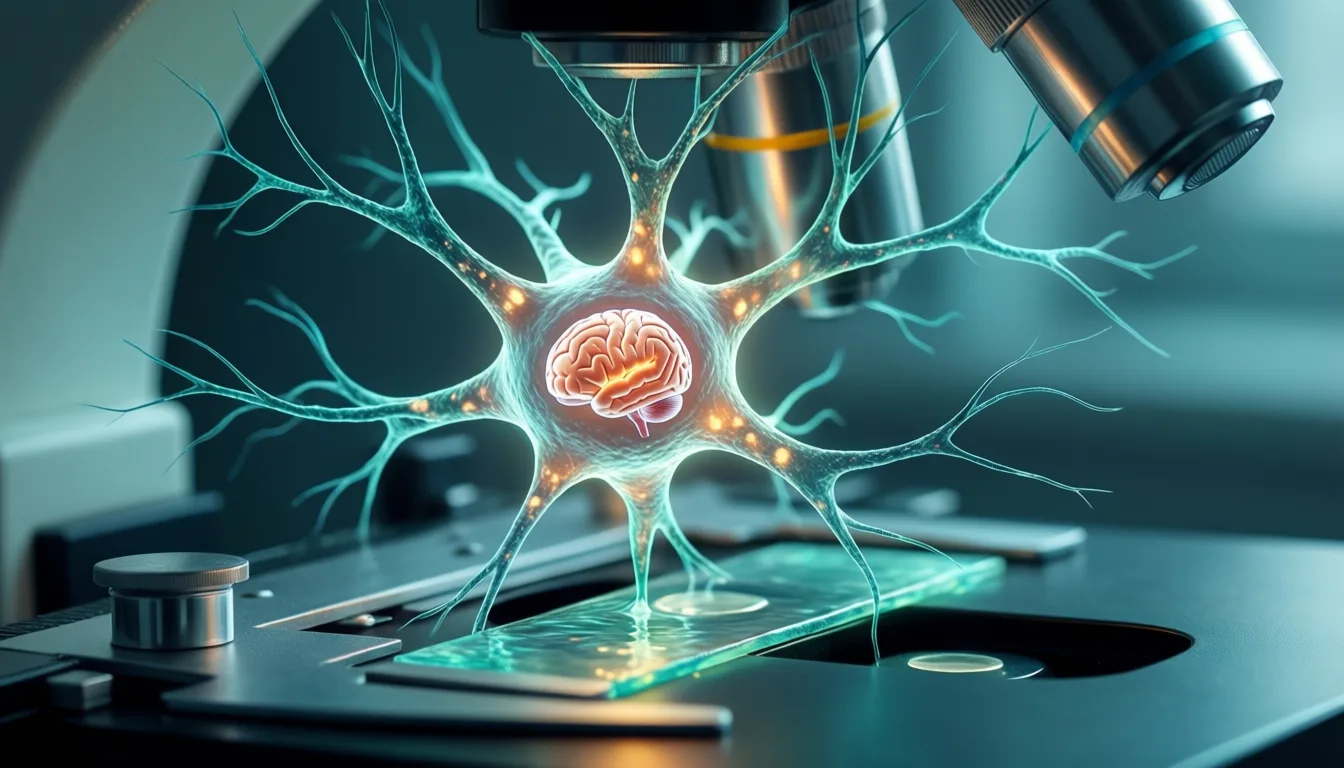
The molecule is GTP — guanosine triphosphate. Same general design as ATP (three phosphates, lots of stored energy), but it powers a different shift at the cellular factory. While ATP keeps the lights on for big jobs like firing neurons and pumping ions, GTP is the fuel that runs the cell's cleanup crew: the little protein machines called GTPases that move vesicles around, haul garbage to the lysosome, and keep the recycling system (autophagy) humming.
Here's the beginner question: if GTP matters so much, why has nobody been tracking it inside living brain cells? Honestly, because it was hard. You couldn't really watch GTP rise and fall in real time. That changed when scientists built a genetically encoded fluorescent sensor called GEVAL — basically a glow-in-the-dark tattletale for free GTP. Point a microscope at a neuron carrying GEVAL, and the cell tells on itself.
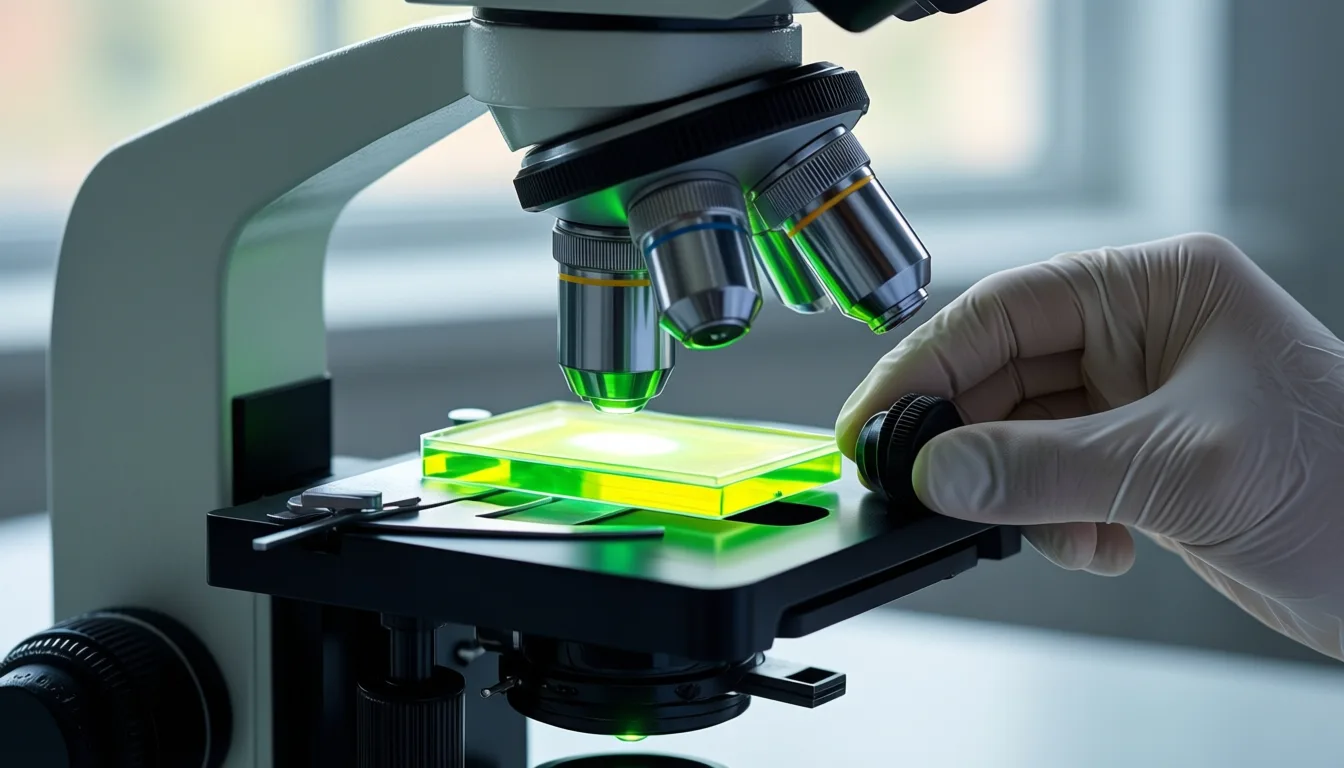
Fluorescent sensors like GEVAL let researchers watch cellular fuel levels shift in living neurons — a view that simply didn't exist a decade ago.
What the glowing neurons revealed
In a study published in GeroScience, researchers pulled neurons from aged 3xTg-AD mice (a common Alzheimer's model) and used GEVAL to compare free GTP levels in young versus old hippocampal cells. The hippocampus, for the uninitiated, is your brain's memory hub — the first neighborhood to fall apart in Alzheimer's.
The result: aged neurons had measurably lower free GTP, especially inside mitochondria, and showed a strange buildup of GTP trapped in vesicular structures. Translation: the fuel was either missing or stuck in the wrong place. And when the team poked at autophagy directly — stimulating it with one drug, blocking it with another — GTP levels moved in lockstep, confirming that the cell's cleanup system runs on this stuff.
It's like the recycling truck is still parked at the curb — there's just no gas in the tank.
That's a meaningful clue. We've known for a while that aging brains accumulate junk — misfolded proteins, oxidized bits, the amyloid-β aggregates that show up in Alzheimer's. The usual story blames the cleanup machinery itself. This study points somewhere subtler: maybe the machinery is fine. Maybe it just can't afford to run.
Refilling the tank
Here's where it gets interesting. The team tried a 24-hour supplement combo on the aged neurons: nicotinamide (a precursor to NAD, the metabolic helper molecule everyone in longevity circles is obsessed with) plus EGCG (a compound from green tea that nudges a cellular stress-response system called Nrf2). Twenty-four hours later, GTP levels in the old neurons had climbed back toward youthful levels.
And the cleanup crew got back to work. Two specific GTPases — Rab7 and Arl8b, which shuttle vesicles toward the lysosome — re-mobilized. Endocytosis picked up, lysosomal activity rose, intraneuronal amyloid-β aggregates were cleared, neuron viability improved, and oxidative protein damage went down. In an Alzheimer's-model dish, that's a pretty striking set of dominoes.
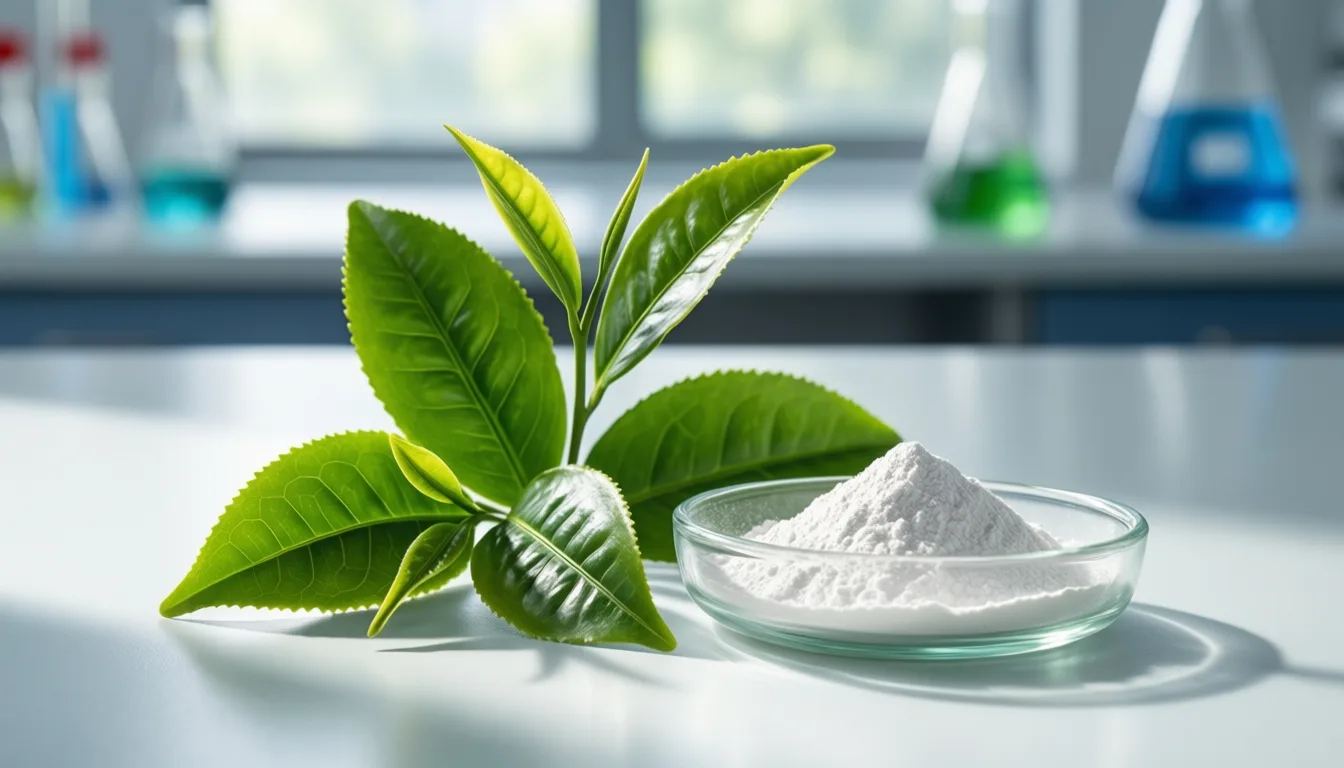
Nicotinamide and EGCG — the two compounds tested — are familiar names in longevity research. The study used them on isolated neurons in a dish, not in living animals or people.
The fine print (and it's important)
Time for the part your smart friend should always say out loud: this is animal-preclinical work. The neurons came from mice — specifically, mice engineered to develop Alzheimer's-like pathology. The treatment happened in a dish, not in a living animal, and certainly not in a person. We don't yet know whether a human brain in a human body, with all its complications, would respond the same way to the same combo at any dose.
We also don't know the right dose, the right delivery, or the right duration for people. EGCG and nicotinamide are both sold as supplements, but "sold as a supplement" is not the same as "shown to fix your aging neurons." High-dose EGCG has documented liver-safety concerns in some contexts, and nicotinamide's long-term effects at supraphysiological doses are still being mapped. None of that is a reason to panic — it's a reason to wait for human data before treating a dish experiment like a prescription.
What this study does do, and beautifully, is reframe the question. For decades, brain aging research has been an ATP story. This work suggests GTP deserves its own seat at the table — and that the fuel shortage limiting cellular cleanup might be addressable from outside the cell, with relatively simple inputs.
- GTP is the cell's other battery. It powers the cleanup crew — endocytosis and autophagy — that clears damaged proteins from neurons.
- A new sensor (GEVAL) made it visible. For the first time, researchers could watch free GTP rise and fall inside living hippocampal neurons.
- Aged Alzheimer's-model neurons run low on GTP. The fuel was depleted in mitochondria and stuck in vesicles, stalling cleanup.
- A nicotinamide + EGCG combo restored levels in a dish. Within 24 hours, GTP rebounded and amyloid-β aggregates cleared.
- This is animal-preclinical. No human trials yet. Don't translate it into a supplement regimen on your own — talk to a clinician.
The big picture: aging brains aren't just running out of one kind of energy. They're running multiple little economies in parallel, and some of them — like the GTP economy that pays for housekeeping — have been hiding in plain sight. If the next round of experiments holds up in living animals, "refuel the cleanup crew" could become a whole new lane in longevity neuroscience. For now, it's a beautifully glowing clue. And clues are how we get to cures.
Frequently asked questions
What is GTP and how does it differ from ATP in brain cells?
GTP (guanosine triphosphate) shares the same general design as ATP — three phosphates and stored energy — but powers a different function. While ATP handles large jobs like firing neurons and pumping ions, GTP fuels the cell's cleanup crew: protein machines called GTPases that move vesicles, haul waste to the lysosome, and keep the recycling system called autophagy running.
How were scientists able to track GTP levels inside living neurons for this study?
Researchers used a genetically encoded fluorescent sensor called GEVAL, which acts as a real-time indicator of free GTP inside a cell. When a neuron carrying GEVAL is viewed under a microscope, its glow reveals whether GTP levels are rising or falling — a capability that simply did not exist a decade ago.
What did the researchers find when they examined GTP in aged Alzheimer's-model neurons?
Aged neurons from 3xTg-AD mice had measurably lower free GTP, particularly inside mitochondria, and showed a buildup of GTP trapped in vesicular structures. This suggested the fuel for cellular cleanup was either missing or stuck in the wrong place, potentially stalling the removal of damaged proteins.
What happened when aged neurons were treated with nicotinamide and EGCG?
After 24 hours of treatment with the combination, GTP levels in aged neurons climbed back toward youthful levels. Two GTPases — Rab7 and Arl8b — re-mobilized, lysosomal activity increased, intraneuronal amyloid-β aggregates were cleared, neuron viability improved, and oxidative protein damage went down.
Can people start taking nicotinamide and EGCG supplements based on this research?
The article strongly cautions against it: the experiment was conducted on isolated neurons in a dish taken from mice, not in living animals or people. The right dose, delivery method, and duration for humans are all unknown, and high-dose EGCG has documented liver-safety concerns in some contexts, so the article recommends waiting for human data and consulting a clinician.
Join the conversation
Comments are moderated and reviewed before they appear. Be constructive — this is health information.
Add your comment