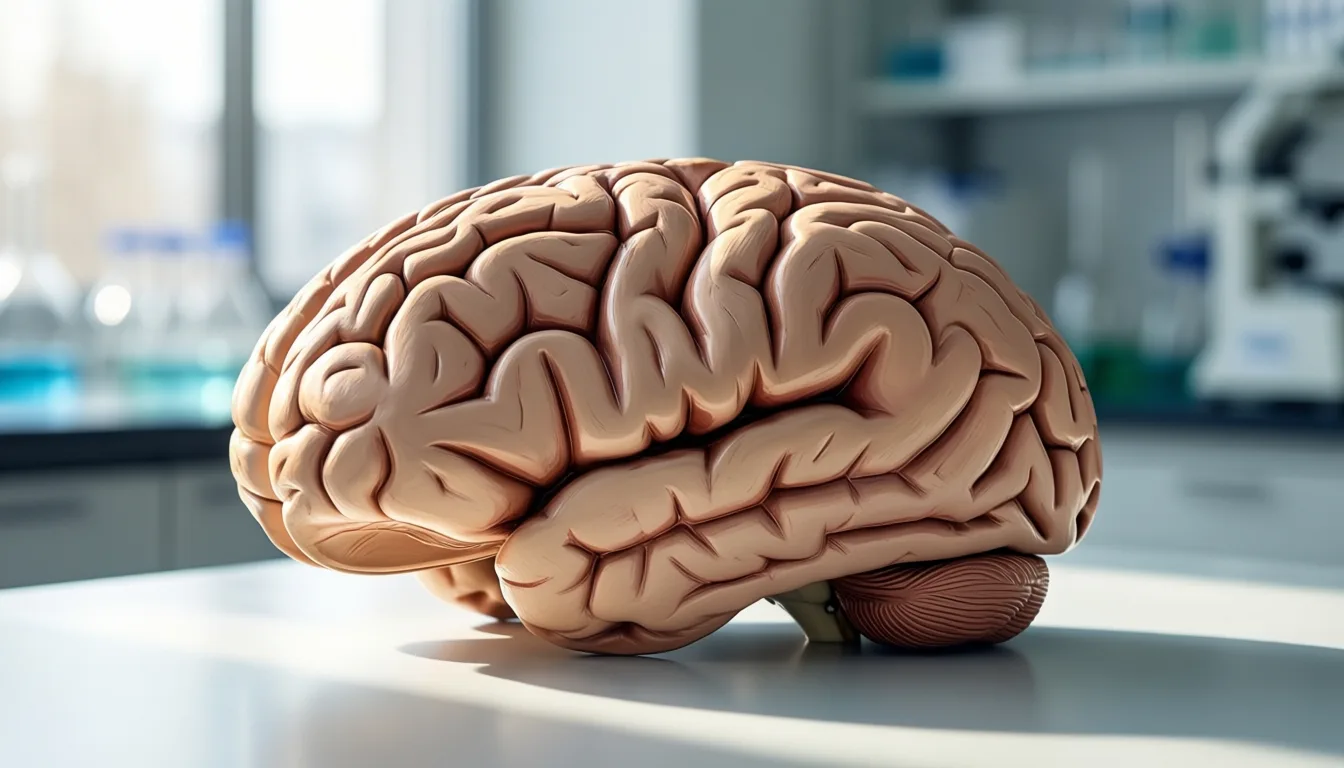
Sex-Specific Brain Aging: Why the Female and Male Brain May Need Different Longevity Playbooks
A new Neuron perspective and a longitudinal hippocampal study suggest biological sex shapes how brains age — and that 'one-size-fits-all' cognitive care may be quietly outdated.
For most of modern neuroscience, the aging brain has been treated as a single organ on a single timeline — a generic clock ticking down. Two 2025 papers quietly push back on that picture. One, a perspective in Neuron, argues that biological sex is foundational, not incidental, to how the brain ages. The other, a longitudinal study in Neurobiology of Aging, tracks the hippocampus — memory's central hub — across nearly the entire human lifespan and finds that its subfields change on schedules that depend sharply on age. Together, they suggest the longevity playbook we hand every adult may be missing at least two crucial variables.
- Sex is biology, not a footnote. A 2025 Neuron perspective argues sex-specific mechanisms shape brain aging and could yield new diagnostics and therapeutics.
- The hippocampus ages on a schedule. In a lifespan study of 474 people, subfield volumes were stable on average but showed strong age-dependent individual trajectories.
- Late-life decline is regional. DG-CA3 and subiculum volumes declined significantly after age 55, while CA1–2 grew into young adulthood.
- Evidence is moderate, not settled. These findings reframe how we think about brain aging; they do not yet prescribe sex-specific clinical protocols.
- Practical takeaway. If you are planning a 'cognitive longevity' strategy, sex and life stage are reasonable variables to raise with your clinician.
The premise: every cell has a sex
The Neuron perspective by Dubal and colleagues opens with a deceptively simple claim: every cell in the body has a biological sex, and aging research is only beginning to take that seriously. The authors argue that expanding aging science to investigate female- and male-specific biology is a major advance for human health, because the mechanistic differences between sexes may point to new diagnostics and therapeutics for the aging brain.
This is a perspective piece, not a randomized trial — a framing argument from senior researchers, not a verdict. But it lands in a field where women have historically carried a disproportionate share of Alzheimer's diagnoses while being underrepresented in mechanistic studies. The authors' bet is that the next generation of brain-aging therapies will look less like a single drug for 'dementia' and more like sex-stratified interventions tuned to the underlying biology.

Hippocampal subfields are small, structurally distinct, and increasingly central to how researchers chart brain aging.
What the hippocampus actually does as we age
The companion piece, from Homayouni and colleagues, is the more concrete of the two. The hippocampus is not one structure but several: the dentate gyrus (DG), the Cornu Ammonis sectors (CA1–3), and the subiculum, each with distinct roles in memory. Cross-sectional studies have hinted that these subfields age differently, but longitudinal data — the same people, measured twice — has been thin.
The researchers followed a normative lifespan sample of 474 people at baseline and 189 at follow-up, with an average interval of about 2.5 years, spanning children, adolescents, young adults, middle-aged adults, and older adults up to age 73. The headline, on first read, is anticlimactic: in the pooled lifespan sample, there was no mean change in subfield volumes. Brains, on average, looked like brains.
The real story sits underneath that average. Individual differences in change were significant across every subfield, and they depended on baseline age. Younger participants tended to gain volume; that tendency attenuated in adulthood and tipped toward loss in later life. CA1–2 volume kept growing into young adulthood, while DG-CA3 and subiculum volumes were stable through midlife and then declined significantly after age 55.
The aging brain is not a single clock. It is several clocks, ticking in different rooms. Editorial synthesis of the 2025 findings
Why this matters for diagnostics
For people thinking about cognitive longevity, the practical implication of these two papers is more philosophical than prescriptive. If subfields decline on different schedules, then a generic 'hippocampal volume' number on a scan is a coarse instrument — and almost certainly less informative than a subfield-resolved view, especially after midlife. If sex shapes the mechanisms of aging, as the Neuron authors contend, then risk models that treat men and women as interchangeable may quietly miss the signal that matters.
Neither paper claims that we already know how to translate this into a sex-specific Alzheimer's screen or a midlife brain-health protocol. The Neuron perspective is explicit that the work of unraveling these mechanisms is still ahead. The longitudinal study, for its part, is about normative aging in a single sample — useful as a map, not a clinical tool.

The same chronological age can mean different things for brain biology — a point the field is only beginning to operationalize.
What 'moderate' evidence actually warrants
It is worth being precise about how strong this evidence is. The Neuron piece is a perspective — an argument from experts about where the field should go, supported by an accumulating but still incomplete literature on sex differences in aging biology. The hippocampal study is a careful longitudinal analysis, but with one follow-up wave and a sample drawn from a normative cohort, not a clinical one. Neither paper, individually or together, justifies dramatic claims about personalized brain-aging protocols.
What they do justify is a shift in how readers and clinicians frame the conversation. Asking whether a brain-health intervention has been studied in both sexes is reasonable. Asking whether a midlife cognitive concern reflects the specific subfields known to change after 55 is reasonable. Treating 'brain aging' as a single, sex-blind process is increasingly hard to defend.
The bottom line
The brain-aging field is moving, slowly, from a single-timeline model toward something more textured: subfields that change on their own schedules, and biology that may diverge meaningfully by sex. The 2025 evidence does not hand consumers a new protocol. It hands them a better set of variables. For a category that has spent decades selling generic 'brain support,' that may be the more honest upgrade.
Frequently asked questions
What did the longitudinal hippocampus study actually find — did brain volume change over time?
In the pooled lifespan sample of 474 people, there was no mean change in hippocampal subfield volumes overall. The real finding was beneath that average: individual trajectories depended strongly on age, with younger participants tending to gain volume and older participants tending to lose it.
Which hippocampal subfields are most affected in people over 55?
The study found that DG-CA3 and subiculum volumes declined significantly after age 55, while CA1–2 volume kept growing into young adulthood and was stable through midlife.
Why do the researchers think sex matters for brain aging?
The Neuron perspective argues that every cell in the body has a biological sex, and that mechanistic differences between sexes may point to new diagnostics and therapeutics for the aging brain. The authors also note that women have historically carried a disproportionate share of Alzheimer's diagnoses while being underrepresented in mechanistic studies.
Do these studies mean there are already sex-specific clinical protocols for brain aging?
No. The Neuron piece is a perspective arguing where the field should go, not a verdict, and the authors are explicit that the work of unraveling these mechanisms is still ahead. Neither paper, individually or together, justifies dramatic claims about personalized brain-aging protocols.
What kinds of questions could someone raise with their clinician based on this research?
The article suggests asking whether a recommended supplement, drug, or screening has been studied in your sex specifically, whether a baseline cognitive or imaging assessment makes sense around midlife given that several hippocampal subfields begin measurable change after age 55, and how sex-specific risk factors such as menopause timing or cardiovascular history factor into your individual picture.
Sources
- Biological sex matters in brain aging. — Neuron
- Two-year changes in hippocampal subfield volumes are age-dependent across the lifespan. — Neurobiology of aging
Join the conversation
Comments are moderated and reviewed before they appear. Be constructive — this is health information.
Add your comment