
Why Some Older Adults Bloom From Exercise — and Others Barely Budge
A small Duke pilot is reuniting people from a 15-year-old exercise trial to ask a question longevity culture keeps dodging: does the same workout still work as we age?
Here's the question nobody at the gym wants to ask out loud: what if you and your friend do the exact same workout for six months — same treadmill, same minutes, same playlist energy — and your friend's heart and muscles transform while yours basically shrug? It's not a hypothetical. Scientists have been seeing this for years. Some people are big responders to exercise. Some are tiny ones. And a small new pilot at Duke is asking a follow-up question that could change how we think about staying strong as we age: does the same person stay a responder forever, or does aging quietly rewrite the rules?
The study is called, a little drily, Role of Aging and Individual Variation in Exercise Training Responsiveness. The setup is unusual and kind of brilliant. Back in the 2000s, a Duke trial known as STRRIDE-PD put adults through a structured exercise program and tracked how their bodies changed. Now researchers are calling those same people back — up to fifteen years older — and asking them to do a six-month aerobic program all over again. Same protocol. Same lab. Different decade of life. The goal is to see how aging affects what the researchers call physical reserve and exercise-induced adaptations in resilience.
Translation: how much spare capacity do you have left, and how much can a structured workout still build back?
The "responder" puzzle, briefly
If you've ever felt secretly defeated comparing your fitness progress to a friend's, the responder problem is your vindication. Exercise scientists have known for a while that when you put a group of people through the same prescription, the results fan out wildly. Some people's VO₂ max (a measure of how much oxygen your body can use during hard effort) jumps. Some barely move. Blood pressure, insulin sensitivity, muscle changes — all of it varies person to person.
What we haven't really known is whether your responder status is fixed for life, or whether it drifts as you age. A 45-year-old big responder — is she still a big responder at 60? At 70? Does the gap between high and low responders widen with age, or narrow? This is the gap the Duke feasibility pilot is poking at.
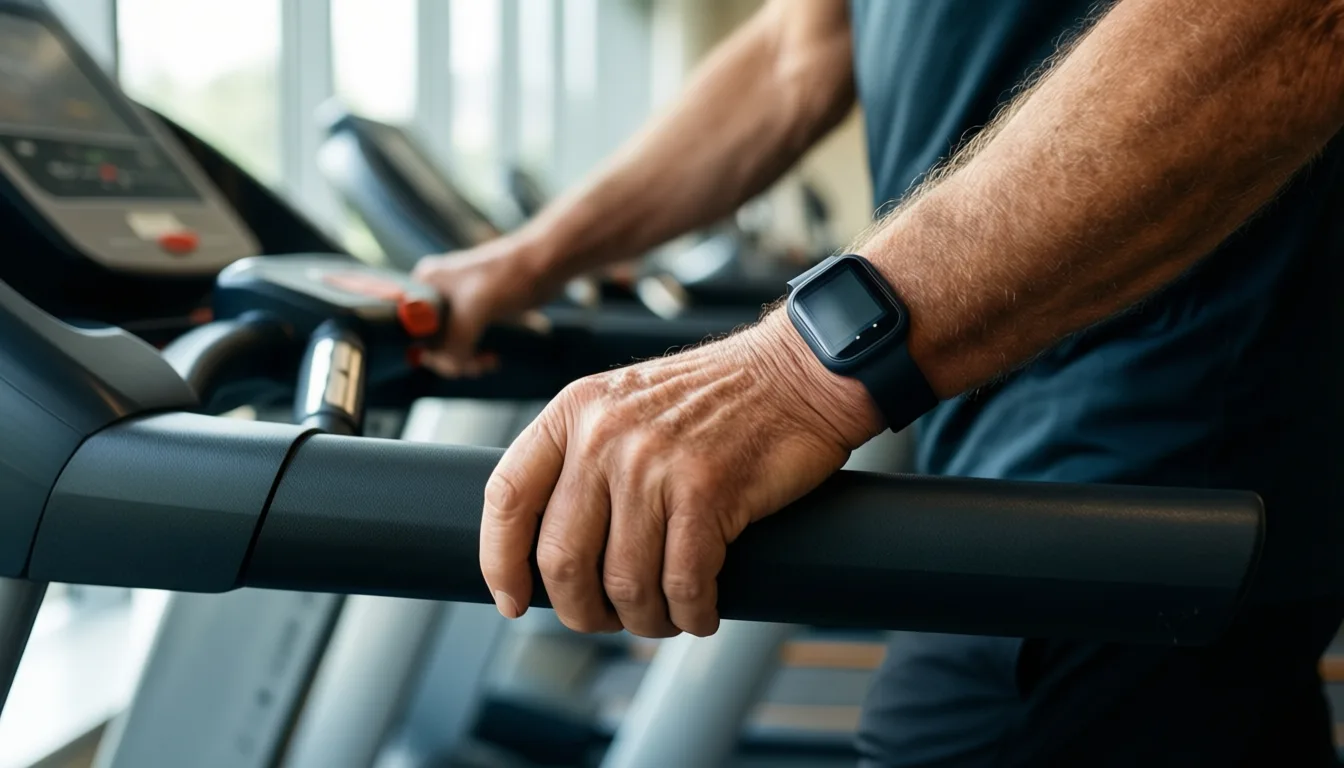
The pilot uses the same six-month aerobic protocol participants did up to 15 years ago — a rare apples-to-apples look at the same body, older.
Why this design is unusual
Most exercise studies are snapshots. You recruit a group, you train them, you measure them, you publish. What you almost never get is the same humans, fifteen years apart, doing the same program in the same lab. That's the move here. By re-engaging former STRRIDE-PD participants, the Duke team gets to compare a person to their younger self — not to a different person at a different age.
The trial description is upfront that this is a feasibility pilot capped at 26 people. That's important context. Feasibility means: can we even pull this off? Can we find these participants, get them back in, run the protocol, and collect clean data? It is not designed to deliver a sweeping verdict on aging and exercise. It's designed to prove the method works so a bigger study can ask the real question.
Some people are big responders to exercise. Some are tiny ones. The Duke pilot is asking whether that stays true as you age.
What "physical reserve" actually means
The study leans on two concepts worth slowing down for. Physical reserve is roughly how much capacity your body is holding above the minimum it needs to get through a normal day — extra cardio headroom, extra muscle, extra metabolic flexibility. Think of it like the savings account that lets you bounce back from a flu, a surgery, a hard week. Resilience is the bounce-back itself: how well your systems recover when something stresses them.
The Duke team is asking whether a six-month aerobic program still meaningfully deposits into the reserve account in older adults, and whether the size of that deposit depends on who you were as a responder years ago. The primary purpose is to assess effects of aging on those markers — not to declare exercise newly magical or newly futile.

Aerobic training is the workhorse intervention here — the same kind of moderate, sustained cardio used in the original STRRIDE protocol.
What this does NOT tell us (yet)
This is the part where the friend-who-just-learned-this part of me wants to be really honest with you. The evidence here is early. A feasibility pilot with up to 26 people cannot tell you:
- Whether your personal response to exercise will change with age.
- Whether a specific dose or type of cardio is optimal for older adults.
- Whether non-responders should switch to a different modality.
- Whether any longevity outcome — disease, lifespan, healthspan — is moved by all this.
What it can do is sharpen the question and prove the longitudinal design is workable. That's still a real contribution. Most of longevity discourse online is built on cross-sectional snapshots and influencer extrapolation. A study that follows the same humans across 15 years of aging, even in pilot form, is the kind of slow science that eventually grounds the louder claims.
- The study: a Duke feasibility pilot bringing back up to 26 former STRRIDE-PD participants for a 6-month aerobic program, ~15 years later.
- The question: does aging change who actually benefits from a structured workout — and does responder status track with you over time?
- The concepts: physical reserve (your capacity buffer) and resilience (your bounce-back) are the outcomes being probed.
- The strength: rare longitudinal design — same humans, same protocol, different decade of life.
- The limits: small, early, feasibility-stage. Not a verdict on what anyone should do at the gym tomorrow.
- The takeaway for readers: individual variation is real; talk to a clinician before starting or changing a program, especially if you're older or managing conditions.
The honest read on this one: it's a small, careful study asking a question that the louder corners of the longevity internet keep skipping. Not every body responds to every workout the same way, and aging probably moves those goalposts. If you're trying to make decisions about your own training, the move isn't to wait fifteen years for the data — it's to talk to a clinician, start where you are, and notice what your body actually does. Science will catch up to the nuance. This pilot is part of how.
Frequently asked questions
What does it mean to be an exercise 'responder,' and why does it vary between people?
When a group of people follows the same exercise prescription, results fan out wildly — some people's VO₂ max jumps, some barely move, and measures like blood pressure, insulin sensitivity, and muscle changes all vary person to person. Exercise scientists have known about this variation for a while, but what hasn't been established is whether your responder status is fixed for life or drifts as you age.
What is the Duke pilot study trying to find out?
The study is asking whether aging changes who actually benefits from a structured workout — specifically, whether a person's responder status tracks with them over time. It does this by bringing back former participants from a 2000s trial called STRRIDE-PD and having them complete the same six-month aerobic program, roughly fifteen years later, in the same lab.
What do 'physical reserve' and 'resilience' mean in the context of this research?
Physical reserve is roughly how much capacity your body holds above the minimum needed to get through a normal day — extra cardio headroom, extra muscle, extra metabolic flexibility, described in the article like a savings account that helps you bounce back from illness or a hard week. Resilience is the bounce-back itself: how well your systems recover when something stresses them.
Why is this study's design considered unusual compared to most exercise research?
Most exercise studies are snapshots — researchers recruit a group, train them, measure them, and publish. The Duke pilot is unusual because it re-engages the same humans who participated up to fifteen years earlier, running the same protocol in the same lab, allowing a direct comparison of a person to their younger self rather than to a different person at a different age.
What can't this study tell us?
Because it is a feasibility pilot capped at 26 people, it cannot tell you whether your personal response to exercise will change with age, what dose or type of cardio is optimal for older adults, whether non-responders should switch to a different modality, or whether any longevity outcome is affected. Its purpose is to prove the longitudinal design is workable so a larger study can pursue the real question.
Join the conversation
Comments are moderated and reviewed before they appear. Be constructive — this is health information.
Add your comment