Protocols
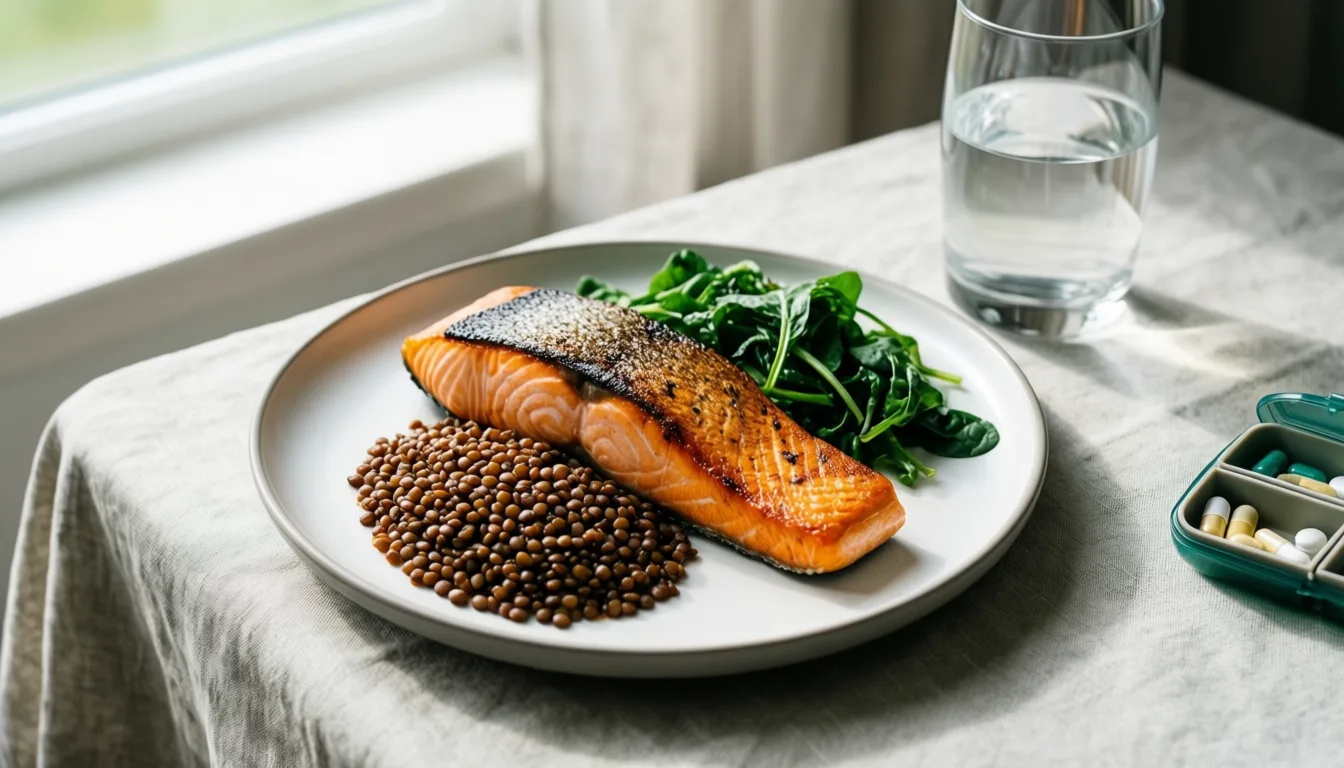
Nutrition as the Missing Half of GLP-1 Therapy
A new review argues the drugs only do half the work. The other half — protein, symptom management, and a maintenance plan — happens on the plate.
Press Enter to search · Esc to close
A new review argues the drugs only do half the work. The other half — protein, symptom management, and a maintenance plan — happens on the plate.
Semaglutide reshaped the conversation around obesity. The next round of data — from skeletal muscle to intracranial pressure to oral small molecules — is reshaping what comes next.

A new peer-reviewed review argues the panic over muscle loss with weight-loss drugs may be missing the point. The real question is whether your muscle still works — not what the scale partitions.
Three new clinical analyses cut through the semaglutide and tirzepatide hype — quantifying real-world weight loss at one year, the muscle question lifters keep asking, and what happens when patients head into the OR.
As the GLP-1 class expands beyond weekly injections, three new studies sketch a more complicated risk-benefit map than the headline weight-loss numbers suggest.

Semaglutide and tirzepatide are reshaping bodies faster than the guidelines can keep up. The muscle you keep — or lose — may decide whether the results actually last.

Three population studies point to the unglamorous middle layer of healthy aging — where perceived stress, sleep architecture, and muscle composition quietly shape what comes next.

GLP-1 receptor agonists are sprawling past diabetes and obesity into cardiovascular protection, body-composition debates, and pill-form delivery. Here is what the latest wave of evidence supports — and what it doesn't.