The Next GLP-1 Frontier: Oral Pills, Muscle Loss, and the Mind
As the GLP-1 class expands beyond weekly injections, three new studies sketch a more complicated risk-benefit map than the headline weight-loss numbers suggest.
The GLP-1 story used to be simple enough to fit on a pen cap: one weekly injection, double-digit weight loss, glycaemic control. In 2025, the picture got more interesting — and more demanding of the reader. A phase 2 trial of an oral small-molecule GLP-1 was halted early for safety. A meta-analysis quantified, for the first time at scale, how much of the weight lost on these drugs is actually muscle. And a small qualitative study began mapping what users themselves report happening inside their heads. For the quantified-self crowd watching this class mature, the headline number — kilograms off the scale — is no longer the most useful signal.
- Oral GLP-1s aren't a sure thing. Pfizer's lotiglipron showed real efficacy in phase 2 but was terminated early for safety reasons.
- Not all the weight is fat. A 19-trial meta-analysis found lean body mass dropped about 1 kg alongside the fat loss.
- Mood signals are mixed and under-studied. Early qualitative work suggests improved control over eating behaviour, but the sample is tiny.
- Evidence is moderate, not settled. Most of these signals come from short trials, small cohorts, or interim safety reviews.
- The interesting metrics are now compositional. DEXA, grip strength, and validated mood scales matter more than the bathroom scale.
The pill that wasn't
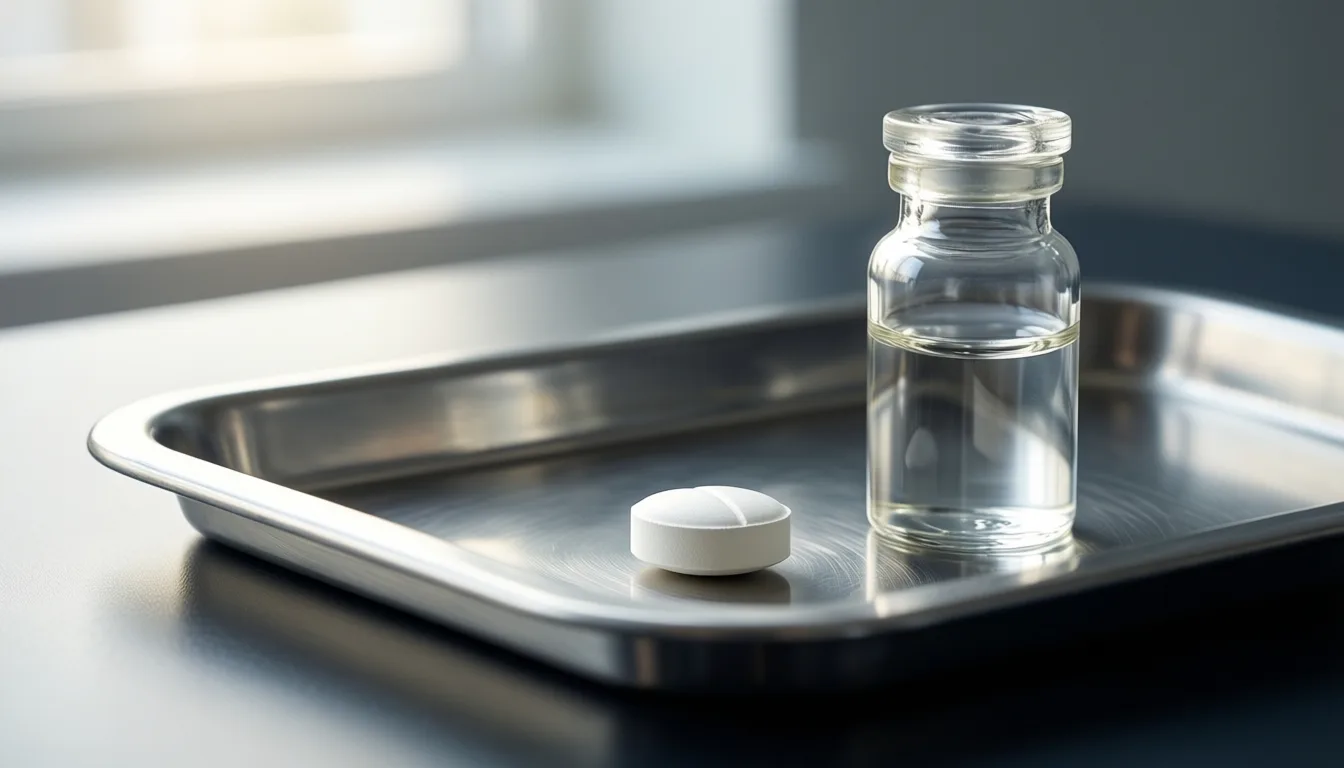
The oral GLP-1 race has been one of the most-watched contests in metabolic medicine. Injectables work, but a daily pill — cheaper to manufacture, easier to titrate, friendlier to needle-averse patients — would change the distribution curve of who actually uses these drugs. Pfizer's candidate, lotiglipron, was a once-daily small molecule designed to do exactly that.
The phase 2 dose-ranging study enrolled 901 participants across type 2 diabetes and obesity cohorts. On efficacy, the signal was real: HbA1c fell by up to 1.44 percentage points versus a 0.07-point drop on placebo in the diabetes arm, and body weight fell by up to 7.47% in the obesity arm at week 20 versus 1.84% on placebo. Those are numbers that, in a different timeline, would have been the headline. Instead, the trial was terminated early for safety reasons following a routine data review, and most participants assigned to the higher doses never reached their target maintenance dose. Gastrointestinal adverse events — the familiar tax of GLP-1 therapy — were the most frequent treatment-emergent issues across cohorts.
The takeaway is not that oral GLP-1s are doomed. Other programmes continue. The takeaway is that the small-molecule route does not automatically inherit the safety profile of the peptide injectables, and pharmacokinetics in pill form behave differently enough that the class effect cannot be assumed.

DEXA and bioimpedance are quietly becoming the more interesting endpoints in GLP-1 research.
The muscle question
If the oral-pill story is about whether a delivery format can survive the regulatory gauntlet, the body-composition story is about what the drugs are actually doing to the bodies that take them. A 2025 systematic review and meta-analysis pooled 19 randomized controlled trials of GLP-1 receptor agonists and dual GIP/GLP-1 agonists, and reported the numbers that the marketing has, until now, mostly elided.
Fat mass fell substantially: a weighted mean difference of −2.25 kg versus controls, with both subcutaneous and visceral fat depots shrinking. That is the part everyone expected. The less-discussed finding: lean body mass also fell, by a weighted mean of −1.02 kg compared with non-users. Diabetes is already an independent risk factor for muscle mass loss through impaired insulin signalling and chronic inflammation; layering a potent appetite-suppressant on top of that physiology, without a structured resistance-training and protein protocol, is a setup for accelerated sarcopenia in vulnerable patients.
For the n-of-1 reader, this reframes the question. The interesting personal metric is no longer scale weight. It is the ratio of fat lost to lean lost — a number that requires a DEXA, a decent bioimpedance device, or at minimum a serial grip-strength reading. The meta-analysis does not tell us whether the lean-mass loss is clinically meaningful for every user, how much of it is water and glycogen versus contractile tissue, or whether resistance training and adequate protein intake can offset it. Those are the trials the field still owes us.
The interesting personal metric is no longer scale weight. It is the ratio of fat lost to lean lost.
What it feels like from the inside
The third strand is the softest, methodologically, and arguably the most interesting culturally. A qualitative study published in Acta Diabetologica conducted semi-structured interviews with nine participants prescribed GLP-1 receptor agonists for obesity or type 2 diabetes, with mental-health status measured at initiation and again at 12–16 weeks. Three themes emerged: acceptance of negative side effects in exchange for long-term physical benefit; varied and individual impact on mental health; and, most strikingly, a reported increase in control over eating behaviours.
That control — the quieting of what users in online communities have started calling “food noise” — is the experiential signal that has driven much of the cultural fascination with this class. The authors note it is suggestive enough to warrant formal investigation of GLP-1 agonists as a potential treatment for binge-eating disorder. It is worth being careful with the framing here: nine participants, no control group, self-report at a single follow-up. The signal is real enough to be worth a randomized trial. It is not yet evidence that these drugs are antidepressants, anxiolytics, or psychiatric tools.

Self-reported control over eating is the strongest qualitative theme so far — and the one most in need of a controlled trial.
How to hold the evidence
Three studies, three different methodologies, three different confidence levels. The lotiglipron halt is the strongest signal in the strict sense — an RCT stopped by an independent review — but it is a signal about one molecule, not the class. The body-composition meta-analysis is the broadest in scope, drawing on 19 trials, but the lean-mass measurements across those trials use heterogeneous methods and the clinical significance of a one-kilogram difference depends heavily on the patient. The qualitative mental-health study is the most evocative and the least generalisable.
Together, they argue for the same posture: GLP-1s remain one of the most consequential pharmacological developments in modern metabolic medicine, and also a class whose long-term profile is still being drawn. Readers tempted by the oral-pill promise should remember that lotiglipron looked efficacious right up until the safety review. Readers tracking their own composition should remember that the scale is a lagging, lossy proxy. And readers experiencing real shifts in their relationship with food should know that the science is finally starting to take that experience seriously — without yet having earned the right to make claims about it.
This is moderate-strength evidence behaving the way moderate-strength evidence should: pointing in interesting directions, refusing to commit. The right response is curiosity, better instrumentation, and a clinician in the loop.
Frequently asked questions
What happened to Pfizer's oral GLP-1 drug, lotiglipron?
The phase 2 trial enrolled 901 participants and showed genuine efficacy — body weight fell by up to 7.47% in the obesity arm versus 1.84% on placebo — but was terminated early for safety reasons following a routine data review. Most participants assigned to higher doses never reached their target maintenance dose, and gastrointestinal adverse events were the most frequent treatment-emergent issues.
Do GLP-1 drugs cause muscle loss alongside fat loss?
A 2025 meta-analysis pooling 19 randomized controlled trials found that lean body mass fell by a weighted mean of 1.02 kg compared with non-users, alongside a fat mass reduction of 2.25 kg. The analysis does not clarify how much of that lean-mass loss represents water and glycogen versus contractile tissue, or whether resistance training and adequate protein intake can offset it.
What did research find about GLP-1 drugs and mental health?
A small qualitative study published in Acta Diabetologica interviewed nine participants and identified three themes: acceptance of side effects in exchange for long-term physical benefit, varied individual impacts on mental health, and a reported increase in control over eating behaviours. The article stresses that with nine participants, no control group, and self-reported data, this is not evidence that these drugs are antidepressants or psychiatric tools.
Why does the article say scale weight is no longer the most useful metric for GLP-1 users?
Because the meta-analysis showed that weight lost includes both fat and lean mass, the more meaningful personal figure is the ratio of fat lost to lean lost — a number that requires a DEXA scan, a validated bioimpedance device, or at minimum serial grip-strength readings. The article argues that compositional data, protein intake, mood scores, and a resistance-training log together give a clearer picture than the bathroom scale alone.
Does the early termination of lotiglipron mean oral GLP-1 pills are a dead end?
The article says the takeaway is not that oral GLP-1s are doomed, since other programmes continue. It does conclude, however, that the small-molecule route does not automatically inherit the safety profile of peptide injectables, and that pharmacokinetics in pill form behave differently enough that a class effect cannot be assumed.
Sources
- Evaluation of an oral small-molecule glucagon-like peptide-1 receptor agonist, lotiglipron, for type 2 diabetes and obesity: A dose-ranging, phase 2, randomized, placebo-controlled study. — Diabetes, obesity & metabolism
- Characterizing body composition modifying effects of a glucagon-like peptide 1 receptor-based agonist: A meta-analysis. — Diabetes, obesity & metabolism
- A qualitative study of the mental health outcomes in people being treated for obesity and type 2 diabetes with glucagon-like peptide-1 receptor agonists. — Acta diabetologica
Join the conversation
Comments are moderated and reviewed before they appear. Be constructive — this is health information.
Add your comment