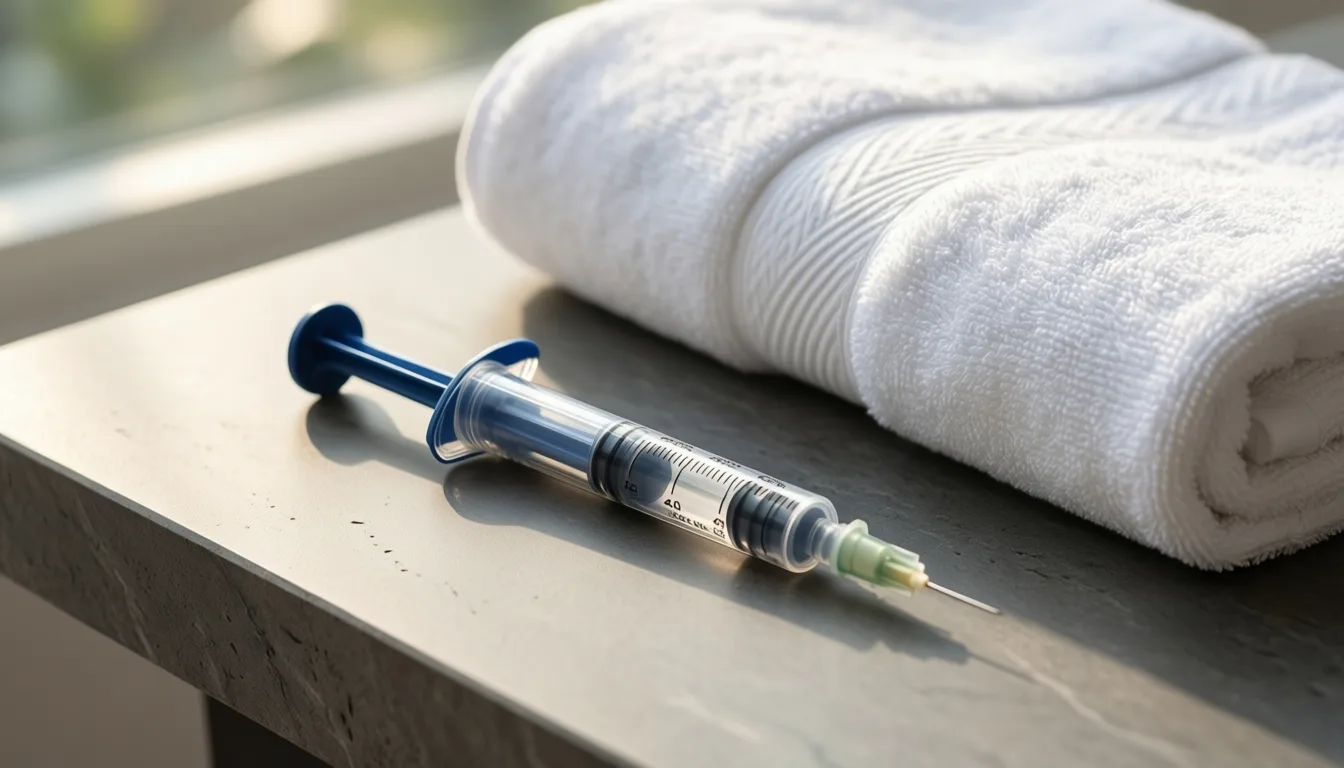
Beyond the Scale: GLP-1s Are Quietly Reshaping Brain, Kidney, and Joint Outcomes
The same peptide class everyone's whispering about in the locker room is showing up in neurology, nephrology, and orthopedic data. The signal looks real — but moderate, not miraculous.
Walk into any serious gym in 2026 and you'll hear the same three letters traded between sets: GLP-1. The peptide class that rewrote obesity medicine is now showing up in places nobody on the bench expected — brain scans, kidney biopsies, orthopedic ward charts. The hype machine wants you to believe semaglutide cures everything short of a bad squat depth. The data wants you to slow down. Both are partially right, and the gap between them is where the smart lifter lives.
Here's the honest setup. GLP-1 receptor agonists — semaglutide, liraglutide, tirzepatide and their cousins — were built to handle blood sugar and, almost by accident, became the most effective weight-loss drugs in history. That part is settled. What's new, and what's actually interesting, is that researchers keep finding effects that have nothing to do with glycemia or the scale. Anti-inflammatory signaling. Vascular effects. Possible neuroprotection. Cleaner kidneys. And, of practical interest to anyone who's going to need a joint replaced at sixty, no apparent penalty in the operating room.
None of this is a finished story. The evidence rating on this whole package is moderate, not high — large observational cohorts and mechanistic animal work, not a stack of randomized neurodegeneration trials. But moderate is still meaningful. And for a class of drugs millions of people are now taking long-term, the off-target effects matter as much as the on-target ones.
- Brain signal looks real but provisional. A 5.3-million-patient matched cohort found lower risk of Alzheimer's, Lewy body, and vascular dementia in GLP-1 users — observational, not proof.
- Semaglutide led the pack across neurodegenerative endpoints, including a statistically significant Parkinson's signal.
- All-cause mortality was nearly halved in the GLP-1 cohort — a striking number that almost certainly overstates the true drug effect.
- Hip replacement is not a contraindication. No increase in 90-day or 1-year complications in matched diabetic patients on GLP-1s.
- Kidney protection has a plausible mechanism. In diabetic rats, liraglutide reduced renal injury via NRF2 antioxidant signaling.
- For kidney stones, SGLT-2 inhibitors may have the edge over GLP-1s — different tools, different jobs.
The brain data: big numbers, observational caveats

The neuroprotection signal is the loudest new finding — and the one that needs the most careful reading.
The headline study is enormous. A retrospective cohort pulled 5,307,845 obese adults across 73 healthcare organizations in 17 countries, propensity-matched roughly 103,000 GLP-1 users against 103,000 non-users, and tracked who later developed neurodegenerative disease. The results were not subtle.
Risk of Alzheimer's disease was about 37% lower in GLP-1 users (RR 0.627, 95% CI 0.481–0.817). Lewy body dementia came in at RR 0.590. Vascular dementia at RR 0.438. Parkinson's didn't reach significance overall, but semaglutide users specifically showed a significant reduction (RR 0.574). Semaglutide was the standout across the board.
Now the cold water. This is observational. Propensity matching is good — it isn't randomization. People prescribed GLP-1s differ from people who aren't in ways researchers can't fully measure: healthcare engagement, socioeconomic factors, baseline cognitive reserve, even how often someone shows up for a check-up. The reported all-cause mortality reduction of nearly 48% (HR 0.525) is the giveaway. No diabetes drug halves mortality. Some of that signal is real biology; a meaningful chunk is healthy-user bias. Read the brain numbers through the same lens.
No diabetes drug halves all-cause mortality. The brain signal is probably real — it is also probably smaller than the press release.
The kidney angle: mechanism, not just association

One of the more interesting things about GLP-1s is that the kidney story comes with a plausible mechanism, not just a chart. In a streptozotocin-induced diabetic rat model, liraglutide reduced oxidative stress and extracellular matrix deposition in renal tissue, and it did so by promoting nuclear translocation of NRF2 — the master regulator of antioxidant defense. Block NRF2 with the inhibitor ML385, and liraglutide's protective effect goes away. That's the kind of clean mechanistic loop that makes a finding feel less like noise.
The asterisk: it's a rat study. Rats are not lifters. Mechanism in rodents tells you the pathway exists; it doesn't tell you the effect size in a human kidney over twenty years. But paired with the large human cardiorenal trial data we already have for this class, it's a credible piece of the puzzle.
On the kidney-stone side, the picture flips. A target-trial emulation in 20,146 patients with nephrolithiasis and type 2 diabetes compared SGLT-2 inhibitors against GLP-1 receptor agonists for recurrent stones. SGLT-2 inhibitors came out ahead for that specific endpoint. The takeaway isn't that GLP-1s are bad for kidneys — it's that within the diabetes drug shelf, different molecules have different specialties. If recurrent stones are your actual problem, that's a conversation with a clinician about a different drug.
The surgery question: can you stay on it?
This one matters more than it sounds. GLP-1s slow gastric emptying, and anesthesiologists have spent the last two years sweating about aspiration risk on the operating table. The orthopedic data, at least for hip replacement, is reassuring. A national database review of 14,065 type 2 diabetic patients undergoing primary total hip arthroplasty, with 812 GLP-1 users propensity-matched 1:4 against non-users, found no significant differences in 90-day surgical or medical complications, and no differences in 1-year revision or periprosthetic joint infection rates. The non-GLP-1 group actually had more extended hospital stays.
That's THA specifically. Different surgeries, different anesthesia protocols, different conclusions may follow. But the broad fear that being on a GLP-1 quietly worsens surgical outcomes doesn't survive contact with this dataset.
How to read the signal honestly

Here's the lifter's framing. GLP-1 receptor agonists are turning out to be more interesting than "weight-loss shot." The anti-inflammatory and vascular effects are plausible enough to explain real benefits beyond glycemia, and we now have large-cohort, mechanistic, and surgical data pointing in the same general direction. That's a moderate evidence package, and moderate is enough to take the class seriously as a metabolic-health intervention rather than a cosmetic one.
What moderate is not enough for: treating these drugs as neuroprotective therapy, prescribing them off-label for cognitive concerns, or assuming the observational mortality numbers represent the true causal effect. The randomized neurodegeneration trials are running. Until they read out, the responsible read is that GLP-1s are probably doing more good than we thought, by mechanisms we're still mapping, with effect sizes we're still calibrating.
That's not the loudest take. It's the right one.
Frequently asked questions
How large was the study on GLP-1s and brain health, and what did it find?
The study screened over 5.3 million obese adults across 73 healthcare organizations in 17 countries, propensity-matching roughly 103,000 GLP-1 users against 103,000 non-users. It found GLP-1 users had about 37% lower risk of Alzheimer's disease, 56% lower risk of vascular dementia, and semaglutide users specifically showed a significant reduction in Parkinson's risk. The authors caution the results are observational, not proof of a causal effect.
Why shouldn't the nearly 48% all-cause mortality reduction be taken at face value?
The article describes that number as a giveaway for healthy-user bias, noting that no diabetes drug halves mortality. People prescribed GLP-1s tend to differ from non-users in ways researchers can't fully measure, such as healthcare engagement, socioeconomic factors, and how often they attend check-ups. Some of the signal is likely real biology, but a meaningful portion reflects those unmeasured differences.
What is the proposed mechanism behind GLP-1s protecting the kidneys?
In a diabetic rat model, liraglutide reduced oxidative stress and extracellular matrix deposition in kidney tissue by promoting nuclear translocation of NRF2, described in the article as the master regulator of antioxidant defense. When researchers blocked NRF2 with an inhibitor, liraglutide's protective effect disappeared, suggesting that pathway is central to the effect. The article notes this is a rat study, so the effect size in humans over time remains unknown.
Is it safe to be on a GLP-1 before hip replacement surgery?
A national database review of over 14,000 type 2 diabetic patients undergoing primary total hip arthroplasty found no significant differences in 90-day surgical or medical complications for GLP-1 users, and no differences in 1-year revision or periprosthetic joint infection rates. The non-GLP-1 group actually had more extended hospital stays. The article notes these findings are specific to total hip arthroplasty and that different surgeries may lead to different conclusions.
What is the main concern for people using GLP-1s who also lift weights?
The article identifies muscle loss during rapid weight loss as the real lifter-specific concern, noting that none of the studies discussed addressed lean mass preservation. It points to protein intake, resistance training, and clinical supervision as the key levers for maintaining muscle while on these drugs.
Sources
- Neuroprotective effects of GLP-1 receptor agonists in neurodegenerative Disorders: A Large-Scale Propensity-Matched cohort study. — International immunopharmacology
- GLP-1 receptor agonist liraglutide alleviates kidney injury by regulating nuclear translocation of NRF2 in diabetic nephropathy. — Clinical and experimental pharmacology & physiology
- Comparative effectiveness of sodium-glucose cotransporter-2 inhibitors for recurrent nephrolithiasis among patients with pre-existing nephrolithiasis or gout: target trial emulation studies. — BMJ (Clinical research ed.)
- Glucagon-Like Peptide-1 Receptor Agonist Use Is Not Associated With Increased Complications After Total Hip Arthroplasty in Patients Who Have Type 2 Diabetes. — The Journal of arthroplasty
Join the conversation
Comments are moderated and reviewed before they appear. Be constructive — this is health information.
Add your comment