Beyond Semaglutide: The Next Wave of GLP-1 Combos and Dual Agonists
Phase III data on IcoSema and fresh SURMOUNT analyses of tirzepatide are rewriting what 'best-in-class' looks like for metabolic and obesity care.
Semaglutide turned the GLP-1 class into a household name, but if you've been watching the trial readouts the way some of us watch PR meets, you already know the story is moving fast. The first-generation injectables that quietly rewrote diabetes care and then detonated the obesity market are no longer the ceiling. They are the floor. A new wave of combinations and dual agonists is landing in Phase III, and the data are good enough that 'best-in-class' is officially up for grabs.
Here's the lifter's version of the state of play. On one side, Novo Nordisk is pairing semaglutide with a once-weekly basal insulin (icodec) in a single shot called IcoSema. On the other, Eli Lilly's tirzepatide — a dual GIP/GLP-1 agonist — keeps stacking post-hoc analyses that explain why the weight loss is as durable as it looks. Two different bets on where incretin therapy goes next, both backed by real Phase III evidence rather than vibes.
If you care about body composition, metabolic health, or you've simply got a family history that makes you pay attention to HbA1c, this is the moment to understand what's actually being tested — and what the trials do and don't say.
- IcoSema is real. The COMBINE 2 Phase IIIa RCT directly compared once-weekly IcoSema vs once-weekly semaglutide 1.0 mg in 683 adults with type 2 diabetes over 52 weeks.
- Tirzepatide's weight loss isn't just nausea. A SURMOUNT-1 to -4 post-hoc analysis found GI side effects mediated only up to ~3.1% of total weight reduction.
- GI events are front-loaded. Most nausea, vomiting and diarrhoea happened during dose escalation and were non-serious.
- Real-world dosing is conservative. 84.1% of U.S. tirzepatide initiators started at ≤5 mg, and most stayed under 10 mg through six refills.
- This is education, not a protocol. Incretins are prescription drugs with real trade-offs — clinician, not gym bro, territory.
IcoSema: one shot, two mechanisms
IcoSema is exactly what it sounds like: insulin icodec (a once-weekly basal insulin) co-formulated with semaglutide in a single weekly injection. The clinical question is obvious — if you're already on a GLP-1 and it isn't quite getting you there, is bolting on a weekly basal insulin in the same pen better than just pushing semaglutide to 1.0 mg?
The COMBINE 2 trial set out to answer that. It's a 52-week, randomised, multicentre, open-label Phase IIIa study across 121 sites in 13 countries, enrolling adults with type 2 diabetes inadequately managed on existing GLP-1 RA therapy (HbA1c 7.0–10.0%, mean baseline 8.0%, mean diabetes duration 12.6 years, mean BMI just over 31). Six hundred and eighty-three participants were randomised 1:1 to IcoSema or semaglutide 1.0 mg, with the primary endpoint being change in HbA1c from baseline to week 52 — and superiority of IcoSema explicitly being tested.
That last detail matters. This isn't a non-inferiority trial dressed up in a press release. The protocol was designed to ask whether the combination beats a real, modern comparator at a real, modern dose.
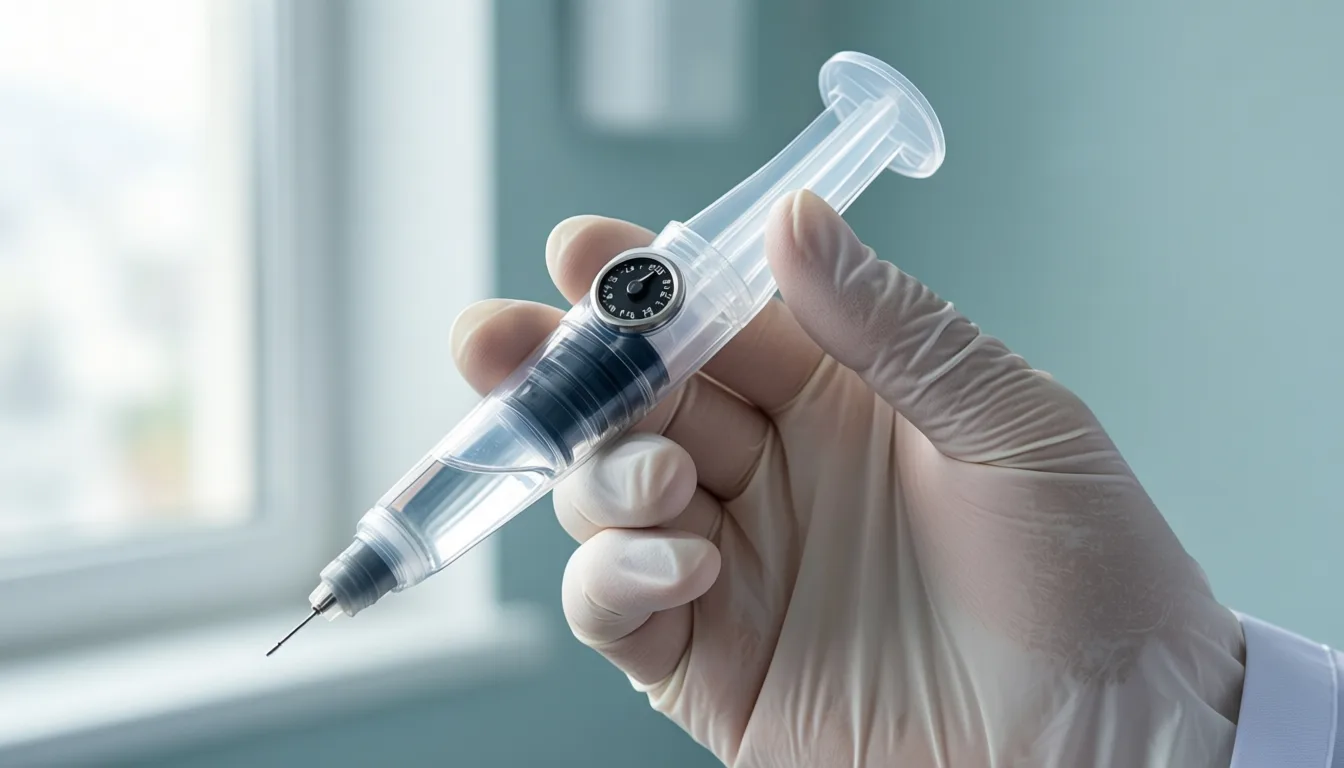
IcoSema combines once-weekly basal insulin icodec with semaglutide in a single weekly shot — the kind of consolidation that changes adherence math.
The first-generation injectables aren't the ceiling anymore. They're the floor.
Tirzepatide and the GI question everyone asks
The other big story in incretin land is tirzepatide. Anyone who lifts has heard the same gym-floor theory: sure, people lose weight, but isn't that just because the drug makes them too nauseated to eat? It's a fair question, and a post-hoc analysis pooling SURMOUNT-1 through SURMOUNT-4 took a serious swing at it.
The analysis compared weight change at the primary endpoint among participants who reported no nausea/vomiting/diarrhoea, nausea alone, or any N/V/D, and ran formal mediation analyses to quantify how much of the weight loss could be attributed to GI side effects. Two findings are worth tattooing on your gym bag.
First: weight reduction with tirzepatide was similar across participants reporting no nausea, nausea alone, or any N/V/D. The people who didn't feel sick lost roughly as much as the people who did. Second: mediation analyses suggested that N/V/D and dyspepsia together accounted for up to 3.1% of total weight reduction. The rest — the overwhelming majority — is the pharmacology doing pharmacology things, not a nausea-induced hunger strike.
The safety picture is consistent with what the original SURMOUNT readouts showed: GI adverse events were more common on tirzepatide (27.8%–72.8% across trials) than placebo (12.2%–32.5%), most were non-serious, most occurred during dose escalation, and discontinuation due to GI events ran between 1.0% and 10.5% depending on the trial.
What the real world is actually doing
Trials tell you what a drug can do. Claims data tell you what people are doing. A U.S. utilization study of 15,665 adults with type 2 diabetes initiating tirzepatide between May 2022 and January 2023 paints a useful picture: mean age 53.2, 58.5% women, mean HbA1c 7.6%, mean BMI 38.7 kg/m², and 87.8% with Class 1, 2, or 3 obesity. Just over half (51.2%) had already been on a GLP-1 before switching.
The dosing pattern is the part worth flagging. 84.1% of patients initiated at ≤5 mg, and at the sixth refill, 56.5% were still on doses under 10 mg. Translation: in practice, clinicians and patients are titrating slowly and often parking below the top doses used in the headline trials. If you're benchmarking expectations against the biggest SURMOUNT numbers, calibrate — real-world weight outcomes track real-world doses.

Real-world claims data show most U.S. patients start low and stay there — a quiet but important footnote to the trial headlines.
The bigger picture for the next 24 months
Stack these readouts and a pattern emerges. The incretin class is splitting into two strategies. One is combination — pair an established GLP-1 with another mechanism (basal insulin, in IcoSema's case) and consolidate weekly therapy into one shot. The other is multi-agonism — engineer a single molecule that hits multiple incretin receptors, like tirzepatide's GIP/GLP-1 dual action, and let the pharmacology do more of the work.
Both approaches are landing real Phase III evidence in the same window, which is why the 'best-in-class' label is genuinely contested for the first time since semaglutide arrived. The competitive pressure is good news for patients: more options, better-characterised tolerability, and trials designed to answer the questions that actually matter (does combination beat monotherapy at a fair dose? is the weight loss real pharmacology or just side-effect-driven undereating?).
The skeptic's caveat still applies. These are prescription drugs studied in defined populations over defined windows. Long-term cardiovascular, oncologic and body-composition data will keep maturing for years. Lean mass preservation, in particular, remains an open question the lifting world should keep pressing on — the trials cited here measured weight, not DEXA-quantified fat-vs-muscle partitioning.
The people who didn't feel sick lost roughly as much as the people who did. That's pharmacology, not a nausea-induced hunger strike.
The headline for the smart lifter is this: the GLP-1 era isn't winding down, it's leveling up. IcoSema is testing whether combination therapy can outperform a maxed-out semaglutide dose head-to-head. Tirzepatide's SURMOUNT post-hoc work is dismantling the lazy critique that incretin weight loss is just side-effect theater. And the utilization data are a reminder that the gap between trial protocol and pharmacy counter is real.
If you or someone you train with is weighing these options, the move is the same as it always is when the evidence is genuinely strong but the decision is genuinely personal: bring the trials to a clinician who actually reads them, and make the call together.
Frequently asked questions
What exactly is IcoSema, and how does it differ from taking semaglutide alone?
IcoSema is a single weekly injection that combines insulin icodec, a once-weekly basal insulin, with semaglutide in one pen. The COMBINE 2 trial was designed specifically to test whether this combination is superior to semaglutide 1.0 mg on its own — not merely equivalent — in adults with type 2 diabetes who were not adequately managed on existing GLP-1 therapy.
Is tirzepatide's weight loss mostly explained by nausea making people eat less?
A post-hoc analysis pooling the SURMOUNT-1 through SURMOUNT-4 trials found that weight reduction was similar whether participants reported no nausea, nausea alone, or any combination of nausea, vomiting, and diarrhea. Mediation analyses showed that GI side effects together accounted for only up to 3.1% of total weight reduction, with the large majority attributed to the drug's pharmacology.
When during treatment are GI side effects from tirzepatide most likely to occur?
According to the article, most nausea, vomiting, and diarrhea occurred during the dose-escalation phase, were non-serious, and discontinuation due to GI events ranged from 1.0% to 10.5% depending on the trial.
How are real-world patients actually starting and using tirzepatide compared to clinical trial doses?
A U.S. utilization study of 15,665 adults initiating tirzepatide found that 84.1% started at 5 mg or below, and at the sixth refill, 56.5% were still on doses under 10 mg. The article notes this means real-world weight outcomes may not match the largest trial results, which used higher doses.
What are the two main directions incretin therapy is heading over the next couple of years?
The article describes two distinct strategies: combination therapy, which pairs an established GLP-1 with a separate mechanism such as basal insulin in a single weekly shot, and multi-agonism, which engineers one molecule to activate multiple incretin receptors simultaneously, as tirzepatide does by targeting both GIP and GLP-1 receptors.
Sources
- Once-weekly IcoSema versus once-weekly semaglutide in adults with type 2 diabetes: the COMBINE 2 randomised clinical trial. — Diabetologia
- Gastrointestinal tolerability and weight reduction associated with tirzepatide in adults with obesity or overweight with and without type 2 diabetes in the SURMOUNT-1 to -4 trials. — Diabetes, obesity & metabolism
- Characteristics and Dosing Patterns of Tirzepatide Users with Type 2 Diabetes in the United States. — Diabetes therapy : research, treatment and education of diabetes and related disorders
Join the conversation
Comments are moderated and reviewed before they appear. Be constructive — this is health information.
Add your comment