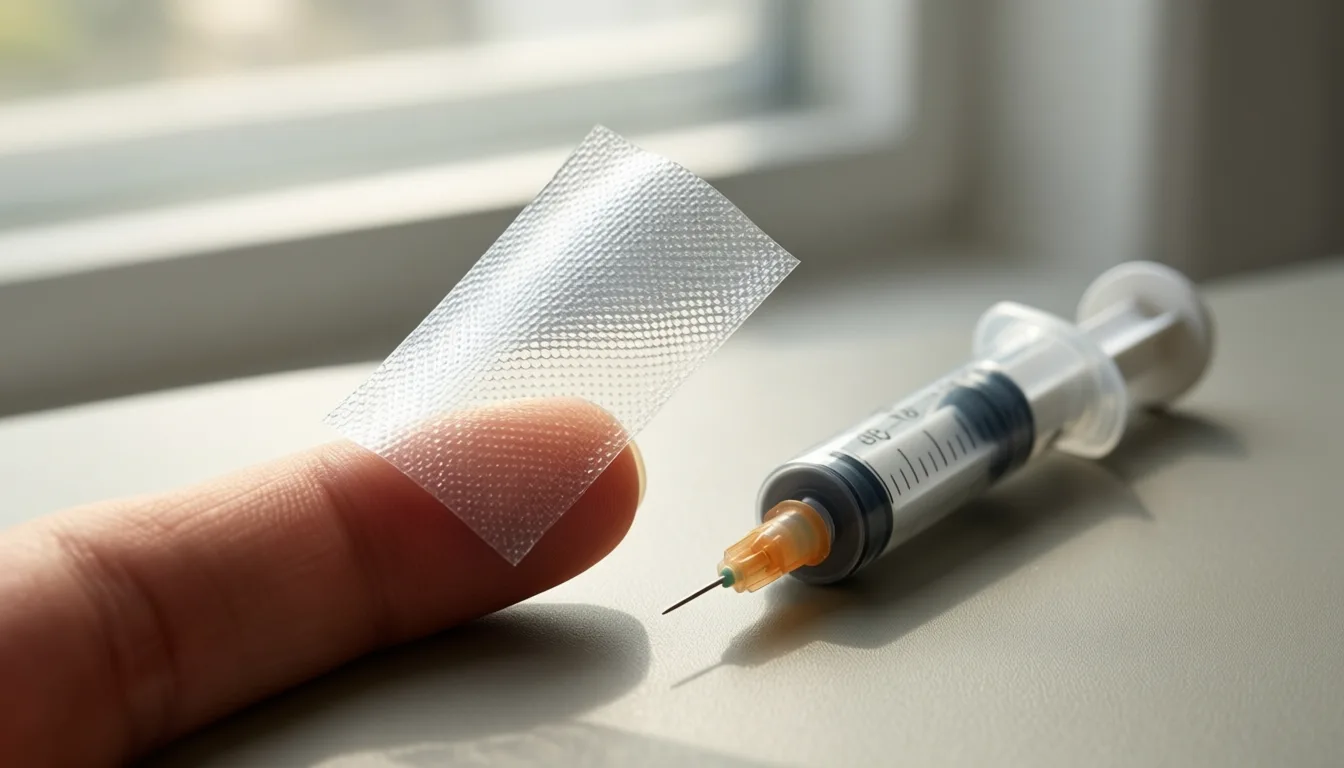
Could a Pill Replace the Injection? The Race to Deliver Peptides Without Needles
GLP-1s rewrote metabolic medicine, but the syringe is still the weak link. New buccal devices and oral formulations are trying to close the gap — and the data is finally getting interesting.
The most consequential drugs of the decade still come with a needle. Semaglutide, tirzepatide, the rest of the GLP-1 class, plus dozens of less famous peptide therapeutics for autoimmune disease, cancer and metabolic disorders — almost all of them are injected, because the gut is exquisitely good at dismantling exactly the kind of molecule they are. For the quantified-self crowd that tracks every gram and glucose excursion, this is the unglamorous bottleneck behind the headline biology: the molecule works, but the delivery doesn't quite. A new wave of engineered buccal devices and reformulated oral peptides is trying to change that, and the literature is finally getting specific enough to take seriously.
Peptides occupy a strange middle ground in pharmacology — bigger than a small molecule, smaller than an antibody, and biochemically distinctive enough that medicinal chemists have spent two decades building a real franchise around them. A 2025 review in the International Journal of Pharmaceutics notes that roughly 100 peptides have reached clinical approval in major markets, with nearly half of those approvals landing in the past 20 years, and projects the global peptide therapeutics market to exceed USD 50 billion by 2024 — a useful proxy for how much commercial pressure is now bearing down on the delivery problem (Rosson et al., 2025).
The pitch for peptides is genuinely good: high target specificity, strong efficacy at the receptor of interest, fewer off-target effects than typical small molecules, and lower immunogenicity than full proteins or antibodies (Rosson et al., 2025). The catch is the route. Almost every approved peptide is parenteral — subcutaneous or intravenous — because oral formulations get chewed up by gastric and intestinal proteases and then struggle to cross the intestinal epithelium intact.
Why the gut wins
The two reviews driving this piece converge on the same diagnosis. Oral peptide delivery is plagued by limited bioavailability: enzymatic degradation in the intestine plus low epithelial permeability mean only a small fraction of a swallowed dose ever reaches circulation in active form (Malhotra et al., 2025). That is the structural reason your GLP-1 still arrives via a pen, and why the few oral peptides that do exist tend to require large doses, strict fasting windows, and absorption enhancers.
Injections solve the bioavailability problem but introduce a behavioral one. The Advanced Drug Delivery Reviews team frames patient acceptability as a genuine barrier to chronic therapy — relevant in a class of drugs whose benefits depend almost entirely on staying on them (Malhotra et al., 2025). For anyone watching the GLP-1 discontinuation curves in the real world, that framing lands.
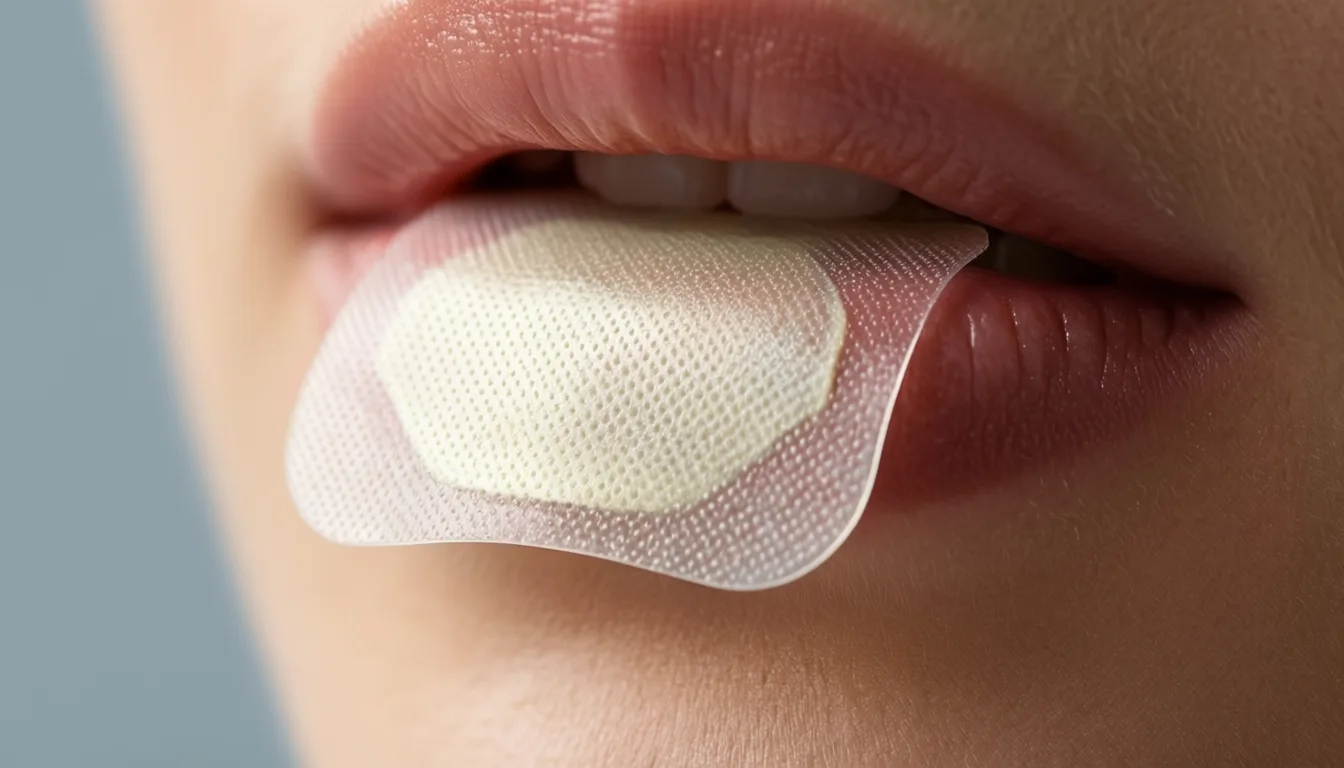
Buccal patches sit against the cheek lining and try to push peptides across an epithelium that evolved to keep large molecules out.
The buccal bet
Between the needle and the swallowed pill sits a third option: the inside of your cheek. The buccal mucosa offers a few real advantages over the GI tract. It bypasses first-pass liver metabolism, doesn't require food restrictions before or after dosing, and — like an oral pill — fits into the kind of routine people actually keep (Malhotra et al., 2025). The problem is that buccal epithelium, like intestinal epithelium, is a permeability barrier. Peptides are large, hydrophilic, and not naturally inclined to cross it.
That's where the device engineers come in. The Malhotra review catalogues a multidisciplinary push to overcome the buccal barrier with hardware: small applied systems that use physical disruption of the epithelium, convection-based mass transfer to push molecules through, and combinations of physicochemical strategies layered on top (Malhotra et al., 2025). Translation for the gear-minded reader: think microneedle-style patches, iontophoretic and pressure-driven systems, and mucoadhesive films loaded with permeation enhancers — all aimed at the same target, which is moving an intact peptide across a few cell layers fast enough to matter.
The molecule works. It's the delivery that doesn't — yet.
It is worth being precise about where this stands. The Advanced Drug Delivery Reviews paper is a review of devices and mechanisms, not a phase-3 readout. The authors describe a category that is advancing on multiple fronts but is still, by their own framing, working against a high epithelial permeability barrier (Malhotra et al., 2025). The reasonable read is that buccal delivery is a credible alternative route under active engineering, not a solved problem with a launch date.
What the parenteral baseline actually looks like
Any non-injected route has to be compared against a moving target. The IJP review walks through how subcutaneous and intravenous administration shape the pharmacokinetic profiles of peptides — and, by extension, patient outcomes — noting that the choice of parenteral route itself meaningfully alters exposure curves (Rosson et al., 2025). A successful buccal or oral product won't just need to deliver some peptide; it will need to deliver a pharmacokinetic profile clinicians and patients consider equivalent enough to switch.
That is a higher bar than the marketing usually implies. For a once-weekly subcutaneous GLP-1, equivalence means a steady, predictable exposure across seven days from a route that historically struggles to deliver consistent absorption. For an oncology peptide on a tighter therapeutic window, the bar is higher still.
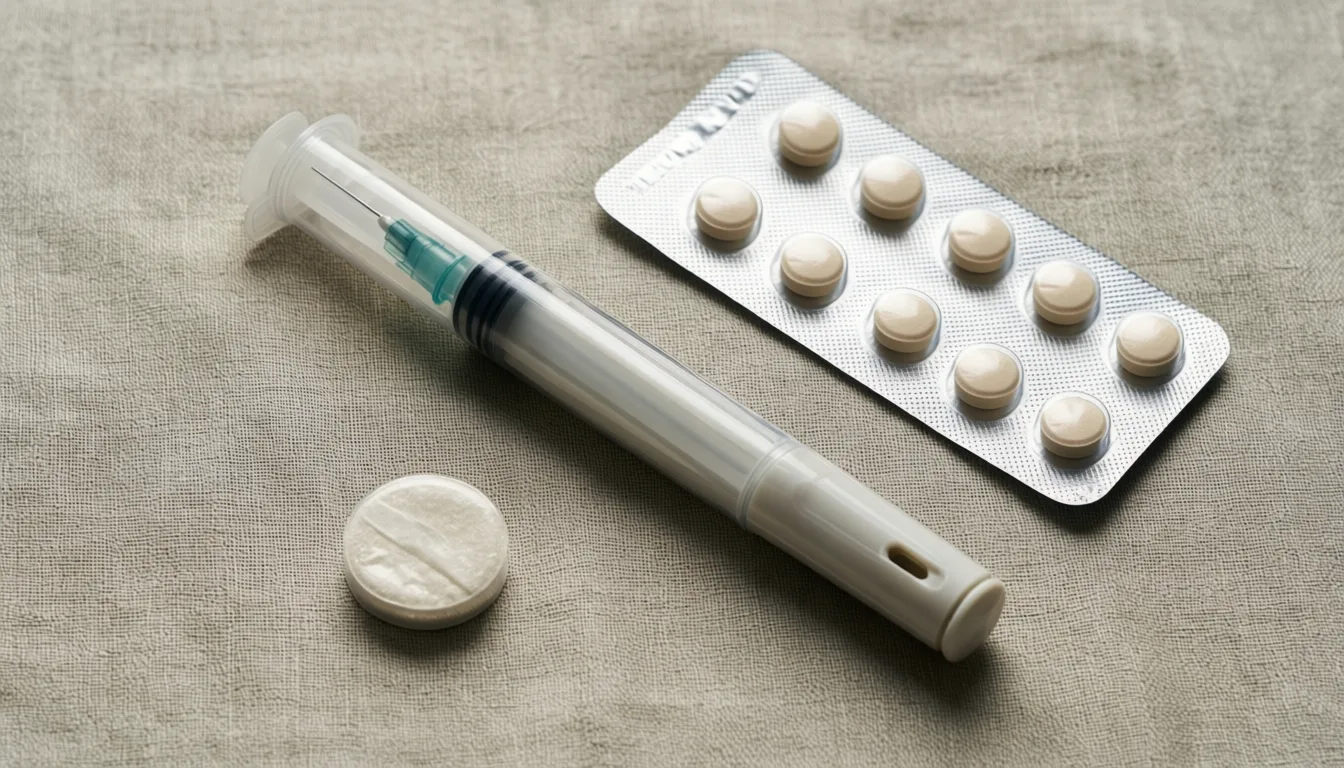
Three delivery futures, one molecule class. The route that wins long-term adherence may matter as much as the receptor biology.
The adherence question hiding underneath
For the n-of-1 crowd, the interesting subtext in both reviews is behavioral. The Malhotra group explicitly cites patient acceptability — needles, dosing rituals, refrigeration, social friction — as a reason oral and buccal alternatives matter, not just a nice-to-have (Malhotra et al., 2025). In a chronic-therapy class where benefit accrues only while you're dosing, the route of administration is effectively a component of the drug's real-world efficacy.
This is the part the wearable-and-protocol crowd tends to underrate. A peptide that's 80% as bioavailable but taken 95% of the time can beat a peptide that's 100% bioavailable and taken 60% of the time. Which is exactly why pharma is spending real money on cheek patches and absorption enhancers rather than treating the syringe as good enough.
- The bottleneck is delivery, not biology. Peptides are clinically valuable but mostly injected because the gut degrades them and epithelia don't let them through (Rosson et al., 2025).
- Buccal delivery is a credible third route. It bypasses first-pass metabolism and avoids food-timing constraints, but still has to defeat a real permeability barrier (Malhotra et al., 2025).
- Devices, not just formulations, are doing the work. Engineered buccal systems use physical disruption, convection and physicochemical enhancers — often in combination (Malhotra et al., 2025).
- The category is commercially loaded. Around 100 approved peptides and a market projected above USD 50 billion by 2024 explain the engineering investment (Rosson et al., 2025).
- Evidence rating: moderate. These are review-level syntheses of an active field, not pivotal trial readouts. Treat the timeline accordingly and talk to a clinician before changing any therapy.
The honest summary: the science of non-injected peptide delivery is moving, the mechanisms are increasingly well-characterized, and the commercial pull is enormous. What's still missing is the boring, decisive part — large, well-controlled human data showing that a buccal patch or an oral formulation delivers a profile clinicians will swap a pen for. Until that arrives, the needle stays. But it's clearly no longer the only serious option on the bench.
Frequently asked questions
Why can't peptide drugs like semaglutide simply be swallowed as a pill?
The gut is highly effective at breaking down peptides: gastric and intestinal proteases degrade them, and even peptides that survive degradation struggle to cross the intestinal epithelium intact. This means only a small fraction of a swallowed dose ever reaches circulation in active form, a problem the article describes as limited bioavailability.
What advantages does the buccal (cheek) route offer over swallowing a peptide?
Buccal delivery bypasses first-pass liver metabolism and doesn't require food restrictions before or after dosing. It also fits into the kind of routine people actually keep, unlike injections, which carry social friction, refrigeration requirements, and needle-related barriers to consistent use.
What technologies are researchers using to get peptides across the cheek lining?
The article identifies three main device families: microneedle and microstructured patches, iontophoretic and pressure-driven systems, and mucoadhesive films loaded with permeation enhancers. All are aimed at physically or chemically pushing an intact peptide across the buccal epithelium quickly enough to matter.
Is buccal peptide delivery a solved problem ready for patients?
No. The article describes it as a credible alternative route under active engineering, not a solved problem with a launch date. Researchers still face a high epithelial permeability barrier, and the reviewed literature covers mechanisms and devices rather than phase-3 clinical results.
Why does the way a peptide drug is delivered matter for how well it actually works in practice?
Because the benefit of chronic therapies like GLP-1 drugs depends almost entirely on staying on them, patient acceptability of the delivery route is effectively a component of real-world efficacy. The article makes this explicit: a peptide that is 80% as bioavailable but taken 95% of the time can outperform one that is 100% bioavailable but taken only 60% of the time.
Sources
- Focus on therapeutic peptides and their delivery. — International journal of pharmaceutics
- Devices to overcome the buccal mucosal barrier to administer therapeutic peptides. — Advanced drug delivery reviews
Join the conversation
Comments are moderated and reviewed before they appear. Be constructive — this is health information.
Add your comment