
Peptides Go Programmable: AI Diffusion Models Are Designing the Next Therapeutic Wave
A new class of generative models is treating peptide design like a search problem — and the early outputs hint at a faster, more targeted pipeline behind a quarter of all pharma.
For most of the last century, designing a therapeutic peptide meant something close to artisanal chemistry: pick a target, sketch a sequence, synthesize, test, fail, iterate. The work was slow and unforgiving, but it produced insulin, GLP-1 agonists, and a steadily expanding shelf of approved drugs that now account for roughly a quarter of the global pharmaceutical market, according to a 2025 review in the Journal of Peptide Science. What is changing — and changing quickly — is the front end of that pipeline. A new generation of generative models is starting to draft candidate peptides the way large language models draft sentences, and the early outputs are interesting enough that the rest of the discovery stack is being rebuilt around them.
The most provocative entry in this wave is PepTune, a multi-objective discrete diffusion model that generates therapeutic peptide SMILES strings — the line notation chemists use to describe molecular structure — and optimizes them across several drug-like properties at once. Built on the Masked Discrete Language Model framework, PepTune borrows the iterative denoising trick that made image diffusion models famous, then adapts it for discrete chemical tokens with a bond-dependent masking schedule designed to keep the generated peptides chemically valid rather than plausible-looking nonsense.
What makes PepTune more than a sequence sampler is what its authors layer on top: an inference-time algorithm called Monte Carlo Tree Guidance. MCTG treats peptide design as a search problem, expanding a tree of candidate refinements and using classifier-based rewards to push the diffusion process toward Pareto-optimal sequences — designs that balance, rather than trade off, multiple properties. In the reported runs, the team generated chemically modified peptides simultaneously optimized for target binding affinity, membrane permeability, solubility, hemolysis, and non-fouling behavior across several disease-relevant targets.
From sequence to shape, in a weekend
Generating a sequence is only half the job. To know whether a candidate will actually engage its target, researchers still need a three-dimensional structure — and that is where the second half of the new stack lives. A 2025 paper in the International Journal of Molecular Sciences benchmarked three structure-prediction tools — AlphaFold 3, I-TASSER 5.1, and PEP-FOLD 4 — against therapeutic peptides being developed for coronary artery disease. The three represent meaningfully different lineages: deep-learning end-to-end prediction, template-based modeling, and fragment-based assembly. Run together, they give designers a triangulated view of likely conformations rather than a single best guess.
The same study pushed those predicted structures through four docking platforms — HADDOCK 2.4, HPEPDOCK 2.0, ClusPro 2.0, and HawDock 2.0 — then ran a 100-nanosecond molecular dynamics simulation with MM/PBSA binding free-energy calculations to stress-test the most promising complexes. The standout was Apelin, an endogenous peptide already studied in cardiovascular contexts, which showed the strongest and most stable interactions with its receptors across platforms. For the quantified-self reader, the takeaway is less about Apelin specifically than about the workflow: a fully computational pipeline that, a few years ago, would have taken a small lab months can now be assembled by a single researcher in days.

Structure-prediction benchmarks now routinely compare deep-learning, template-based, and fragment-based methods on the same target.
The bottleneck is moving. It used to be 'can we design it?' Increasingly, it's 'can we prove it works in a body?'
Why diffusion, and why now
Discrete diffusion is a deliberately strange choice for chemistry. Most generative chemistry work to date has leaned on autoregressive models — predict the next token, then the next — or on continuous latent spaces that get decoded back into molecules. Diffusion approaches the problem differently: start from noise, learn to denoise toward valid structures, and let inference-time guidance shape where the denoising lands. The appeal, as PepTune's authors frame it, is modularity. New objectives — a different toxicity classifier, a new permeability model, a fresh binding predictor — can be plugged into the guidance step without retraining the base model. For a field where the definition of a 'good' peptide keeps expanding, that is not a small thing.
It is also worth being precise about what these results are and are not. PepTune's published evidence is computational: generated sequences scored by in-silico predictors, not validated in cells, animals, or humans. The CAD benchmarking paper is likewise a modeling exercise, with its authors explicitly calling for in-vivo validation as the necessary next step. None of this diminishes the engineering, but it does set the ceiling on how strongly any of it should be read today.
- Generative design is real, but early. PepTune demonstrates multi-objective diffusion for peptide SMILES, with results so far reported in silico, not in patients.
- The structure-prediction stack has matured. AlphaFold 3, I-TASSER, and PEP-FOLD now plausibly cover the same target from three different angles in a single project.
- Apelin emerged as a standout in CAD modeling — strongest binding and stability across four docking platforms — but the work is computational and awaits in-vivo testing.
- Regulators are paying attention. FDA, ICH, and EMA guidelines for peptide and protein analytics continue to expand as the modality scales.
- The bottleneck is shifting downstream — toward synthesis, formulation stability, and clinical validation, not idea generation.
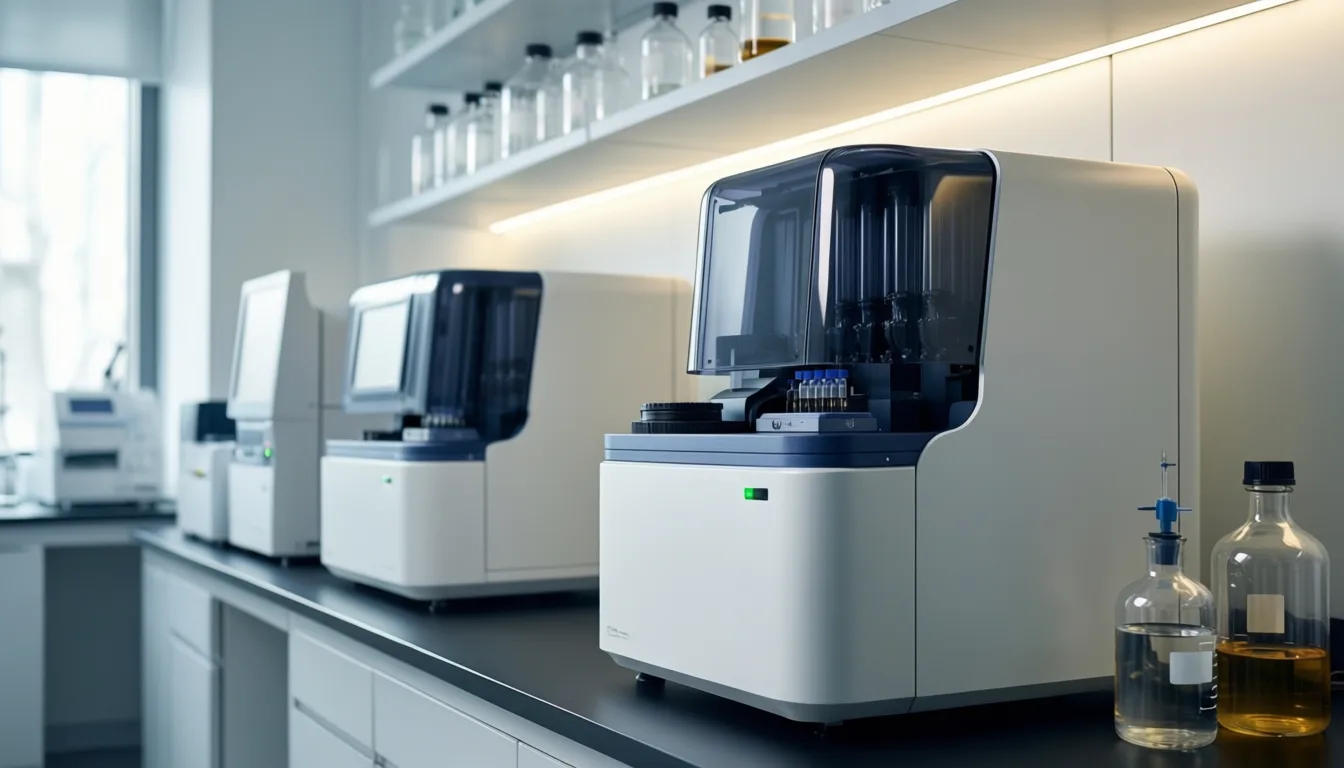
As design accelerates, the rate-limiting steps move toward synthesis, formulation, and clinical validation.
The regulatory shadow
Faster design does not mean faster approval. The same Journal of Peptide Science review that pegs peptides and proteins at roughly a quarter of the global pharmaceutical market also catalogues the regulatory weight behind them — overlapping guidelines from the FDA, ICH, and EMA covering identity, purity, potency, stability testing, and bioanalytical workflows that frequently need to be tailored to each molecule. Peptides offer high specificity and potency, but they are notoriously unstable in liquid formulations, and the analytical chemistry required to ship them at scale is non-trivial.
For the quantified-self crowd watching this space, the practical implication is straightforward: a flood of AI-designed candidates does not translate to a flood of new clinic-ready drugs. It translates to a deeper pool from which the same demanding pipeline — synthesis, formulation, preclinical, Phase 1 through 3 — must still pick winners. The compression is upstream. Whether it propagates downstream is the open question of the next several years.
The honest framing is this: peptide design is becoming programmable in a way it has never been before, and the tooling is converging fast enough that small teams can now run pipelines that used to require institutional infrastructure. That is genuinely new. What it is not — yet — is a shortcut around biology. The molecules these models produce still have to fold correctly, get into the right cells, survive the body long enough to act, and clear regulators who have spent decades calibrating to a slower process. The interesting story over the next few years will not be how clever the generators get. It will be how well their outputs hold up when they finally meet a living system.
Frequently asked questions
What is PepTune, and how does it differ from earlier approaches to peptide design?
PepTune is a multi-objective discrete diffusion model that generates therapeutic peptide SMILES strings and optimizes them across several drug-like properties at once. Unlike autoregressive models that predict one token at a time, it starts from noise and learns to denoise toward valid structures, using an inference-time algorithm called Monte Carlo Tree Guidance to steer that process toward sequences that balance multiple properties simultaneously rather than trading one off against another.
Which properties can PepTune optimize in a single generation pass?
The article reports that PepTune generated chemically modified peptides simultaneously optimized for target binding affinity, membrane permeability, solubility, hemolysis, and non-fouling behavior, covering five or more properties in one pass across several disease-relevant targets.
What stood out in the coronary artery disease benchmarking study, and how far along is that research?
Apelin, an endogenous peptide already studied in cardiovascular contexts, showed the strongest and most stable interactions with its receptors across all four docking platforms tested. The authors of that study explicitly described the work as a modeling exercise and called for in-vivo validation as the necessary next step, so the findings remain computational.
Why doesn't a surge in AI-designed peptide candidates automatically mean faster drug approvals?
The article explains that AI-generated candidates still must pass through the same demanding pipeline — synthesis, formulation, preclinical testing, and Phase 1 through Phase 3 clinical trials. Peptides are also notoriously unstable in liquid formulations, and overlapping regulatory guidelines from the FDA, ICH, and EMA covering identity, purity, potency, stability, and bioanalytical workflows must still be satisfied for each molecule.
What practical advantage does diffusion's modular design offer researchers working on new targets?
Because new objectives — such as a different toxicity classifier, a new permeability model, or a fresh binding predictor — can be plugged into the guidance step without retraining the base model, researchers can adapt the system as the definition of a 'good' peptide expands without rebuilding from scratch.
Sources
- PepTune: Generation of Therapeutic Peptides with Multi-Objective-Guided Discrete Diffusion. — ArXiv
- Evaluation of Structure Prediction and Molecular Docking Tools for Therapeutic Peptides in Clinical Use and Trials Targeting Coronary Artery Disease. — International journal of molecular sciences
- Regulatory Guidelines for the Analysis of Therapeutic Peptides and Proteins. — Journal of peptide science : an official publication of the European Peptide Society
Join the conversation
Comments are moderated and reviewed before they appear. Be constructive — this is health information.
Add your comment