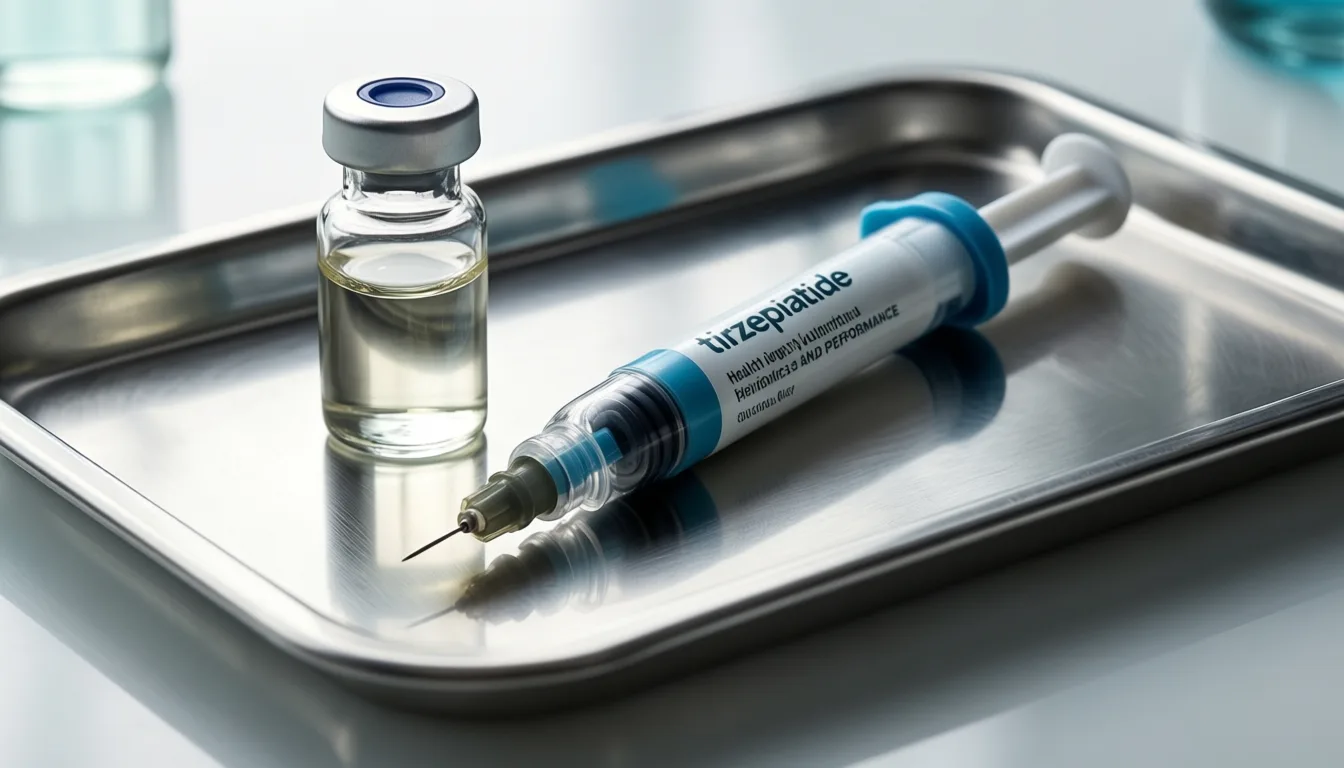
Tirzepatide's Expanding Frontier: Lipids, Brain Pressure, and a New Safety Signal
The dual GIP/GLP-1 agonist is moving past weight loss into lipid repair and intracranial pressure relief. But a small case series flags a risk off-label users haven't been warned about.
Tirzepatide arrived as a weight-loss story, but the data trail it is leaving behind is more interesting than the headlines. The molecule — a once-weekly peptide that activates both the GIP and GLP-1 incretin receptors — is now being studied in places no one expected it to go: lipid panels that wouldn't budge on statins alone, the cerebrospinal fluid pressure inside the skulls of women with idiopathic intracranial hypertension, and, less happily, emergency rooms in Kuwait, where a small cluster of non-diabetic patients showed up in hypoglycemic ketoacidosis after dose escalations. For the quantified-self crowd watching this peptide ride the same off-label curve as semaglutide, the picture is becoming both broader and sharper at once.
- Lipids respond. A meta-analysis of 13 randomized trials found tirzepatide improved cholesterol and triglyceride markers with a visible dose-response across 5, 10 and 15 mg.
- A new neurological signal. In a propensity-matched real-world cohort of 193 patients with idiopathic intracranial hypertension, tirzepatide was associated with sharply lower papilledema and visual-disturbance risk at 24 months.
- An emerging risk. Clinicians have documented hypoglycemic ketoacidosis in four non-diabetic patients using tirzepatide off-label for weight loss, typically after dose escalation.
- The evidence is moderate, not settled. Real-world cohorts and case series are hypothesis-generating; none of these uses are yet established standards of care.
- Off-label is not consequence-free. Self-directed dose titration without clinician oversight is where the safety signal lives.
The lipid story: more than a weight-loss side effect
The most quantifiable of tirzepatide's expanding effects shows up on a standard lipid panel. A 2024 systematic review and meta-analysis published in the Journal of Obesity & Metabolic Syndrome pooled data from 13 randomized controlled trials and concluded that tirzepatide was "efficacious at improving all lipid markers, including cholesterol and triglycerides," with a clear dose-response trend across the 5, 10 and 15 mg groups. Nine of the included trials carried a low risk of bias; two were rated moderate and two high, which is the honest texture of any meta-analysis in a fast-moving field.
That dose-response matters. It is the kind of pattern that makes a pharmacologist sit up: a graded biological signal rather than a flat effect that might just be the downstream consequence of weight loss. The authors stop short of declaring tirzepatide a lipid drug — and so should we — but they note the growing evidentiary case for its use in metabolic syndrome and obesity beyond glycemic control alone.

Across 13 randomized trials, tirzepatide moved the standard lipid markers in the right direction — with a dose-response that's hard to attribute to weight loss alone.
A graded biological signal — the kind of pattern that makes a pharmacologist sit up.
Into the skull: a surprising neurological turn
Idiopathic intracranial hypertension (IIH) is a disorder of unexplained elevated pressure inside the skull. It predominantly affects obese women of reproductive age, and its complications — papilledema, visual loss, intractable headache — are the kind that send patients to neuro-ophthalmology clinics rather than weight-loss clinics. GLP-1 agonists have already shown signal here. The newer question is what happens when you add GIP into the mix.
A retrospective cohort study using the TriNetX Global Health Research Network, posted in late 2024, took a first look. The investigators used propensity score matching to compare 193 tirzepatide-exposed IIH patients with 193 controls receiving standard care. At 24 months, the tirzepatide group showed a 68% reduction in papilledema risk, a 73.9% reduction in visual disturbance and blindness risk, and a smaller but statistically significant 19.7% reduction in headache risk. Body mass index dropped by about 1.15 kg/m² versus controls.
Two caveats are worth holding in the same hand as those numbers. First, this is a real-world observational study — propensity matching narrows the gap with a randomized trial but does not close it. Second, it is a preprint, not yet peer-reviewed at the time of writing. The findings are hypothesis-generating; they are not a green light to add tirzepatide to an IIH protocol. But for a condition with few good pharmacologic options, the effect sizes are striking enough to deserve a prospective trial.

Papilledema — swelling of the optic disc from raised intracranial pressure — is the marker that dropped most sharply in the tirzepatide-exposed IIH cohort.
The safety signal nobody wanted
And then the other side of the ledger. A 2024 case series in The American Journal of Case Reports documents four non-diabetic patients with obesity in Kuwait who developed hypoglycemic ketoacidosis after starting tirzepatide for weight reduction. All four were women, ages 17 to 34, with BMIs in the low-30s. Three presented in week 5 of treatment, typically after a dose escalation to 5 mg. The clinical picture was consistent: abdominal pain, vomiting, sometimes diarrhea, a median blood glucose under 3.89 mmol/L, and a high anion gap metabolic acidosis with ketosis. All four required inpatient IV fluids and correction of hypoglycemia.
The authors' working hypothesis is mechanistic and pointed: starvation. Tirzepatide's appetite-suppression and gastric-slowing effects can drive a profound caloric deficit; in a non-diabetic patient with no insulin resistance to absorb the incretin signal, that can tip into hypoglycemia and ketogenesis. Four cases in one center is not an incidence rate. But it is a coherent enough pattern that the authors recommend measuring urine and serum ketones in any patient on a dual GIP/GLP-1 agonist who shows up with gastrointestinal symptoms.
For the off-label crowd, that recommendation lands differently than for an endocrinologist. The pattern in these cases — symptom onset around a dose escalation, in users who were eating less than the drug's pharmacology accounted for — is precisely the failure mode self-titration produces.
In a non-diabetic patient with no insulin resistance to absorb the incretin signal, the deficit can tip into hypoglycemia and ketogenesis. Bitar et al., 2024
Reading the moderate-evidence map
Put the three studies side by side and a useful map emerges. The lipid meta-analysis is the strongest piece of evidence — randomized trial data, pooled, with dose-response. The IIH cohort is the most surprising and clinically intriguing, but its design (retrospective, observational, preprint) demands a prospective trial before anything changes at the bedside. The hypoglycemic ketoacidosis series is the smallest dataset but, paradoxically, the most actionable: case reports are how rare drug-related harms first surface, and four convergent presentations in non-diabetic off-label users is the kind of signal regulators and prescribers take seriously.
The through-line is that tirzepatide's pharmacology — dual incretin activation, profound effects on appetite and gastric emptying, downstream metabolic shifts — has consequences well beyond glucose and weight. Some of those consequences look beneficial in ways the original trials did not measure. Others are the predictable downside of a molecule that powerfully suppresses caloric intake, in people whose physiology was not the development program's target population.
None of this is settled. The evidence rating on this story is moderate for a reason: the most exciting findings are real-world or preprint, and the safety signal is, for now, a handful of cases. What is settled enough to say plainly: tirzepatide is doing more than the label describes, in both directions, and the people most exposed to that asymmetry are the ones titrating it themselves.
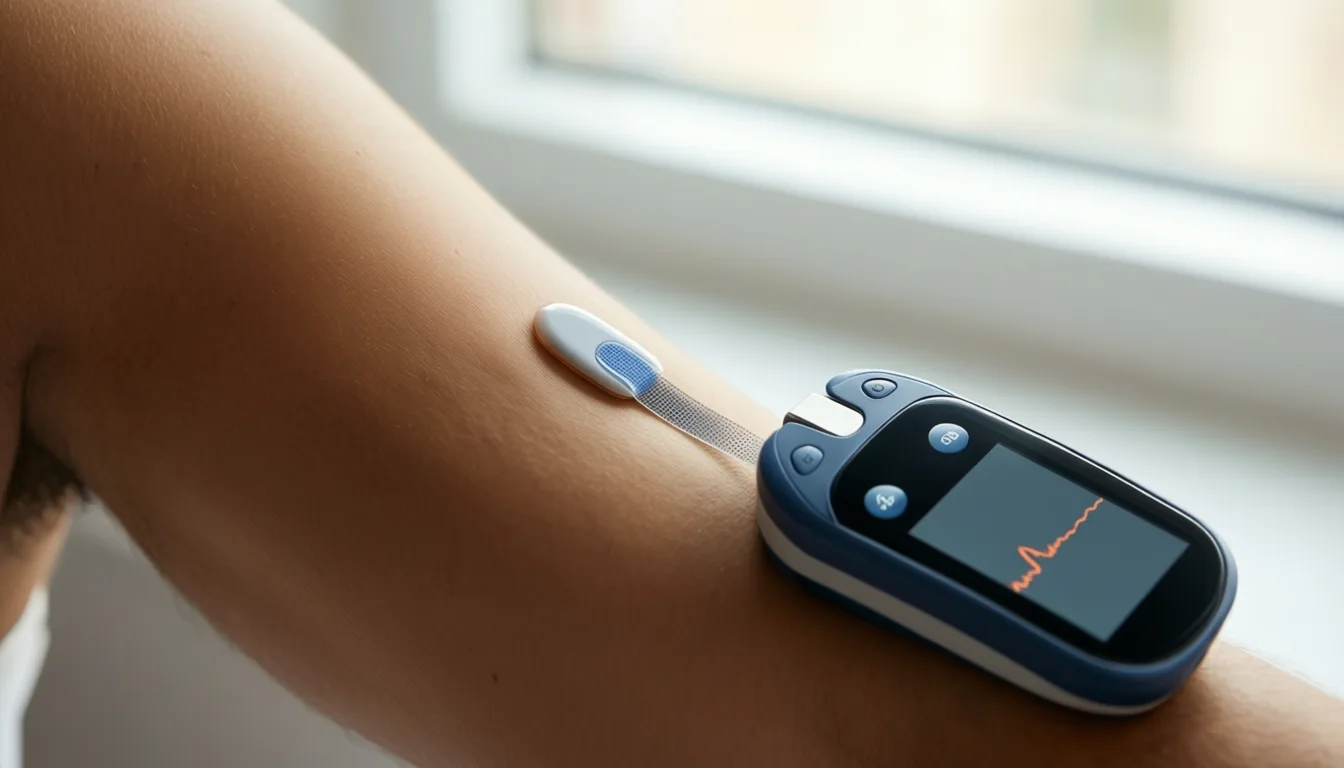
For self-experimenters, a continuous glucose monitor is the kind of instrument that would catch the asymptomatic dips the Kuwait case series describes — but only a clinician can interpret the full picture.
Frequently asked questions
How does tirzepatide work?
Tirzepatide is a once-weekly peptide that activates both the GIP and GLP-1 incretin receptors. Its appetite-suppression and gastric-slowing effects can drive a significant caloric deficit in users.
What did research find about tirzepatide's effects on cholesterol and triglycerides?
A 2024 meta-analysis pooling data from 13 randomized controlled trials concluded that tirzepatide improved all lipid markers, including cholesterol and triglycerides, with a clear dose-response trend across the 5, 10, and 15 mg groups. Nine of the included trials carried a low risk of bias.
What is idiopathic intracranial hypertension, and what did the tirzepatide study find?
Idiopathic intracranial hypertension is a disorder of unexplained elevated pressure inside the skull that predominantly affects obese women of reproductive age, with complications including papilledema, visual loss, and intractable headache. A propensity-matched cohort study of 193 tirzepatide-exposed patients found a 68% reduction in papilledema risk, a 73.9% reduction in visual disturbance and blindness risk, and a 19.7% reduction in headache risk at 24 months compared to controls.
What safety concern has been documented in non-diabetic people using tirzepatide for weight loss?
A 2024 case series documented four non-diabetic patients with obesity who developed hypoglycemic ketoacidosis after starting tirzepatide for weight reduction. All four were women aged 17 to 34, and three presented in week 5 of treatment, typically after a dose escalation to 5 mg, with symptoms including abdominal pain, vomiting, low blood glucose, and high anion gap metabolic acidosis with ketosis.
What do the authors of the Kuwait case series suggest clinicians do when a tirzepatide user presents with gastrointestinal symptoms?
The authors recommend measuring urine and serum ketones in any patient on a dual GIP/GLP-1 agonist who presents with gastrointestinal symptoms, rather than assuming the symptoms reflect a simple GI side effect.
Sources
- The Effects of Tirzepatide on Lipid Profile: A Systematic Review and Meta-Analysis of Randomized Controlled Trials. — Journal of obesity & metabolic syndrome
- Efficacy of Tirzepatide Dual GIP/GLP-1 Receptor Agonist In Patients with Idiopathic Intracranial Hypertension. A Real-World Propensity Score-Matched Study. — medRxiv : the preprint server for health sciences
- Exploring Hypoglycemic Ketoacidosis in Nondiabetic Patients on Tirzepatide: Is Starvation the Culprit? — The American journal of case reports
Join the conversation
Comments are moderated and reviewed before they appear. Be constructive — this is health information.
Add your comment