
Eleanor Voss
Health Columnist
Women 55+ navigating menopause, bone, brain and heart health
Eleanor Voss writes about the science of women's health after 50 — menopause, bone density, brain and heart — cutting through decades of under-research with clear, candid evidence reviews. She writes the column she wished existed.
Latest articles

Subjective Age and the Mind: What 15 Years of Data Suggest About How We Grow Older
A long-running German study finds that how old you feel tracks how your brain performs over time — at both the population and personal level. The signal is modest, but it's persistent.

Telomere Length and the Sex-Specific Math of Years Lost
A 445,000-person UK Biobank analysis suggests telomeres track life expectancy differently in men and women — and a transplant study links short, dysfunctional telomeres to frailty. Here is what that actually means for you.
Could Ozempic Slow Aging Itself? The First Human Signal Is In
A post-hoc analysis of a randomized trial found semaglutide reduced multiple DNA-methylation aging clocks. It's early, narrow, and genuinely intriguing.

Personality as a Buffer Against Epigenetic Aging
A new analysis of nearly 3,000 older adults suggests that conscientiousness and openness may help the mind stay sharper than the body's biological clocks would predict — while neuroticism appears to do the opposite.

Inflamm-Aging Goes Mainstream: A Cheap Blood Marker and a Gut Bug Hint at Longevity's Next Levers
Two new studies sharpen the picture of chronic low-grade inflammation in aging — one points to a routine blood ratio, the other to a specific gut microbe coaxed by ginseng. Neither is a prescription. Both are worth watching.
The Senescence-Cancer Crossover: A Metabolic Brake on Aging Cells
New 2025 research reframes senescent and tumor cells as biological cousins — and points to putrescine as an unexpected checkpoint in how cells decide to age.

Three Quiet Signals of How You're Actually Aging
New 2025 population research points to surprisingly accessible markers — what's in your urine, the length of your reproductive years, and a single honest question about your health — that track biological age.

Personality as a Predictor of Lifespan: What 22,000 Adults Reveal About Longevity
A coordinated analysis of four major U.S. cohorts finds that highly specific personality 'nuances' — not just broad traits — track with mortality risk. The strength of the signal is modest, but the pattern is hard to ignore.
Hearing the Future: Why Struggling to Follow Conversation in Noise May Be a Brain Signal
New imaging research links trouble understanding speech in noisy rooms to subtle wear in the brain's white-matter wiring — sharpening a question that matters for long-term cognitive health.
The Middle-Age Muscle Cliff: Why Sarcopenia Starts Earlier Than You Think
New molecular and longitudinal research suggests the slide in strength begins decades before frailty — and that nerves and inflammation, not just muscle, set the pace.

The Longevity Inheritance: What the Brains of Centenarians' Children Reveal
A new imaging study of adults whose parents lived exceptionally long lives finds a distinctive gray-matter signature — a structural hint that 'good genes' may be visible on a scan.
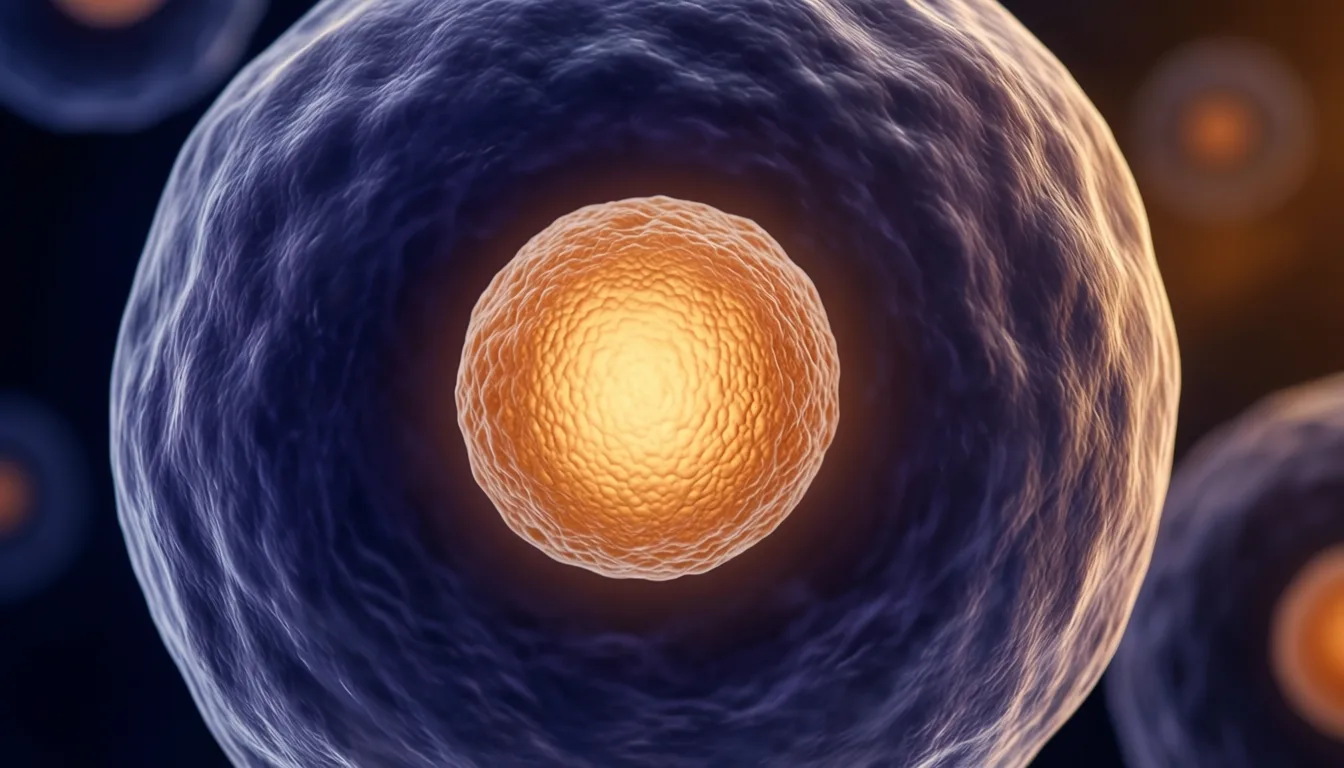
The Nucleolus as Aging's Hidden Clock: New Mechanistic Targets for Geroprotection
A tiny structure inside every cell may act as a countdown timer for lifespan — and a new wave of AI-guided drug discovery and senescence-targeting therapies is racing to slow it down.