AI at the Dinner Plate: What 'Precision Nutrition' Actually Delivers Today
Algorithms promise to engineer the perfect meal for your face, your physique, and your future. A new scoping review separates the signal from the marketing.
The pitch is irresistible to anyone who treats their body like a project. Upload your bloodwork, strap on a sensor, swab your gut, and let a model spit back the exact bowl of food that will sharpen your jawline, smooth your skin, and stretch your healthspan by a decade. Precision nutrition powered by artificial intelligence has become the glossiest promise in the wellness aisle — and, finally, it has a serious literature behind it worth interrogating. A new scoping review in Advances in Nutrition pulled almost two hundred studies into one room and asked the only question that matters for readers optimizing in real life: what part of this is actually working yet, and what is still a beautifully designed wait.
- The field is exploding, fast. Roughly three-quarters of AI precision-nutrition research has been published since 2020, concentrated on diet-related disease like diabetes and cardiovascular conditions.
- The real wins are narrow. Continuous glucose monitor–guided recommendations and microbiome modeling are the most developed use cases — promising, but still maturing.
- Evidence is uneven. Methods, datasets, and evaluation metrics vary widely across studies, making head-to-head comparisons difficult.
- Diversity is the elephant in the lab. Minority and cultural representation is thin, which limits how well today's models generalize to real eaters.
- Treat outputs as hypotheses, not prescriptions. The smartest move right now is using these tools to ask better questions of a clinician — not to replace one.
What the review actually found
The authors followed a PRISMA-ScR scoping protocol and pulled 198 articles spanning precision nutrition, AI, and natural language processing, then mapped the landscape: where the work is being published, which conditions it targets, what methods it leans on, and — crucially for a category sold on personalization — whether it accounts for the humans it claims to personalize for.
The headline trend is momentum. About 75% of the studies in the review were published from 2020 onward, a surge that tracks with the broader explosion in machine learning tooling and the consumer rise of wearables. The dominant clinical targets are predictable and reasonable: diabetes and cardiovascular disease, with a secondary emphasis on prevention and general health optimization. That is meaningful for the looksmaxing reader, because the same metabolic levers that drive cardiometabolic risk — glycemic control, inflammation, body composition — are the levers that quietly govern skin quality, hair density, sleep architecture, and the soft-tissue contours people obsess over.
CGM-driven recommendations are among the most developed real-world applications mapped in the review.
So where is the work strongest? The review describes a maturing toolkit built around two pillars that any reader who has shopped a wellness app will recognize. The first is AI applied to continuous glucose monitoring data to predict individual glycemic responses to specific meals — the basic premise behind the personalized-blood-sugar category. The second is microbiome modeling, where machine learning tries to translate a stool sample's bacterial signature into food recommendations. Both are real research programs, not vibes. Both are also, in the review's framing, still part of an evolving landscape rather than a settled science.
The dream is a model that knows your dinner before you do. The reality is a research field still learning what 'you' even means in its training data.
The diversity problem nobody markets around
If there is one finding that should reset the way readers shop this category, it is this: the review explicitly flags the need to better integrate minority and cultural perspectives to make AI precision nutrition equitable and effective. Translation for the consumer: a recommendation engine is only as personalized as the people it was trained on. If a model was built largely on one demographic's diets, microbiomes, and glycemic patterns, its confident-sounding output for someone outside that group is closer to an educated guess than a precision call.
This matters double for cultural eating patterns. A model that has barely seen injera, congee, dal, or pozole will struggle to give meaningful guidance to anyone whose plate actually looks like their family's. The review treats this as a research gap to close, not a dealbreaker — but it is the gap most worth keeping in mind when an app tells you, with apparent certainty, which carb to cut.
What this means for the optimizer
For the reader whose health interest skews aesthetic — clearer skin, leaner composition, deeper sleep, better recovery — the practical read is more nuanced than "it works" or "it doesn't." The review's signal is that AI precision nutrition is a legitimately active field with concentrated traction in glycemic and microbiome use cases, particularly aimed at metabolic disease. Those are the same upstream systems that quietly determine how your face looks at 7 a.m. on a Tuesday.
But the methodological variation the review documents — different datasets, different evaluation metrics, different definitions of success — is the kind of heterogeneity that makes it hard to say any one consumer product is doing what its marketing implies. A glucose-prediction app that performs beautifully in one cohort may not generalize cleanly to you. A microbiome recommendation engine may be drawing from a reference population that does not include your ancestry, your diet, or your medication list.
None of this is a reason to dismiss the category. It is a reason to use it the way thoughtful early adopters use any moderately evidenced tool: as a structured way to notice patterns, generate hypotheses, and have a sharper conversation with a clinician who can interpret them against your bloodwork and history. The plate in front of you is still the variable that matters most. The algorithm, for now, is a second opinion worth weighing — not the chef.
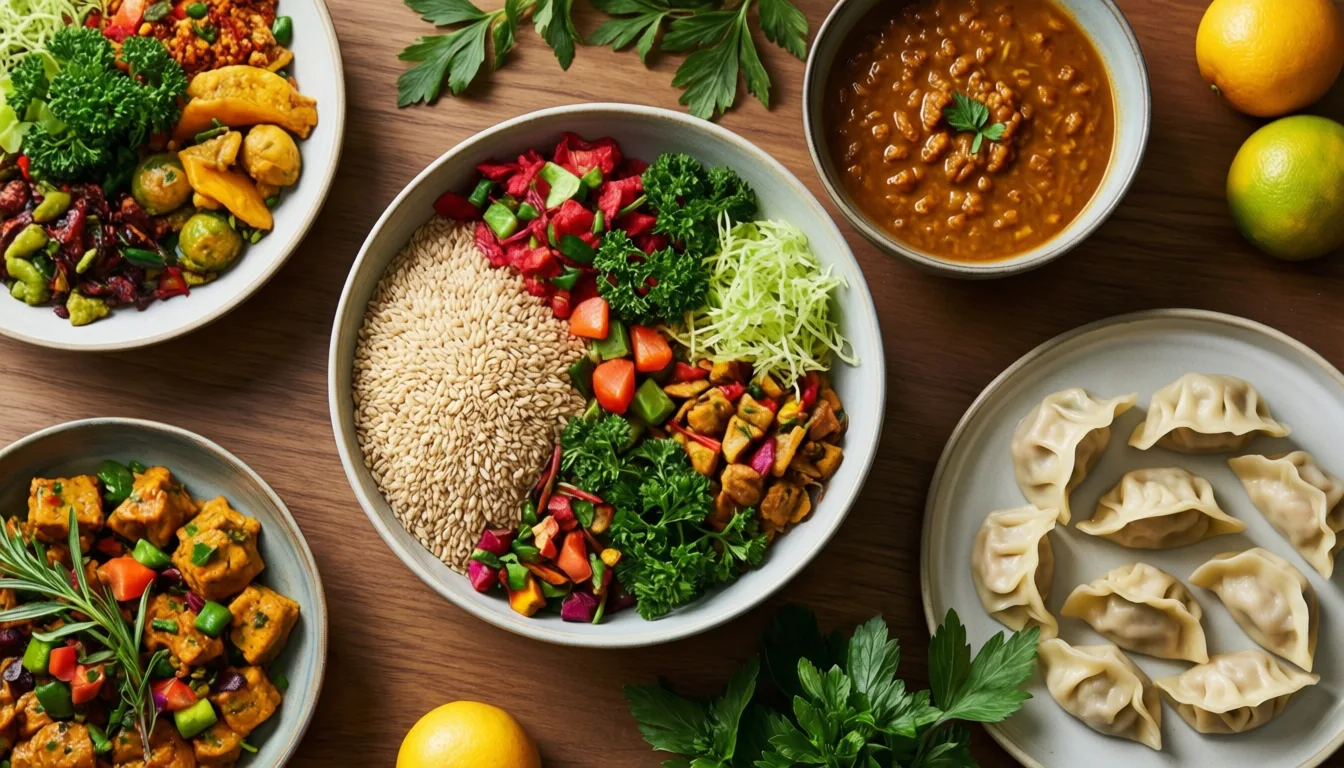
Personalization is only as deep as the data behind it — cultural diet patterns remain underrepresented in the literature.
The most honest framing of where this category sits in 2026 is the one the scoping review itself implies: a fast-moving research front with credible early applications, real methodological work still ahead, and a personalization promise that will only get truer as the training data starts to look like the people buying the subscription. For now, the smartest move at the dinner plate is the same one it has always been — eat like someone who plans to be around, and audit the algorithm before you let it audit you.
Frequently asked questions
Which AI precision nutrition applications are the most developed right now?
According to the review, the two strongest use cases are AI applied to continuous glucose monitor data to predict individual blood sugar responses to specific meals, and microbiome modeling that translates a stool sample's bacterial signature into food recommendations. Both are described as real research programs, though still part of an evolving landscape rather than settled science.
Why might an AI nutrition app's recommendations not apply to me?
The review explicitly flags that minority and cultural perspectives are underrepresented in the research, meaning a model built largely on one demographic's diets, microbiomes, and glycemic patterns may produce results that are closer to an educated guess than a precision call for anyone outside that group. Cultural eating patterns — foods like injera, congee, dal, or pozole — remain largely absent from training data.
How should I actually use AI nutrition tools given that the science is still maturing?
The review's framing suggests using these tools as a structured way to notice patterns and generate hypotheses, then bringing that data to a clinician who can interpret it against your bloodwork and history. The article describes the algorithm as a second opinion worth weighing, not a replacement for a clinician.
Why is it hard to know whether a specific precision nutrition product does what it claims?
The review documents wide variation across studies in datasets, evaluation metrics, and definitions of success, which makes head-to-head comparisons difficult. A glucose-prediction app that performs well in one cohort may not generalize to someone with a different ancestry, diet, or medication list.
What health conditions does most AI precision nutrition research focus on?
The dominant clinical targets in the review are diabetes and cardiovascular disease, with a secondary emphasis on prevention and general health optimization. The article notes these same metabolic levers — glycemic control, inflammation, and body composition — also influence factors like skin quality, sleep, and body composition more broadly.
Sources
- A Scoping Review of Artificial Intelligence for Precision Nutrition. — Advances in nutrition (Bethesda, Md.)
Join the conversation
Comments are moderated and reviewed before they appear. Be constructive — this is health information.
Add your comment