The Glucose Monitor Grows Up: How CGM Is Becoming a Whole-Body Information Layer
Once a niche tool for type 1 diabetes, continuous glucose monitors are quietly reshaping how doctors — and families — read the body's signals in real time.
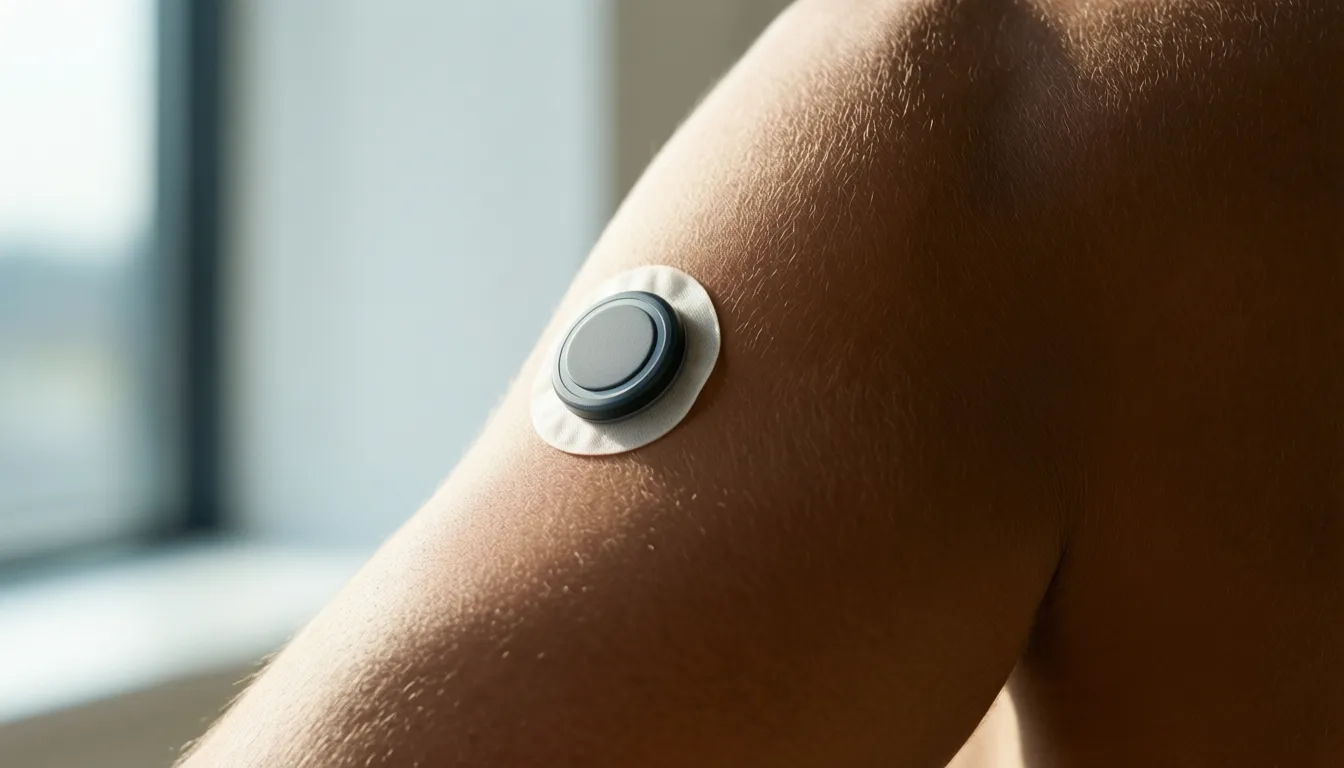
The small white disc on the back of the arm has become one of the most quietly radical pieces of wearable hardware in modern medicine. For two decades, continuous glucose monitors — CGMs — were the domain of type 1 diabetes, a lifeline for people whose pancreases had stopped negotiating with their bloodstream. Then came the smartphone integrations, the over-the-counter approvals, the biohackers strapping them on to audit oat-milk lattes. Now the device is entering a third, more interesting act: it is becoming an information layer. Not a glucose meter so much as a continuous, granular feed of how a body is actually behaving — usable by clinicians treating type 2 diabetes without insulin, and, in at least one documented case, by a family member watching a crisis unfold in real time.
The looksmaxing crowd has long treated CGMs as a metabolic mirror — a way to see which foods spike, which workouts flatten the curve, which late nights blunt insulin sensitivity the next morning. That use case is real, but the more consequential story right now is clinical. A new retrospective analysis of Optum's Clinformatics Data Mart — a large U.S. claims and lab database — looked at adults with type 2 diabetes who were managing the condition without insulin, relying instead on the standard non-insulin toolkit: metformin, sulfonylureas, SGLT2 inhibitors, DPP-4 inhibitors, and GLP-1 receptor agonists. The question was simple: does adding a CGM to those medications change anything measurable?
The answer, according to the study published in Endocrinology, Diabetes & Metabolism, is yes — modestly but consistently. Across 52,394 CGM-naïve adults, CGM users saw an A1c reduction roughly 0.45 percentage points greater than non-users over the follow-up period. After adjusting for covariates, CGM users posted larger A1c drops than non-users across every medication class examined. That is not a miracle cure, and it is not a randomized trial. It is observational data from real-world claims, which means selection effects are baked in — the kind of patient who gets a CGM may also be the kind of patient who tracks, who shows up, who tweaks. The authors are upfront about that.
Why a tenth of a percent matters
In glycemic terms, a sustained A1c reduction of nearly half a percentage point is not trivial. Endocrinologists generally treat fractions of a percent as clinically meaningful when scaled across millions of patients and years of exposure. What the Optum analysis implies is that the value of a CGM in type 2 diabetes may not be the sensor itself but the behavioral feedback loop it creates — a person sees the curve after the rice bowl, sees the flat line after the walk, and adjusts. The medication does the pharmacology; the sensor closes the loop.
That framing matters because CGMs were, until recently, prescribed mainly for people on intensive insulin regimens, where the cost of a missed low is acute. Extending them upstream — to people whose diabetes is being held by oral agents and GLP-1s — is a bet that information itself is therapeutic. The new data offers moderate support for that bet. It does not yet tell us which patients benefit most, how long the effect persists once the novelty fades, or whether the same gains would survive a randomized design.
The medication does the pharmacology. The sensor closes the loop.

The behavioral feedback loop — see the curve, change the meal — may be where CGM earns its keep in non-insulin type 2 care.
The case that reframes the device
If the claims data tells the population story, a single case report tells the more startling one. Writing in Cureus, clinicians described a 68-year-old woman with type 2 diabetes, borderline personality disorder, and major depressive disorder who attempted suicide by injecting 90 units of lispro insulin and ingesting 12 lorazepam tablets. Her daughter was watching her mother's glucose remotely through the CGM's share function. When the curve dropped sharply, the daughter intervened. The patient reached the emergency department, received intravenous dextrose, was admitted to the ICU, and survived. At one-month follow-up, she was under psychiatric care and denied ongoing suicidal ideation.
The case report is, by definition, a single data point. It cannot tell us how often CGM alerts catch insulin overdoses, whether the share-function design saves lives at scale, or how to weigh privacy against safety in psychiatric care. What it does is reframe what the device is. A glucose monitor that a family member can watch in real time is not just a metabolic tool — it is a passive safety net for a specific high-risk population: people who have access to insulin as both medicine and means.
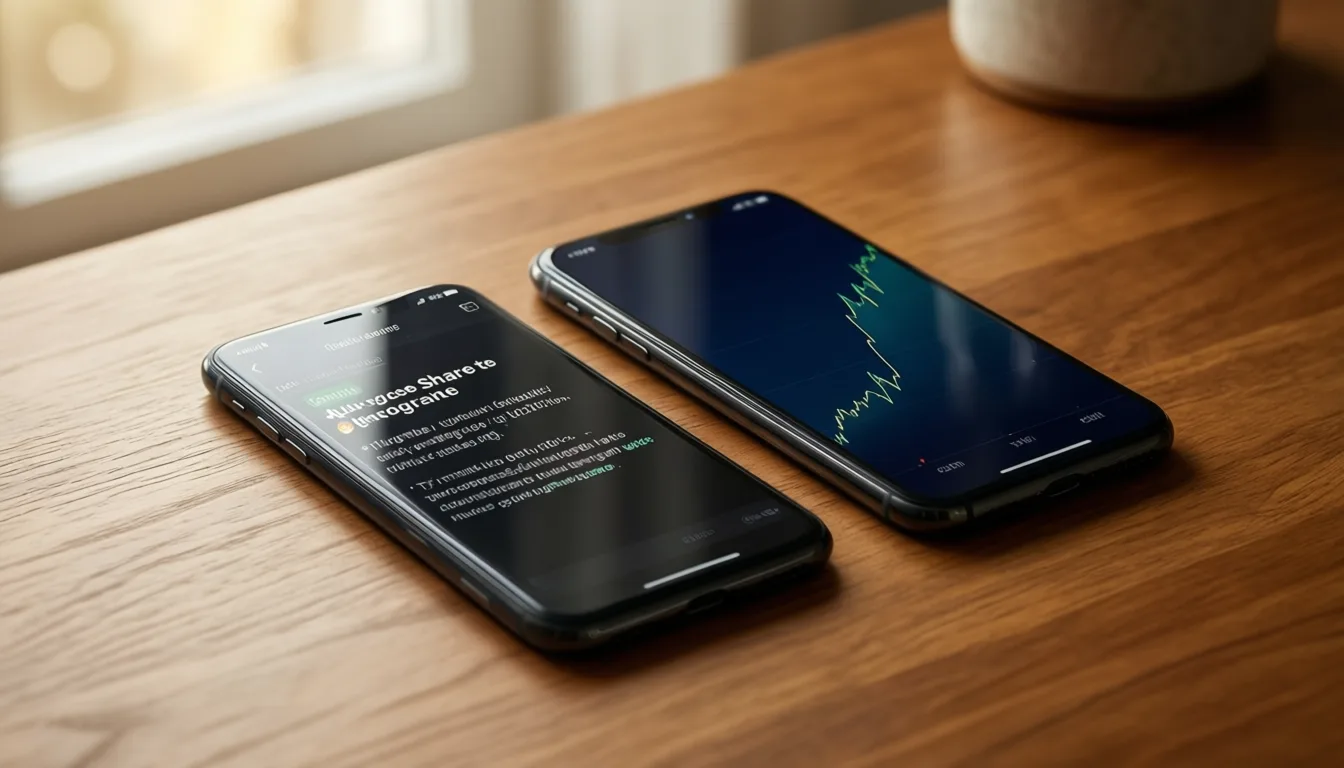
The CGM's share function — designed for parents of children with type 1 diabetes — is finding unanticipated uses in adult psychiatric care.
What the evidence does — and doesn't — say
Read together, the two papers sketch a device in transition. The claims analysis is large and real-world but observational; the case report is vivid but singular. Neither is a randomized trial, and neither should be read as proof that everyone with type 2 diabetes — or everyone with a psychiatric diagnosis — should be wearing a sensor. The honest read is that CGM is accumulating moderate evidence for uses beyond its original indication, and that the next few years will likely bring trials designed to test those uses directly.
For the optimization-minded reader, the takeaway is more cultural than clinical. The CGM is becoming infrastructure. It is the first widely worn sensor that gives a continuous, medically meaningful readout of a metabolic process most of us never see. Whether that readout improves your physique, your sleep, or your A1c depends on what you and your clinician do with it. The device, increasingly, is just the feed.
- Modest, real-world A1c gains. In a large claims analysis, CGM users with non-insulin-treated type 2 diabetes saw roughly a 0.45-percentage-point greater A1c reduction than non-users.
- Observational, not randomized. The Optum data cannot prove causation; selection effects likely play a role, and randomized trials are still needed.
- Beyond glycemia. A case report describes a family member using CGM share data to detect a hypoglycemic crash from an insulin overdose in time to intervene.
- Information, not instruction. The clinical benefit appears to come from the behavioral feedback loop — seeing the curve and adjusting — paired with appropriate medication.
- Talk to a clinician. CGM decisions, especially in patients with psychiatric comorbidities or complex regimens, belong in a conversation with a treating physician.
Frequently asked questions
How much did CGM use reduce A1c compared to not using one, according to the claims study?
In the Optum Clinformatics Data Mart analysis of 52,394 adults, CGM users with non-insulin-treated type 2 diabetes saw an A1c reduction roughly 0.45 percentage points greater than non-users over the follow-up period. After adjusting for covariates, CGM users posted larger A1c drops than non-users across every medication class examined.
Why can't the Optum study prove that CGMs directly caused the A1c improvement?
The study is observational data drawn from real-world insurance claims, not a randomized trial, which means selection effects are built in. The authors acknowledge that the type of patient who gets a CGM may also be the type who tracks their health closely, shows up to appointments, and makes adjustments — factors that could independently explain better outcomes.
What non-insulin medications were the patients in the study taking?
The patients were managing type 2 diabetes with metformin, sulfonylureas, SGLT2 inhibitors, DPP-4 inhibitors, and GLP-1 receptor agonists — five drug classes in total.
How did a CGM play a role in the emergency case described in the article?
A 68-year-old woman with type 2 diabetes attempted suicide by injecting insulin and ingesting lorazepam tablets; her daughter was monitoring her mother's glucose remotely through the CGM's share function and intervened when the readings dropped sharply. The patient reached the emergency department, received treatment, and survived.
What was the CGM share function originally designed for, and how is it now being used differently?
The share function was designed for parents monitoring children with type 1 diabetes. The case report described in the article illustrates it finding an unanticipated use in adult psychiatric care, where a family member used it to detect a dangerous hypoglycemic crisis in real time.
Sources
- Exploring Combined Use of Continuous Glucose Monitoring and Anti-Diabetes Medications on Glycaemic Control for People With Type 2 Diabetes Not Using Insulin. — Endocrinology, diabetes & metabolism
- Utility of Continuous Glucose Monitoring in the Management of a Suicide Attempt in a Patient With Comorbid Type 2 Diabetes and Major Depressive Disorder. — Cureus
Join the conversation
Comments are moderated and reviewed before they appear. Be constructive — this is health information.
Add your comment