Bone Health Before Spine Surgery: Which Anabolic Drugs Actually Move the Needle?
A single-institution analysis used CT-derived Hounsfield Units to compare modern osteoporosis drugs in preoperative patients. The signal is real but moderate — and frailty quietly blunts the response.
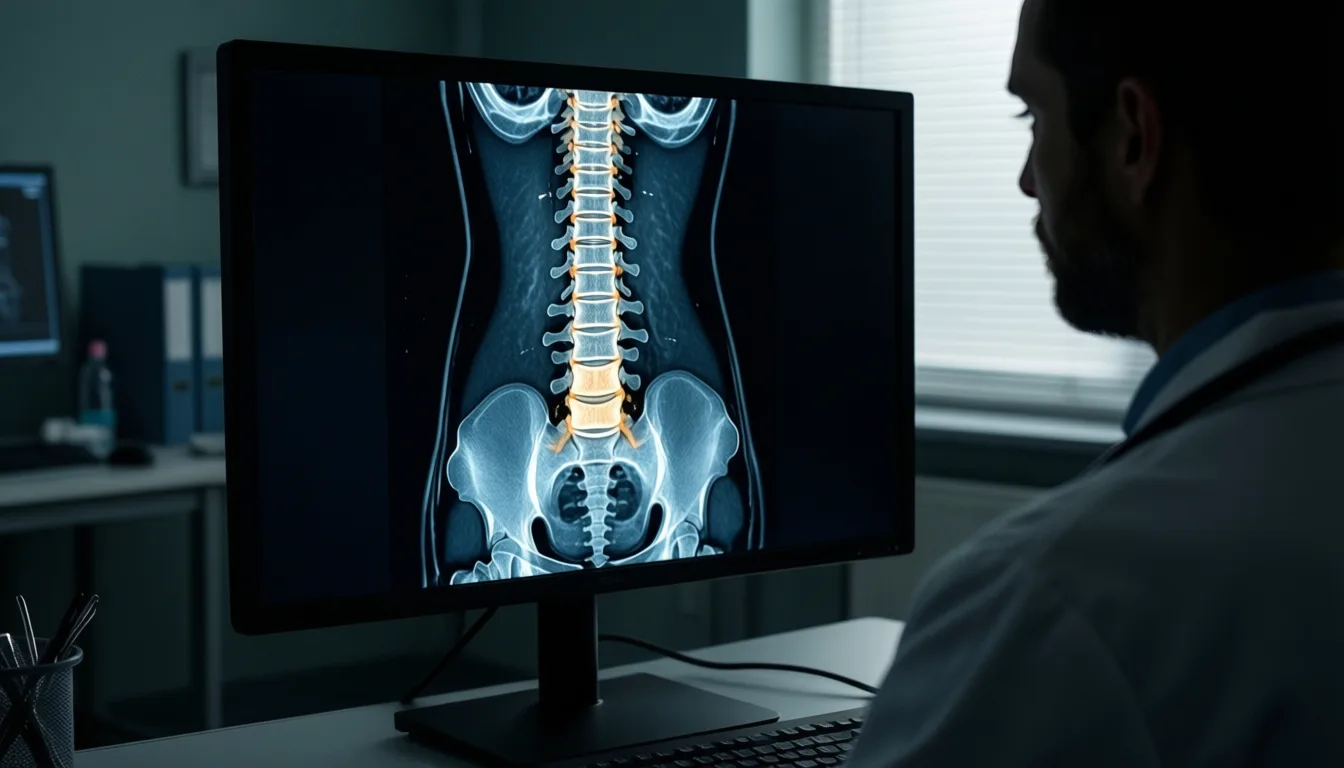
Bone is the part of the quantified-self stack that almost nobody quantifies — until a surgeon says the word osteoporosis and suddenly every vertebra on the CT becomes a number. For patients heading into spine surgery, those numbers matter: poor bone quality raises the odds of screws loosening, cages subsiding, and constructs failing. A 2025 analysis in the Journal of Clinical Medicine took a pragmatic look at what actually shifts those numbers before the operating room, comparing modern anabolic and antiresorptive drugs using the most n-of-1-friendly bone metric the average patient already has lying around: the Hounsfield Unit reading on a routine CT.
The setup is the kind of real-world dataset biohackers tend to trust more than tightly controlled trials. Researchers at a single multisite institution pulled records on 267 preoperative spine surgery patients — median age 74, two-thirds female — who had been treated with one of four drugs: the anabolics teriparatide and romosozumab, or the antiresorptives denosumab and alendronate. They measured lumbar Hounsfield Units before and after treatment and asked a simple question: who crossed a clinically meaningful threshold of at least a 7-point HU improvement?
Just under half — 127 patients, or 47.6% — did. That headline number is worth sitting with. It says the modern pre-op bone toolkit moves measurable density in roughly one in two patients within a treatment window, which is genuinely useful, and also that the other half didn't clear the bar. For a Protocols-section reader, this is the moderate-evidence reality: real signal, real ceiling.
The Four Drugs, Briefly
The comparison spans two mechanistic camps. Anabolics — teriparatide (a PTH analog) and romosozumab (a sclerostin-blocking monoclonal antibody) — push osteoblasts to build new bone. Antiresorptives — denosumab (a RANKL inhibitor) and alendronate (a bisphosphonate) — slow the osteoclasts that tear bone down. In the cohort, alendronate (95 patients) and denosumab (113) were the workhorses; romosozumab (31) and teriparatide (28) were the smaller, more targeted groups, typically reserved for higher-risk bone.
The univariable comparisons showed the groups weren't apples-to-apples to begin with: they differed significantly by age, sex, BMI, frailty scores, and even baseline HU. That's the texture of real clinical practice — the sicker, frailer, thinner-boned patients tend to get routed toward the anabolics. Any honest read of the data has to account for that selection.
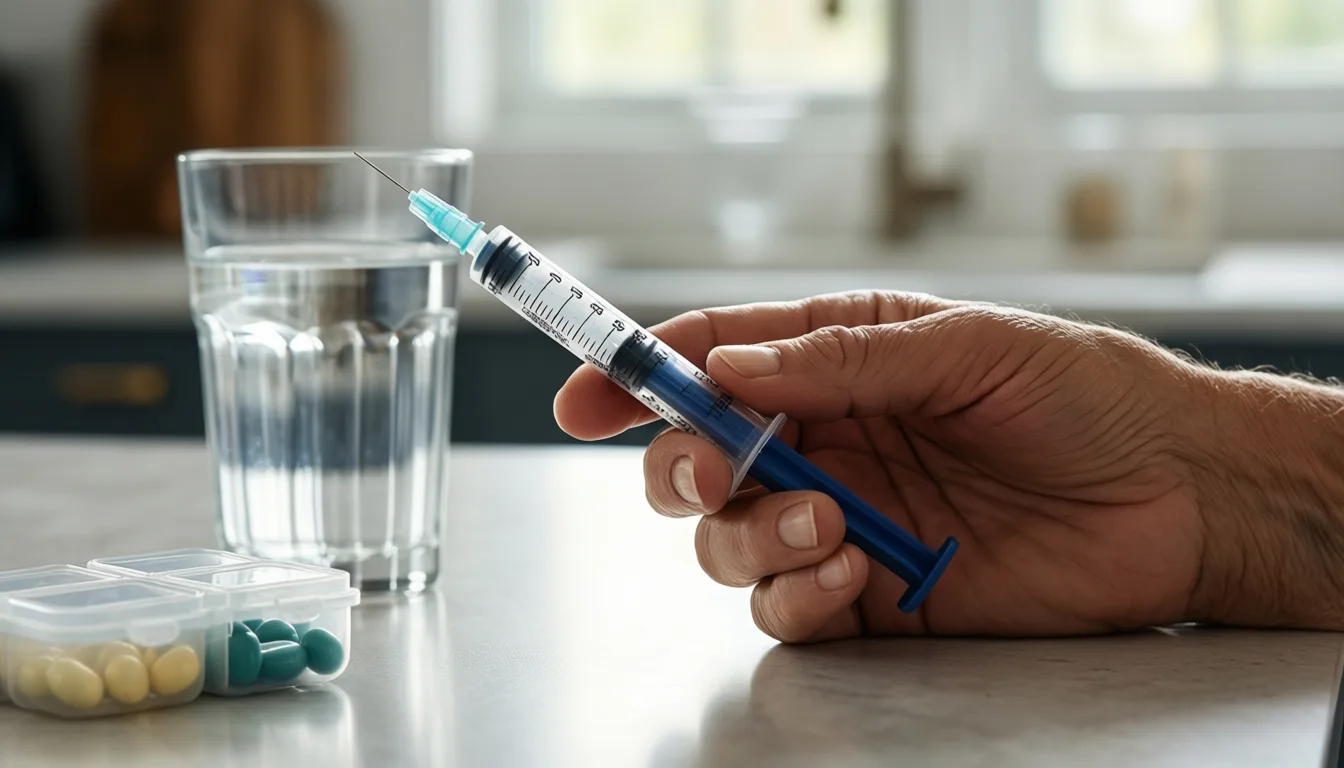
Anabolic regimens like teriparatide and romosozumab are delivered by injection, often for a fixed pre-surgical window.
Frailty Is the Quiet Variable
The most actionable finding for the quantified-self crowd isn't which drug ranked first — it's that the patient's underlying frailty appears to shape who responds. The study explicitly set out to identify factors influencing treatment response, leaning on two indices most readers won't have heard of: the modified Frailty Index (mFI) and the Risk Analysis Index (RAI). Both differed significantly across medication groups in the baseline comparisons, and both were built into the logistic regression models predicting HU gain.
The implication, framed cautiously: bone-building drugs don't operate in a vacuum. Pre-treatment HU, BMI, and composite frailty scores all carry information about who will and won't cross the 7-point threshold. For a reader optimizing before elective spine surgery, that suggests the protocol question isn't only "which drug?" but "what shape am I in when I start it?" Sarcopenia, nutritional status, and overall physiologic reserve are not side quests here — they're part of the response curve.
Bone-building drugs don't operate in a vacuum. Frailty appears to shape who actually crosses the response threshold.
What HU Actually Tells You
One reason this paper resonates with the data-obsessed: Hounsfield Units are already sitting on most pre-op CT scans, no extra DEXA appointment required. HU is a density measurement baked into CT physics; in the lumbar spine, it correlates with bone mineral density and has become a pragmatic surrogate for fracture and instrumentation risk. The investigators chose a ≥7-point improvement as their threshold for "responder," which gives readers a concrete, repeatable yardstick — the kind of pre/post number you can actually track between scans rather than a vague "bone got better."
Caveats apply. This is a single-institution retrospective cohort, not a randomized comparison. The drug groups weren't balanced. The follow-up windows and treatment durations weren't standardized in the abstract-level data. And HU change, while clinically meaningful, is a proxy for what surgeons actually care about: fewer mechanical failures after fusion. The paper is a useful map of the terrain, not a verdict.

Frailty indices factor in mobility, strength, and comorbidities — variables that respond to training, not just pharmacology.
- The pre-op bone toolkit works — about half the time. Roughly 47.6% of patients hit the ≥7-point HU improvement threshold across all four drugs.
- Anabolics and antiresorptives were both in the mix. Teriparatide and romosozumab (anabolic) sat alongside denosumab and alendronate (antiresorptive); each group served a different patient profile.
- Frailty matters as much as the molecule. mFI and RAI scores differed significantly across drug groups and were modeled as predictors of response.
- Hounsfield Units are a tractable metric. They live on routine CTs and offer a concrete pre/post number — useful for tracking, not a substitute for clinical judgment.
- This is one institution, not a randomized trial. Treat the rankings as a map of real-world practice, not a definitive head-to-head.
For the n-of-1 mindset, the most honest takeaway is that pre-surgical bone optimization is now measurable, comparable, and worth asking about — but it's also a domain where the patient's underlying biology, captured imperfectly by frailty indices, sets a ceiling on what any drug can do in a short pre-op window. Modern anabolics are powerful tools. They are not, on the evidence to hand, magic ones. Bring the CT number to the conversation, and let a clinician who knows the rest of the chart pick the protocol.
Frequently asked questions
What percentage of patients in the study actually saw a meaningful improvement in bone density before spine surgery?
Just under half — 127 patients, or 47.6% — achieved a clinically meaningful improvement of at least 7 Hounsfield Units. The study authors note this reflects a real signal with a real ceiling, meaning the pre-surgical bone toolkit works roughly one in two times within a treatment window.
What is the difference between the anabolic and antiresorptive drugs compared in the study?
Anabolic drugs — teriparatide and romosozumab — work by pushing osteoblasts to build new bone, while antiresorptive drugs — denosumab and alendronate — work by slowing the osteoclasts that break bone down. In the study cohort, alendronate and denosumab were the more commonly used options, while teriparatide and romosozumab were typically reserved for higher-risk patients.
Why does frailty matter when it comes to how well bone medications work before surgery?
The study found that patients' frailty scores — measured by the modified Frailty Index and the Risk Analysis Index — differed significantly across drug groups and were modeled as predictors of who responded to treatment. The article suggests that bone-building drugs don't operate in a vacuum, and a patient's underlying physiologic reserve, including factors like sarcopenia and nutritional status, sets a ceiling on what any drug can achieve in a short pre-operative window.
What are Hounsfield Units, and why did researchers use them to measure bone health?
Hounsfield Units are a density measurement built into CT scanning that correlates with bone mineral density and is used as a surrogate for fracture and instrumentation risk in the lumbar spine. Researchers used them because they are already present on most routine pre-operative CT scans, requiring no additional DEXA appointment, and offer a concrete before-and-after number that can be tracked between scans.
How reliable are the study's findings — was this a randomized controlled trial?
The study was a single-institution retrospective cohort analysis, not a randomized trial, and the drug groups were not balanced — sicker, frailer patients tended to be routed toward the anabolic medications. The article describes the paper as a useful map of real-world practice rather than a definitive head-to-head comparison.
Sources
- Impact of Frailty and Other Factors as Estimated by HU to Predict Response to Anabolic Bone Medications. — Journal of clinical medicine
Join the conversation
Comments are moderated and reviewed before they appear. Be constructive — this is health information.
Add your comment