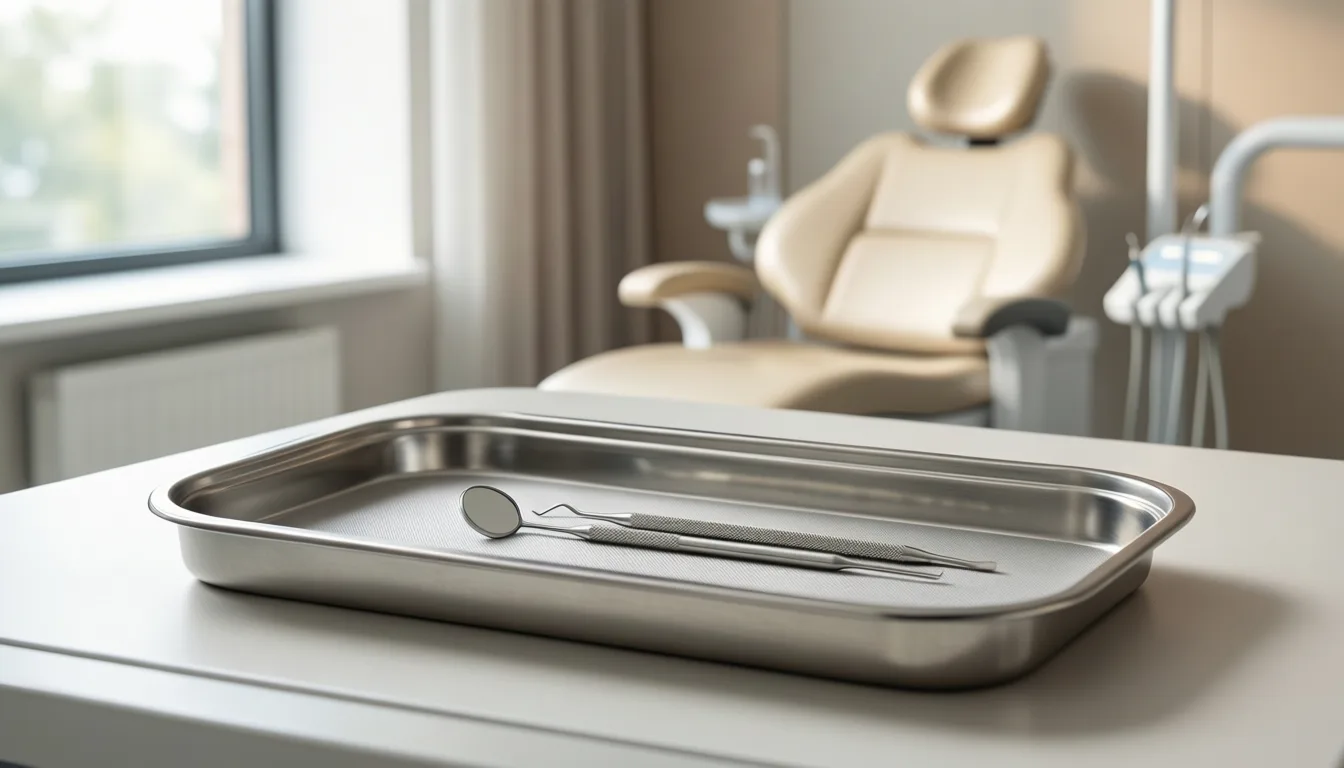
The Mouth-Joint Axis: Why Your Dentist Visit Belongs on Your Pre-Surgery Checklist
A new retrospective study links poor preoperative oral hygiene to early wound infection after hip and knee replacement — making the dental chair an underweighted stop on the prehab calendar.
You have booked the surgeon, cleared the cardiologist, and color-coded the recovery calendar. The appointment you probably did not book is with your dentist — and a new clinical analysis suggests that omission may matter more than the prehab literature has previously implied. In a retrospective cohort of 330 patients undergoing hip or knee replacement, researchers found that the cleanliness of a patient's teeth before surgery was independently associated with the odds of developing an early wound infection in the 90 days that followed.
The study, published in 2025 in the European Journal of Orthopaedic Surgery & Traumatology, examined patients operated on at a single hospital between January 2020 and December 2022. The team measured three standard markers of oral health before surgery — plaque control records (PCR), bleeding indices, and the share of probed periodontal pockets ≥ 4 mm — and tracked wound infections through postoperative day 90. After adjusting for other variables, two factors emerged as independently associated with elevated infection risk: higher body mass index and a higher PCR rate, the latter a direct measure of how much bacterial plaque is clinging to a patient's teeth on the day of assessment, according to the authors' multivariate analysis.
The effect size is modest but consistent. Each one-point increase in the plaque control record was associated with a 4% rise in the odds of early wound infection (OR 1.04; 95% CI 1.01–1.07), while BMI carried an OR of 1.27 per unit (95% CI 1.10–1.49), as reported in the primary results. These are not the kind of numbers that rewrite surgical guidelines overnight. But for an elective procedure where infection is the complication patients fear most, a variable that is cheap, measurable, and modifiable deserves a seat at the prehab table.
Why the mouth talks to the joint
The biological premise is not new. The mouth is a dense, persistent reservoir of bacteria, and periodontal disease creates a chronically inflamed surface through which oral microbes can enter the bloodstream during routine activities like chewing and brushing. In a patient whose immune system is already managing the insult of major orthopedic surgery — and whose body now contains a large foreign object in the form of a prosthesis — that low-grade bacteremia is a plausible vector for trouble at the surgical site.
What the new analysis adds is a quantitative hook on a routine clinical metric. PCR is not exotic; any dental hygienist can produce one in a standard cleaning visit. The implication of the Kaneko et al. cohort is that this number, captured weeks before surgery, carries information that orthopedic teams are not currently using.

Prehab calendars rarely include a dental visit. The new data argues they should.
A variable that is cheap, measurable, and modifiable deserves a seat at the prehab table.
What the study can — and cannot — tell you
The evidence here is best characterized as moderate and suggestive rather than definitive. This is a single-center, retrospective observational study in a relatively older Japanese cohort (mean age 75.3 years), and the authors themselves frame their conclusion as an emphasis on the importance of preoperative oral optimization, not a mandate. Retrospective designs cannot prove that cleaning teeth before surgery would have prevented infections; they can only show that patients with cleaner mouths had fewer of them, after adjusting for measured confounders. The authors note that the role of preoperative oral health in joint-replacement infection risk has been poorly understood, which is precisely why a single cohort, however well-executed, is a starting line rather than a finish line.
It is also worth noting what did not reach independent significance in the multivariate model. Bleeding indices and the rate of deep periodontal pockets were measured but did not emerge as independent predictors in the adjusted analysis — only plaque load and BMI did. That nuance matters: the finding is specifically about plaque burden, not about every facet of periodontal disease.
A practical read for the prehab calendar
For a reader with an elective hip or knee replacement on the horizon, the operational translation is straightforward and low-risk. A dental cleaning and periodontal assessment are already standard preventive care; sequencing one into the pre-surgical window — well in advance of the operation, not days before — is a reasonable extension of existing prehab logic that already includes nutrition, conditioning, and weight management. The BMI association in the same model is a reminder that infection risk is multifactorial, and that no single modifiable variable carries the whole load.
None of this is a substitute for the conversation that should actually drive the decision: the one with your surgical team and your dentist, who can weigh your individual periodontal status, the timing of any planned dental work, and the prophylactic protocols specific to your procedure. The study points at a lever; clinicians decide when and how to pull it.
- The signal: In a 2025 retrospective cohort of 330 hip/knee replacement patients, higher preoperative dental plaque scores were independently associated with early wound infection through day 90.
- The size: Each one-point rise in plaque control record carried a 4% increase in infection odds (OR 1.04; 95% CI 1.01–1.07); BMI was the other independent predictor.
- The caveat: Single-center, retrospective, older cohort — suggestive of an association, not proof that dental cleaning prevents infection.
- The action: If you have elective joint surgery scheduled, ask your surgical team whether a preoperative dental assessment fits your prehab plan.
- The frame: Oral hygiene joins weight, conditioning and nutrition as a modifiable input — not a magic bullet, but a cheap one.

Frequently asked questions
What did the study find about the relationship between dental plaque and joint replacement surgery?
In a retrospective cohort of 330 hip or knee replacement patients, higher preoperative dental plaque scores were independently associated with early wound infection in the 90 days following surgery. Each one-point increase in the plaque control record was associated with a 4% rise in the odds of early wound infection (OR 1.04; 95% CI 1.01–1.07), with BMI as the only other independent predictor identified.
What is a plaque control record, and who can measure it?
A plaque control record (PCR) is a standard clinical metric that measures how much bacterial plaque is clinging to a patient's teeth at the time of assessment. Any dental hygienist can produce one during a standard cleaning visit.
Did other signs of gum disease — like bleeding gums or deep periodontal pockets — also predict infection risk in the study?
No. While the researchers measured bleeding indices and the rate of deep periodontal pockets alongside plaque scores, neither of those measures emerged as an independent predictor in the adjusted analysis. The finding is specifically about plaque burden, not every facet of periodontal disease.
How reliable is this evidence — does it prove that a dental cleaning before surgery prevents infection?
The evidence is best characterized as moderate and suggestive rather than definitive. Because this is a single-center, retrospective observational study, it can show that patients with cleaner mouths had fewer infections after adjusting for measured confounders, but it cannot prove that cleaning teeth before surgery would have prevented those infections. The authors themselves describe the cohort as a starting line rather than a finish line.
What practical step does the article recommend for someone with an elective joint replacement scheduled?
The article suggests sequencing a dental cleaning and periodontal assessment into the pre-surgical window — well in advance of the operation, not days before — as a reasonable extension of prehab logic that already includes nutrition, conditioning, and weight management. It recommends bringing the question to your surgical team and dentist, who can weigh your individual periodontal status and the protocols specific to your procedure.
Sources
- Poor preoperative oral status is associated with early wound infection after joint replacement surgery. — European journal of orthopaedic surgery & traumatology : orthopedie traumatologie
Join the conversation
Comments are moderated and reviewed before they appear. Be constructive — this is health information.
Add your comment