Eat With the Clock: Resistant Starch, Meal Timing, and the Microbiome
Two new reviews suggest the next frontier in performance nutrition isn't what you eat — it's when you eat, and how the starch on your plate talks to the bugs in your gut.
For a decade, performance nutrition has been a numbers game — grams of carbs per hour, grams of protein per kilo, a calculator in every gym bag. But a quieter shift is underway in the literature. Two recent reviews, one on dietary strategies for circadian rhythm regulation and another on resistant starch type 5 and the gut microbiome, point in the same direction: the macros matter, but the structure around them — when food arrives, and what shape it takes by the time it reaches the colon — may matter just as much. For athletes whose recovery hinges on circadian repair and whose engines run on microbial metabolites, that is not a small footnote.
- Timing is a nutrient. A 2026 review frames chrononutrition as a four-dimensional system: time window, energy distribution, macronutrient pattern, and bioactive compounds.
- Light pollution is a metabolic stressor. The authors describe circadian rhythm disruption as a 'concealed epidemic' linked to shift work and urban night light.
- RS5 is structurally different. Resistant starch type 5 is a V-type inclusion complex where amylose helices wrap around guest molecules, surviving digestion intact.
- The output is butyrate. Colonic fermentation of RS5 yields butyrate, acetate, and propionate — short-chain fatty acids tied to gut barrier integrity and inflammation control.
- Evidence is moderate, not settled. Standardized assessment frameworks, human trials, and structure–activity mapping are still catching up to the mechanistic story.
The clock on your plate
The premise of chrononutrition is straightforward: the same meal eaten at 8 a.m. and at 11 p.m. is not the same meal. Peripheral clocks in the liver, gut, and muscle synchronize partly through feeding signals, and when those signals scatter across a 16-hour eating window under blue light, the orchestra goes out of tune. The new review in Critical Reviews in Food Science and Nutrition calls this an emerging 'concealed epidemic,' driven by urban light pollution and globalized schedules, and proposes a four-dimensional framework for thinking about food as a circadian input: time-window-based, energy-intake-based, macronutrient-based, and bioactive-compound-based strategies.
For an endurance athlete, the practical translation is intriguing rather than prescriptive. Time-window strategies (think early time-restricted feeding) overlap heavily with what shift workers and red-eye flyers already wrestle with. Energy-distribution strategies — front-loading calories toward earlier in the day — line up with metabolic data showing better glycemic handling in the morning. None of this is a license to skip the post-session carb refuel because the clock says 9 p.m.; the review is candid that translating preclinical findings to human responses remains one of the field's hardest unsolved problems.

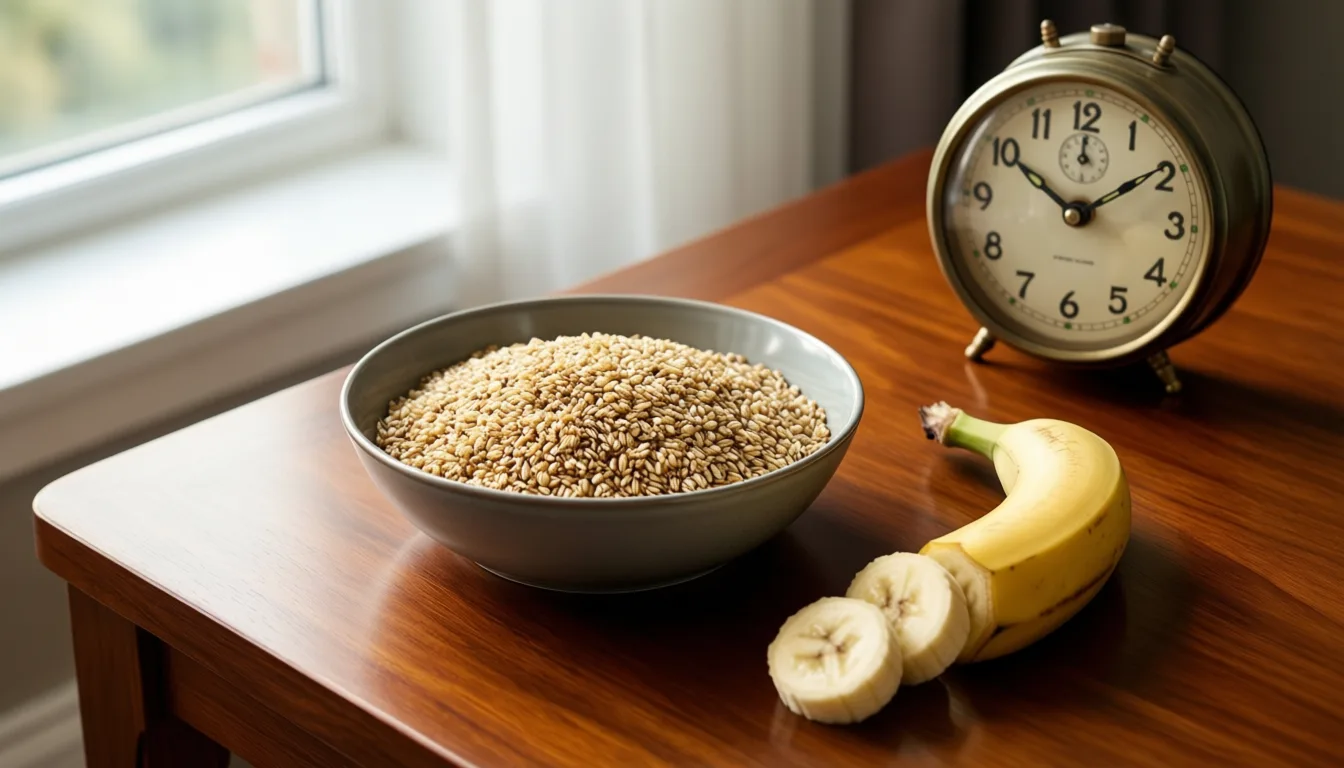
Front-loaded eating windows are one of four chrononutrition strategies the reviewers map.
The same meal eaten at 8 a.m. and at 11 p.m. is not the same meal.
The starch that survives
If chrononutrition is about when food arrives, resistant starch is about what survives the journey. Most starch is hydrolyzed in the small intestine and absorbed as glucose. Resistant starch escapes that fate and reaches the colon intact, where it becomes substrate for the microbiome. Among the five recognized types, RS5 has a quietly unusual architecture. The review in Engineering Microbiology describes it as a self-assembled V-type inclusion complex: amylose helices that, once the native granule is disrupted, wrap around a guest molecule — a fatty acid, a polyphenol, a flavor compound — through non-covalent interactions.
That geometry is the whole story. The helical cage resists digestive enzymes, slows fermentation in the colon, and offers a mechanism for targeted release of whatever bioactive is tucked inside. The reviewers frame RS5 as a structural strategy for delivering both fiber and a guest payload to the lower gut, where the microbiome can do the work.
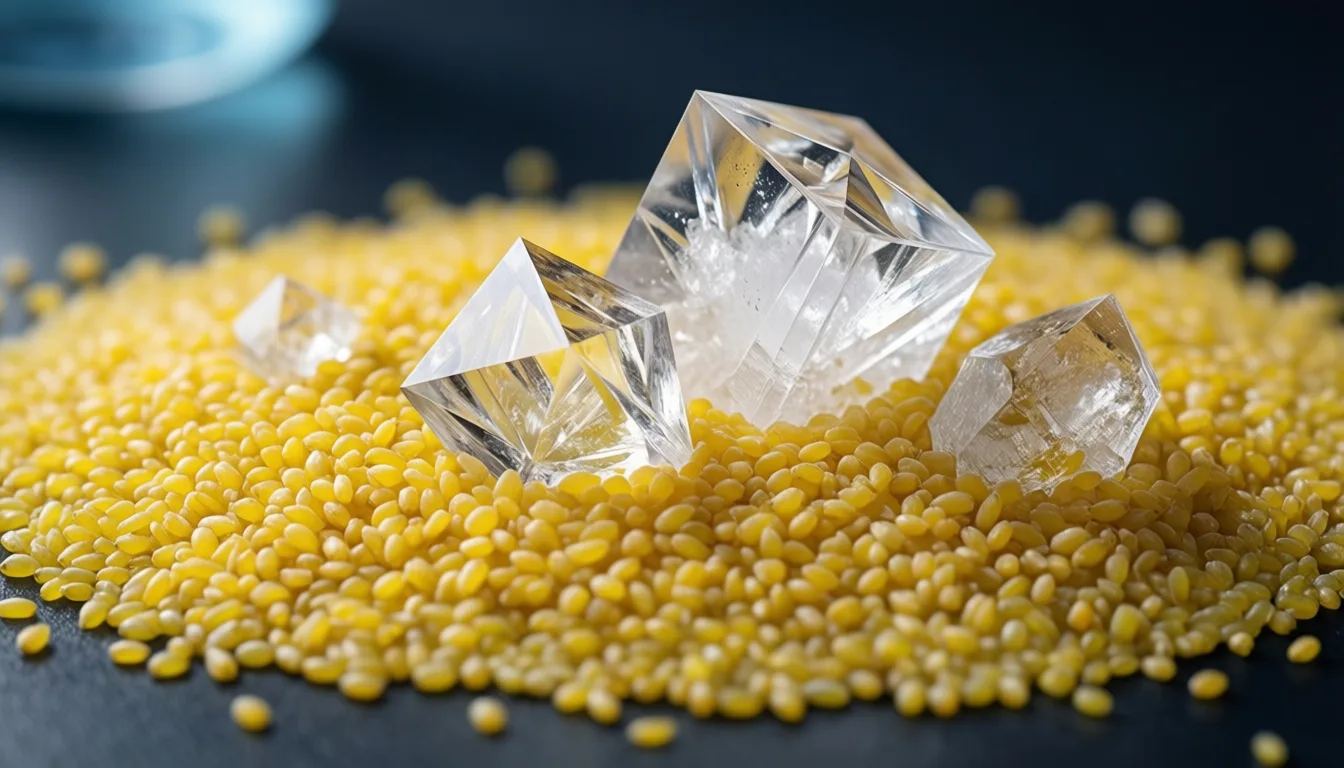
RS5's V-type helical architecture is what lets it slip past small-intestine enzymes.
Why athletes should care about butyrate
The reason the microbiome conversation keeps creeping into performance circles is short-chain fatty acids. When colonic bacteria ferment resistant starch, they produce butyrate, acetate, and propionate — small molecules with outsized roles. Butyrate is the preferred fuel for colonocytes and a key signal for intestinal barrier integrity. Acetate and propionate enter systemic circulation and interact with hepatic and peripheral metabolism. The RS5 review reports that the complex promotes beneficial taxa, suppresses pathogenic species, and shifts SCFA output upward, with knock-on effects the authors link to inflammation control and metabolic regulation, and potentially to obesity, type 2 diabetes, and colorectal cancer risk.
That last sentence deserves to sit there carefully. The review is a mechanistic synthesis, not a clinical trial. The phrase the authors use — that RS5's influence on gut microbiota and host health 'remains inadequately explored' — is the honest one. The signal is plausible and the biochemistry is elegant. The human outcome data is thinner than the mechanism deserves.
Where the two stories meet
Read together, the two reviews suggest a single thesis: the next wave of nutrition science is structural. Chrononutrition treats the eating window as a structural variable; RS5 treats the starch molecule itself as one. Both shift attention from how much to in what form, and when. For athletes whose training already pushes the system to its edges — shift workers training around night rotations, ultra-endurance athletes whose gut tolerance is the rate-limiting step, anyone managing inflammatory load across a hard block — the framing is useful even before the clinical data catches up.
What it isn't, yet, is a protocol. The chrononutrition review explicitly flags the absence of standardized assessment frameworks and the limited predictive value of preclinical models. The RS5 review flags that we still don't fully understand the structure–activity relationships of these complexes. Moderate evidence means moderate language: these are working hypotheses with real mechanistic teeth, not finished recommendations.
The performance-nutrition stack of 2030 may look less like a macro calculator and more like a calendar with a fermentation map attached. The clock and the colon, in other words, are about to get a lot more interesting.
Frequently asked questions
What is chrononutrition, and why does meal timing matter?
Chrononutrition is the study of food as a circadian input, based on the idea that the same meal eaten at 8 a.m. and at 11 p.m. is not the same meal. Peripheral clocks in the liver, gut, and muscle synchronize partly through feeding signals, so when those signals are scattered across a long eating window, the system goes out of sync. The article frames this as a four-dimensional approach covering time window, energy distribution, macronutrient pattern, and bioactive compounds.
What makes resistant starch type 5 (RS5) different from other resistant starches?
RS5 has a V-type inclusion complex architecture in which amylose helices wrap around a guest molecule — such as a fatty acid or polyphenol — through non-covalent interactions. This helical cage resists digestive enzymes and allows RS5 to reach the colon intact. The article describes this structural property as the mechanism behind RS5's ability to deliver both fiber and a bioactive payload to the lower gut.
What are short-chain fatty acids, and what role do they play?
Short-chain fatty acids — butyrate, acetate, and propionate — are produced when colonic bacteria ferment resistant starch. Butyrate is the preferred fuel for colonocytes and a key signal for intestinal barrier integrity, while acetate and propionate enter systemic circulation and interact with hepatic and peripheral metabolism. The article links RS5's promotion of these molecules to inflammation control and metabolic regulation.
Is the article recommending a specific eating window or RS5 supplementation protocol?
No — the article is explicit that neither story has reached the level of a protocol. The chrononutrition review flags the absence of standardized assessment frameworks and the limited predictive value of preclinical models, and the RS5 review acknowledges that structure–activity relationships are still poorly understood. The article describes both as working hypotheses with real mechanistic basis, not finished recommendations.
Why does the article describe circadian rhythm disruption as a 'concealed epidemic'?
The article borrows that phrase from a 2026 review, which uses it to describe how urban light pollution and globalized schedules quietly disrupt the body's internal clocks. Shift work and exposure to blue light at night are cited as primary drivers. Because the disruption is gradual and widespread rather than acute, it goes largely unrecognized despite its metabolic consequences.
Sources
- Dietary nutritional strategies for circadian rhythm regulation: advances, challenges and future directions. — Critical reviews in food science and nutrition
- Effect of resistant starch type 5 on gut health through modulating gut microbiota. — Engineering microbiology
Join the conversation
Comments are moderated and reviewed before they appear. Be constructive — this is health information.
Add your comment