Epigenetic Clocks and Spit Tests: The New Toolkit for Tracking How You're Really Aging
At-home longevity tests are graduating from gimmick to research-grade. Here's what second-generation DNA clocks and saliva-based oxidative stress assays actually measure — and what they still can't tell you.
Okay, real talk: I used to think "biological age" was a wellness-influencer party trick. You spit in a tube, a website tells you you're 27 instead of 31, you post a screenshot, the algorithm rewards you. Cute. But here's the thing — while the marketing got loud, the actual science got serious. Researchers are now publishing public-health-level reviews of the DNA tests behind those numbers, and a separate group of chemists just figured out how to measure one of the body's most important damage signals from plain old saliva. Two very different tools, same big question: can we finally track aging in a way that's useful, not just shareable?
First, the obvious beginner question: what even is an epigenetic clock?
Think of your DNA as a piano. Every cell has the same keys, but "epigenetic" markers — little chemical tags called methylation — decide which keys actually get played. As we age, the pattern of those tags shifts in predictable ways. A few years ago, scientists realized they could read those patterns and estimate someone's age from a blood or saliva sample. That's an epigenetic clock.
The first versions were impressive party tricks — they could guess your chronological age within a few years. But guessing the number on your driver's license isn't that useful. The newer, second-generation clocks try to do something harder and more interesting: estimate your risk of getting sick or dying sooner, based on how your methylation pattern compares to people who later developed disease. A 2025 review in the Annual Review of Public Health walks through how these second-gen clocks are built and why they matter for preventive medicine, early detection, and even measuring whether a lifestyle change is actually doing anything inside your cells.
- Second-generation epigenetic clocks are designed to predict morbidity and mortality risk, not just guess your chronological age.
- Validity still has caveats: the public-health review flags real questions about how these clocks perform across race, sex, lifestyle, and environment.
- Saliva isoprostanes — markers of lipid damage from oxidative stress — can now be measured non-invasively with a new lab workflow.
- The method is sensitive but early: it's an analytical chemistry advance, not yet a validated consumer test or a diagnostic.
- Bottom line: the toolkit is maturing, but a number from a tube is not a diagnosis. Talk to a clinician before acting on any result.
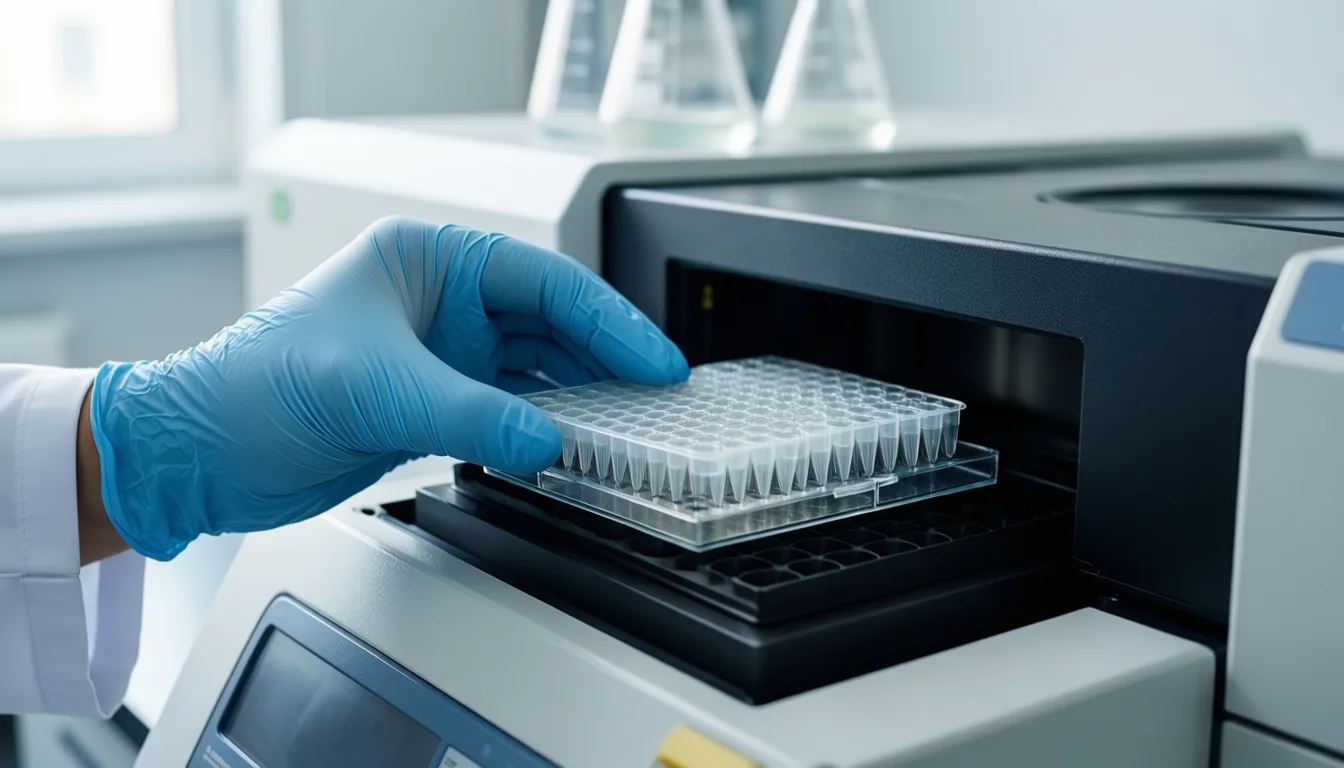
The new saliva method runs 96 samples at once and uses far less organic solvent than older workflows — small things that decide whether a test ever leaves the research lab.
Why "second-generation" is the word doing all the work
Here's where the marketing and the science quietly part ways. Plenty of at-home tests will hand you a single "biological age" number and call it a day. But the researchers behind the field are more careful. The Annual Review survey emphasizes that the clocks worth paying attention to are the ones trained to predict actual health outcomes — chronic disease, mortality — not just to match a birthday.
That same review also does something refreshingly grown-up: it lists the limitations. How well do these clocks work across different racial and ethnic groups? Do they behave the same in men and women? How much do lifestyle factors and environmental exposures push the numbers around, and in ways we can interpret? The honest answer, per the review, is that the validity questions are still being worked out. That's not a reason to dismiss the tech — it's a reason to read the fine print on any product built on it.
A biological-age number is a research signal in a consumer wrapper. Treat it like a weather forecast, not a verdict.
Meanwhile, in the spit lab
The other half of this story is happening on a totally different bench. Oxidative stress — the slow chemical wear-and-tear from reactive molecules damaging your cells — is one of the suspected drivers of aging and chronic disease. The classic way to measure it is to look for isoprostanes, which are basically the molecular crumbs left behind when fats in your cell membranes get oxidized. They're considered the gold-standard marker for that kind of lipid damage.
The catch: measuring them has traditionally meant blood or urine, and a finicky lab process. A 2024 methods paper in Talanta changes the substrate. The team developed a workflow using a technique called parallel artificial liquid membrane extraction (PALME) paired with LC-MS/MS — a heavy-duty mass spectrometry setup — to detect isoprostanes directly in oral fluid. Translation: spit, no needle, no catheter, and sensitive enough to pick up baseline levels in healthy people.
A few things make this more than a novelty. The method achieved detection limits in the single-digit picograms-per-milliliter range, kept matrix interference low, and uses minimal organic solvent — the authors frame it as a "Green Analytical Chemistry" approach. It also processes 96 samples at once, which is the kind of throughput you need before any test has a shot at becoming routine.
What this actually means for you (and what it doesn't)
Let's keep this honest. The epigenetic clock review is a survey of where the science stands — promising, maturing, but still working through questions of validity across different populations. The saliva isoprostane paper is an analytical chemistry advance — a better way to measure a thing, not a clinical study showing that the measurement predicts your future health. Neither paper hands you a personal action plan.
What they do, together, is sketch the next chapter of at-home longevity testing. The trajectory is toward biomarkers that are non-invasive, scalable, and increasingly grounded in real outcomes data rather than vibes. That's genuinely exciting. It's also the moment to be the most skeptical, because every advance in the lab gets repackaged at consumer speed, and the gap between "we can measure this" and "you should change your life based on this" is wider than the marketing usually admits.
The optimistic-but-skeptical takeaway
I'll admit it — reading these two papers back to back made me more interested in this field, not less. The honest framing in the epigenetic clock review, plus the quiet, careful methods work in the saliva isoprostane paper, are exactly what you want to see in a science that's growing up. Less "miracle test," more "here's what we can measure, here's what we can't, here's what we're still figuring out."
So no, your spit is not yet a crystal ball. But the tools that read it are getting sharper, more transparent about their limits, and — crucially — easier to use without a needle. That's a category worth watching, with eyes open.
Frequently asked questions
What is an epigenetic clock, and how does it estimate age?
Epigenetic clocks read the pattern of chemical tags called methylation on your DNA, which shift in predictable ways as you age. Scientists can analyze those patterns from a blood or saliva sample to estimate how old you are biologically.
How are second-generation epigenetic clocks different from earlier versions?
First-generation clocks were designed mainly to guess your chronological age from a sample. Second-generation clocks are trained to predict actual health outcomes — chronic disease and mortality risk — by comparing your methylation pattern to people who later developed disease, making them more relevant for preventive medicine.
Are these epigenetic clocks equally reliable for everyone?
Not necessarily. The Annual Review of Public Health survey flagged open questions about how well these clocks perform across different racial and ethnic groups, between men and women, and in people with varying lifestyle factors and environmental exposures. Those validity questions are still being worked out.
What are isoprostanes, and why does measuring them matter?
Isoprostanes are molecular byproducts left behind when fats in cell membranes get oxidized, and they are considered the gold-standard marker for lipid damage caused by oxidative stress. Oxidative stress is one of the suspected drivers of aging and chronic disease, so measuring isoprostanes is a way to assess that underlying cellular wear-and-tear.
Is the new saliva isoprostane test something I can use at home today?
No — the paper describing it is an analytical chemistry advance, not a validated consumer test or a diagnostic. The article notes that the gap between 'we can measure this' and 'you should change your life based on this' is wider than the marketing usually admits, and that big decisions belong in a conversation with a clinician.
Join the conversation
Comments are moderated and reviewed before they appear. Be constructive — this is health information.
Add your comment