
Epigenetic Clocks Have a Quiet Problem — and Maybe a New Opportunity
Consumer biological-age tests promise a number that tells you how fast you're aging. A new analysis suggests the signal underneath that number isn't quite what we thought.
The pitch is irresistible: spit in a tube, mail it off, and a few weeks later a dashboard tells you your real age — the one your cells believe, not the one on your driver's license. Epigenetic clocks have become the marquee biomarker of the longevity era, the number that anchors supplement stacks, sleep protocols, and the entire vocabulary of looksmaxing-for-the-inside. But a quietly important paper published this summer suggests the readout those clocks rely on may be partly measuring something other than methylation at all — and that the field, and the consumer market built on top of it, has some math to redo.
Epigenetic clocks work by reading DNA methylation: small chemical tags on the genome that shift in predictable patterns as we age. The standard lab workflow uses bisulfite conversion, a chemistry step designed to distinguish methylated from unmethylated cytosines so an array can quantify the difference. Feed enough of those readings into a regression model, train it against the known ages of thousands of donors, and you get a clock — a number that tracks chronological age with uncanny accuracy and, in some configurations, claims to predict biological age too.
The new analysis, published in GeroScience in July 2025, pulls on a loose thread in that workflow. The researchers report that methylation array signals can predict chronological age even without the bisulfite conversion step — the step that is supposed to make the measurement about methylation in the first place. In other words, something else in the signal is carrying age information, and the clocks have been quietly riding along on it.
The team calls these confounders "pseudomethylation" signals: array readings shaped by non-methylation factors that nonetheless correlate with age. Some of this appears tied to sequence variation — genotype-dependent quirks in how probes bind to DNA. The authors note that epigenetic clock sites are overrepresented near genomic regions whose methylation state depends on sequence variants, suggesting that part of what clocks have been learning is genetic, not epigenetic.
Part of what the clocks have been learning is genetic, not epigenetic — and nobody told the dashboard.
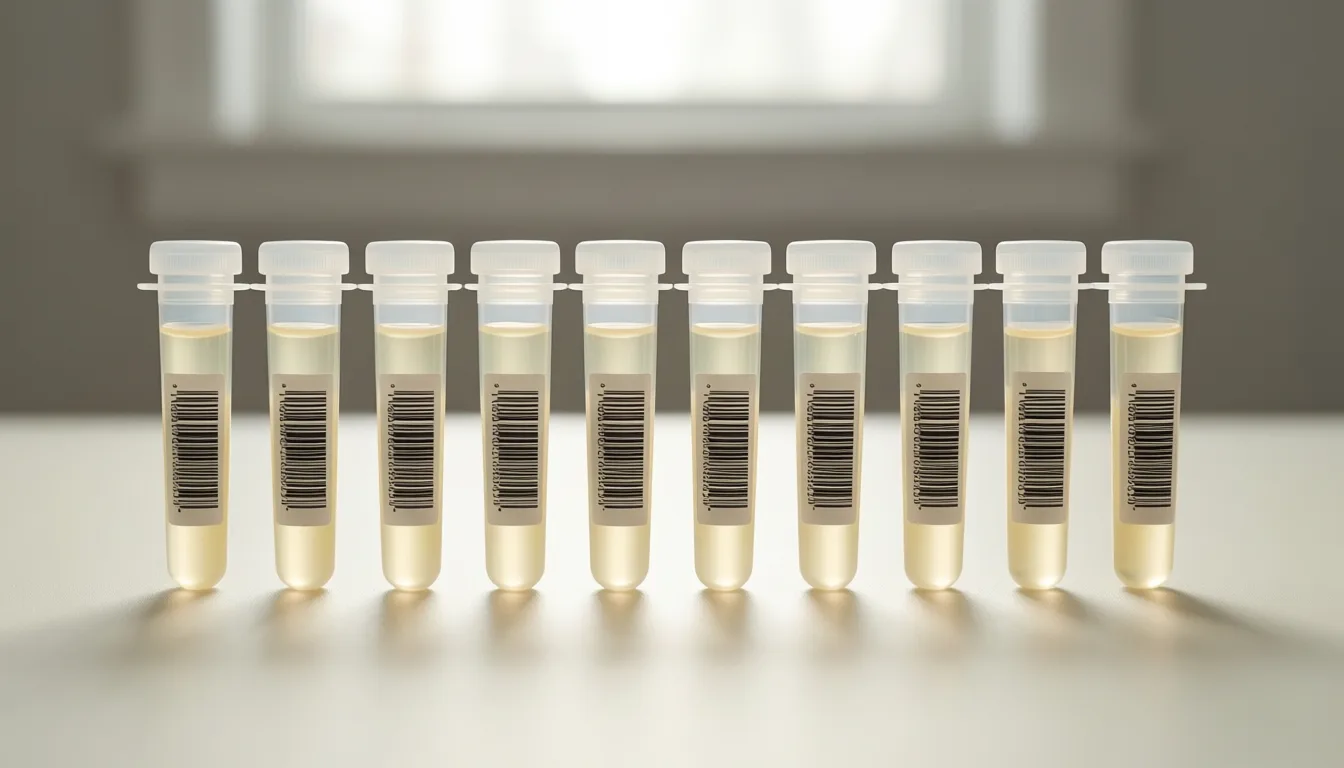
Consumer biological-age kits have multiplied faster than the science underneath them has settled.
Why this matters for the kit on your bathroom counter
If you have spent any time in the longevity corner of the internet, you have seen the screenshots: a user posts their epigenetic age before a protocol and again six months later, triumphantly two or three years younger. That delta is the entire emotional product of a consumer clock. It is also the part most vulnerable to the issues the new paper raises.
Two implications stand out. First, if non-methylation factors are partly driving the age signal, then small technical shifts — a different array lot, a different lab, a different sample type — could nudge a result in ways that have nothing to do with how well you slept or how clean your diet got. Second, if genotype is baked into the signal, then a portion of the "age" being reported is, in effect, a fixed feature of the person being tested, not a dynamic readout of how they are living. Neither point invalidates epigenetic clocks. Both complicate the way their outputs are currently marketed.
The authors are careful, and so should we be. They do not argue that methylation is irrelevant to aging — the broader literature on that point is substantial. They argue that quantifying these covariates will be critical to building better clocks and designing appropriate studies of epigenetic aging. That is a methods critique, not a demolition. But methods critiques are exactly the kind of thing that should travel from the journal to the product page before a consumer pays two or three hundred dollars for a number.
- The signal is mixed. A 2025 analysis finds methylation arrays can predict age without the chemistry step that is supposed to isolate methylation.
- Genotype is in there. Clock sites cluster near regions whose readings depend on sequence variants, meaning some of the "age" signal is fixed at birth.
- Small changes may not mean much. A modest year-over-year shift on a consumer report could reflect technical noise rather than a lifestyle win.
- The science isn't broken — it's maturing. The authors frame this as a roadmap for better clocks, not a verdict against them.
- Treat the number as one data point. Sleep, body composition, cardiometabolic markers, and how you actually look and feel still carry information a clock cannot.

The dashboard is the product. The science underneath is still being audited.
The opportunity hiding inside the problem
Here is the interesting twist. The same paper that flags pseudomethylation as a confounder also reports that those signals are uniquely age predictive in their own right. That is not just a bug; it is potentially a new lane. If non-methylation array signals carry independent information about chronological age, future clocks could explicitly incorporate them — or, better, separate them — to produce a cleaner read on what is actually changing as a person ages versus what is fixed by their genome or introduced by the assay.
That is how the field tends to move. A first generation of clocks proved the concept. A second generation chased biological age, mortality risk, and pace-of-aging metrics. A third generation, if this line of work holds up, may be defined by how rigorously it strips out the confounders the early clocks were inadvertently leaning on. The consumer market will follow, eventually. It usually does.
For now, the practical posture is the unglamorous one. If you are tracking your own optimization, an epigenetic age report is a reasonable data point to collect, especially over long intervals and from the same provider using the same sample type. It is a poor scoreboard for a six-week protocol. And it is not, despite the framing on most product pages, a verdict on how well you are aging. The clocks are real instruments. They are also, as of mid-2025, instruments whose calibration is openly being revised in the literature.

The most useful response to a biological-age result is usually the least dramatic one.
The looksmaxing instinct — measure everything, optimize relentlessly — is, on balance, a good one. It is what turns vague intentions into routines that compound. But measurement only pays off when the instrument is honest about what it is measuring. The GeroScience paper is a useful reminder that the most prestigious number in longevity is still, in important ways, under construction. The smartest move is not to abandon the tools. It is to hold them at the confidence level the evidence currently supports — and to keep an eye on the next generation of clocks, which may finally tell us something the first generation only implied.
Frequently asked questions
What did the 2025 GeroScience study actually find about epigenetic clocks?
Researchers found that methylation array signals can predict chronological age even without bisulfite conversion — the chemistry step designed to isolate methylation in the first place. This means something other than methylation is carrying age information in the signal, which the authors call 'pseudomethylation' signals.
If part of the age signal reflects my genetics, does that mean my epigenetic age score is partly fixed at birth?
According to the paper, clock sites cluster near genomic regions whose readings depend on sequence variants, meaning a portion of the reported age signal is tied to genotype rather than lifestyle or biology. The article describes this as a 'fixed feature of the person being tested, not a dynamic readout of how they are living.'
Does this research mean epigenetic clocks are invalid?
The authors do not argue that methylation is irrelevant to aging, and the article characterizes the paper as a methods critique rather than a demolition. The researchers frame their findings as a roadmap for building better, more rigorously calibrated clocks.
Why might a two-year improvement on my consumer biological-age report not mean much?
The article notes that small technical shifts — such as a different array lot, lab, or sample type — could nudge results in ways unrelated to lifestyle changes. A modest year-over-year swing can easily fall within technical and biological noise rather than reflecting a genuine change in aging.
What is the recommended way to use a consumer epigenetic age report?
The article advises using the same provider over time, since cross-brand comparisons are not equivalent, and treating the score as one data point rather than a definitive verdict. It also recommends pairing results with other measurable markers — such as sleep quality, resting heart rate, body composition, and standard bloodwork — and consulting a clinician before acting on a result.
Join the conversation
Comments are moderated and reviewed before they appear. Be constructive — this is health information.
Add your comment