GLP-1s Beyond Weight Loss: What the New Heart, Muscle, and Oral-Delivery Data Actually Show
GLP-1 receptor agonists are sprawling past diabetes and obesity into cardiovascular protection, body-composition debates, and pill-form delivery. Here is what the latest wave of evidence supports — and what it doesn't.
The GLP-1 story stopped being about appetite a while ago. What started as a diabetes drug and detoured through obesity is now pushing into territory that matters to any 40-year-old paying attention to his arteries, his muscle, and the trade-offs that come with a weekly injection. Four new pieces of evidence — a body-composition meta-analysis, two mouse studies on the heart and aorta, a post-hoc look at who quits the drug, and a first credible oral formulation — give us the clearest read yet on where this class is actually going. The honest summary: the upside is real, the caveats are specific, and the hype is still ahead of the data.
- Lean mass is a real cost, not a myth. A 2025 network meta-analysis found GLP-1 weight loss is roughly 25% lean mass — but the percentage of lean mass relative to total body composition didn't change.
- Not all GLP-1s hit muscle the same way. Tirzepatide and semaglutide drove the biggest fat loss but were among the worst for preserving lean mass; liraglutide was the only agent to drop weight without significantly cutting lean mass.
- Cardiovascular signals are expanding — in mice. Liraglutide blunted abdominal aortic aneurysm progression and partially prevented diastolic dysfunction in separate 2024 mouse studies.
- Tolerance, not just efficacy, decides who stays on. In type 1 diabetes trials, lower BMI and longer disease duration predicted dropout.
- An oral version is closer than it was. A nanomicelle liraglutide formulation hit 4.6× higher bioavailability than unformulated drug in rats — promising, but preclinical.
The body-composition question, finally answered with numbers
If you are 40, lifting three days a week, and eyeing a GLP-1 for the last stubborn 15 pounds, the lean-mass question is the one that matters. A 2025 systematic review and network meta-analysis pooled 22 randomized trials and 2,258 participants and put real numbers on it. Across the class, GLP-1 receptor agonists cut total body weight by about 3.55 kg, fat mass by 2.95 kg, and lean mass by 0.86 kg — meaning roughly a quarter of the weight you lose is lean tissue.
That sounds alarming, but the same analysis offers a more nuanced read: the relative proportion of lean mass — lean as a share of total body composition — didn't budge. You're getting smaller proportionally, not selectively wasting muscle. Whether that distinction holds up over years, in non-trial populations, and in men who aren't simultaneously progressing in the gym, is a separate question the data can't yet answer.
The drug-by-drug breakdown is where this gets practical. Tirzepatide at 15 mg weekly and semaglutide at 2.4 mg weekly were the most effective for shedding weight and fat — and among the least effective at preserving lean mass. Liraglutide, at the higher 3.0 mg or 1.8 mg doses, was the only GLP-1 in the analysis to deliver significant weight loss without a significant hit to lean mass. That is not a reason to write off the newer, more potent agents — they work — but it is a reason to take resistance training and protein intake seriously if you're using one.

Resistance training is the obvious lever for anyone using a potent GLP-1 — the meta-analytic evidence suggests it is roughly a quarter of the weight loss that's at stake.
Heart signals — promising, but still mouse-stage
Two 2024 mouse studies tighten the link between GLP-1 signaling and the cardiovascular system, and both deserve to be read for what they are: mechanistic preclinical work, not human outcomes.
In the first, researchers induced abdominal aortic aneurysms in mice and then gave daily liraglutide starting at 7, 14, or 28 days after induction. Liraglutide reduced aneurysm dilation, slowed elastin degradation, and tamped down vascular inflammation and oxidative stress — and the earlier the drug was given, the better the result. That timing signal is the interesting part. It suggests the protective effect isn't just about pressure or weight; it's about catching an inflammatory remodeling process before it locks in.
The second study looked at diastolic dysfunction — the stiff-heart pattern that drives heart failure with preserved ejection fraction, a syndrome that disproportionately affects middle-aged men with metabolic baggage. Mice given angiotensin II developed predictable diastolic dysfunction; mice given angiotensin II plus liraglutide were partially protected. The proposed mechanism is unusual: liraglutide-treated hearts showed higher protein synthesis and amino-acid accumulation, suggesting that faster protein turnover may protect against the fibrotic remodeling that stiffens the ventricle. The catch — and the authors flagged it — is that those same mice lost lean muscle, raising the uncomfortable possibility that the heart was scavenging amino acids from peripheral muscle.
The earlier liraglutide was given, the better the aortic outcome. That timing signal is the interesting part.
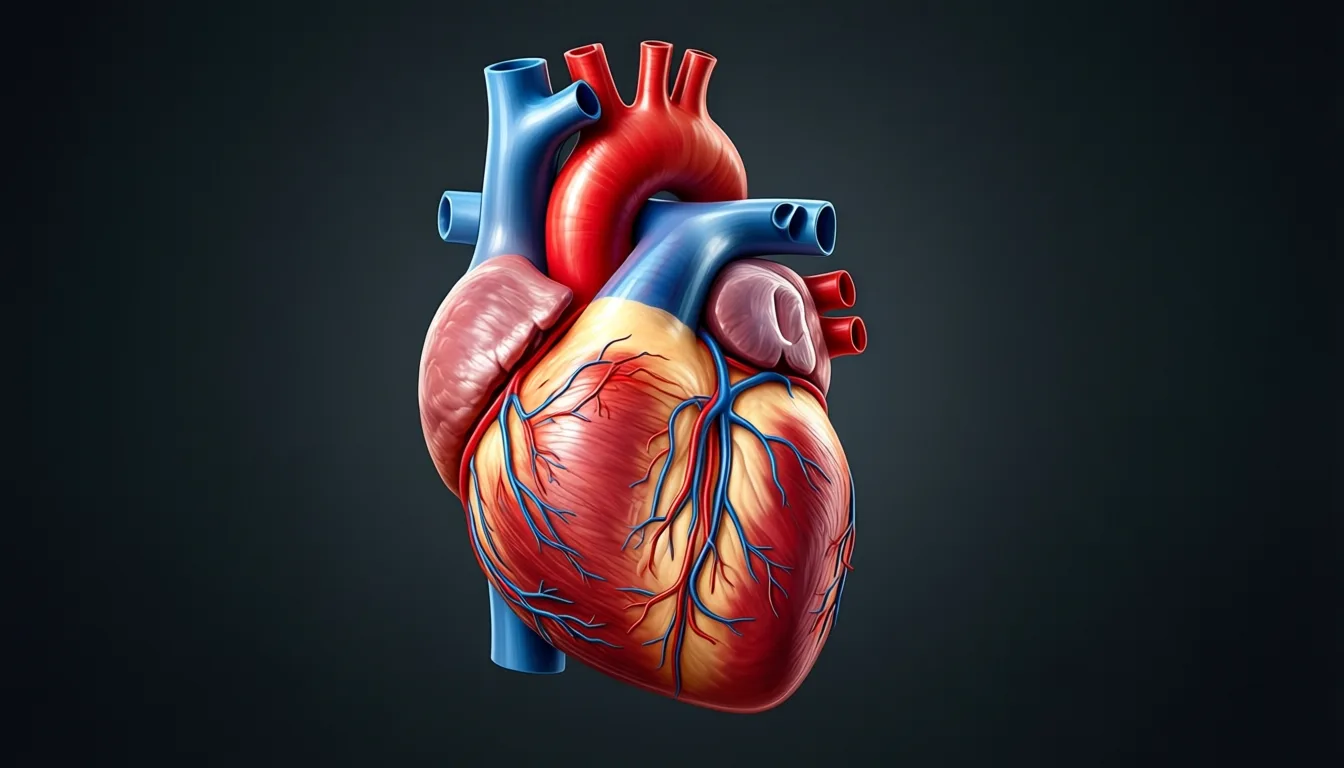
Mouse data point to two distinct cardiovascular effects of liraglutide: slowing aneurysm progression in the aorta and partially preventing the stiff-heart pattern that underlies HFpEF.
Who actually stays on the drug
Efficacy is one story; tolerance is another. A post-hoc analysis of the ADJUNCT ONE and ADJUNCT TWO trials — both testing liraglutide as an add-on to insulin in type 1 diabetes — looked at who dropped out and why. Non-completers had lower baseline BMI, longer duration of diabetes, lower insulin doses, and a higher proportion with undetectable C-peptide. Within the liraglutide arm specifically, longer disease duration and C-peptide status were the differentiators.
The takeaway for a general reader is not about T1D — it's about the principle. The people most likely to quit a GLP-1 were leaner and had less metabolic reserve. That maps onto a pattern clinicians are starting to recognize: the further you get from the obesity-and-insulin-resistance phenotype these drugs were optimized for, the more side-effect noise you encounter relative to benefit. Anyone weighing GLP-1 use should have that conversation with a clinician honestly, not aspirationally.
The pill problem, possibly cracked
Peptide drugs have a delivery problem: stomach acid and gut enzymes destroy them before they can be absorbed, which is why GLP-1s have historically meant injections. One 2024 paper takes a serious run at the problem. Researchers built an oral liraglutide formulation by electrostatically complexing the drug with bile acid derivatives and packaging it into nanomicelles using a non-ionic surfactant. The optimized formulation hit a mean particle size around 76 nm and showed permeability roughly 1,347% higher than unformulated liraglutide in a Caco-2/HT29 gut-cell model. In rats, oral bioavailability rose to about 5.14% — a 4.63-fold improvement over the unformulated drug.
Over 12 weeks of oral dosing, treated rats showed lower glycohemoglobin, lower HOMA-IR insulin-resistance scores, reduced white adipose tissue, and — interestingly — greater activation of brown adipose tissue than rats getting the standard subcutaneous injection. That last finding is intriguing because BAT activation is a different metabolic lever than appetite suppression, and it hints that oral delivery routes may interact with metabolism differently than the subcutaneous route we've assumed is the gold standard.
None of this is in humans yet. But it is a credible mechanistic blueprint for a pill version of a peptide that, until recently, the field largely conceded would always need a needle.
Bile-acid–based nanomicelles boosted oral liraglutide bioavailability 4.6-fold in rats — a meaningful proof-of-concept for peptide pills.
What this actually changes for you
The headline reframing: GLP-1s are becoming a multi-organ platform, not a weight-loss class. The body-composition data is the strongest of the four — it's human, randomized, and meta-analyzed — and it argues that if you use the most potent agents, you treat resistance training and protein as non-negotiable, not optional. The cardiovascular signals are real but preclinical; treat them as reasons to watch the next round of human trials, not as reasons to act now. The oral formulation work matters more for the field than for any individual reader this year, but it does suggest that the injection era of GLP-1s may be shorter than expected.
What it does not change: this is still a prescription drug class with a real side-effect profile, real costs, and a real set of people for whom the risk-benefit math doesn't pencil out. The post-hoc dropout data is a quiet reminder that the people the drug works least gracefully for are often the people most eager to try it. If a GLP-1 is on your shortlist, the right move is a candid conversation with a clinician who knows your metabolic baseline — not a Reddit thread and not this article.
Frequently asked questions
How much of the weight lost on GLP-1s is lean mass versus fat?
A 2025 network meta-analysis of 22 randomized trials found that across the GLP-1 class, roughly 25% of weight lost is lean tissue rather than fat. However, the same analysis found that the relative proportion of lean mass as a share of total body composition did not change, meaning users become proportionally smaller rather than selectively losing muscle.
Which GLP-1 drug is best at preserving lean mass?
Liraglutide was the only agent in the meta-analysis to deliver significant weight loss without a significant reduction in lean mass. By contrast, tirzepatide and semaglutide — the most effective drugs for shedding total weight and fat — were among the least effective at preserving lean mass.
What did recent research find about GLP-1s and heart health?
Two 2024 mouse studies found that liraglutide slowed abdominal aortic aneurysm progression and partially protected against diastolic dysfunction, the stiff-heart pattern that underlies heart failure with preserved ejection fraction. These findings are preclinical, and human trials in those specific indications have not yet reported results.
Who is most likely to drop out of GLP-1 treatment?
A post-hoc analysis of liraglutide trials found that people with lower baseline BMI, longer disease duration, lower insulin doses, and less metabolic reserve were most likely to discontinue. The article notes this reflects a broader pattern: the further a person is from the obesity-and-insulin-resistance profile these drugs were designed for, the more side-effect noise they tend to encounter relative to benefit.
Is an oral GLP-1 formulation available yet?
Not on the delivery platform described in the article. A nanomicelle liraglutide formulation achieved 4.6 times higher bioavailability than unformulated drug in rats, but this research is preclinical — no oral liraglutide on this platform has been approved.
Sources
- Effect of glucagon-like peptide-1 receptor agonists and co-agonists on body composition: Systematic review and network meta-analysis. — Metabolism: clinical and experimental
- Glucagon-Like Peptide-1 Inhibits the Progression of Abdominal Aortic Aneurysm in Mice: The Earlier, the Better. — Cardiovascular drugs and therapy
- Liraglutide Protects Against Diastolic Dysfunction and Improves Ventricular Protein Translation. — Cardiovascular drugs and therapy
- Determinants of Liraglutide Treatment Discontinuation in Type 1 Diabetes: A Post Hoc Analysis of ADJUNCT ONE and ADJUNCT TWO Randomized Placebo-Controlled Clinical Studies. — Journal of diabetes science and technology
- An oral liraglutide nanomicelle formulation conferring reduced insulin-resistance and long-term hypoglycemic and lipid metabolic benefits. — Journal of controlled release : official journal of the Controlled Release Society
Join the conversation
Comments are moderated and reviewed before they appear. Be constructive — this is health information.
Add your comment