
Lasers, Light, and Senescent Skin: What the Evidence Actually Shows
Premium energy-based devices promise to roll back skin aging. A new systematic review asks whether they truly act on the biology of senescence — or just polish the surface.
The pitch for premium aesthetic devices has quietly shifted. Where clinics once sold smoother skin, the new vocabulary borrows from longevity science: senescence, signaling, cellular rejuvenation. The implication for the executive paying four figures a session is that lasers, radiofrequency, ultrasound, and light therapies aren't just resurfacing the face — they're reaching the biology underneath it. A 2025 systematic review in Lasers in Surgery and Medicine set out to test whether that story holds up.
- The review is small. Only 23 original studies met inclusion criteria — a thin base for sweeping claims.
- The direction is encouraging. Across lasers, light-based, and other energy devices, treatments trended toward reducing markers of cellular senescence.
- The mechanism proposed is hormesis — a controlled stress that nudges aged cells back toward healthier signaling.
- Clinical ≠ cellular. Looking better in the mirror doesn't automatically mean senescent cells were cleared.
- Spend accordingly. Treat these devices as plausible, not proven, longevity interventions.
Cellular senescence is one of the load-bearing ideas in modern aging biology. As cells accumulate damage, some stop dividing but refuse to die, lingering in tissue and leaking inflammatory signals that degrade the cells around them. Skin shows this vividly: thinner dermis, slower repair, a dulled response to everyday insults. If an aesthetic device could reduce that burden, it would be doing something categorically different from a filler or a peel.
That is the question a team led by Kelm and Murphrey took to the literature. Following PRISMA methodology, they searched PubMed, EBSCO, and Web of Science for studies evaluating whether lasers, radiofrequency, ultrasound, photobiomodulation, photodynamic therapy, and intense pulsed light produced measurable effects on senescence at the cellular level. Twenty-three original articles met the bar — six on lasers, eleven on light-based modalities, and six on other energy devices.
What the review actually found
The headline conclusion is cautiously positive. Across the included work, these technologies demonstrated a positive effect on cellular senescence, alongside the clinical improvements in age-related skin changes that have made them a fixture of premium dermatology. The authors also note that the devices appeared to minimize neocarcinogenesis — that is, they didn't seem to be seeding new cancers while remodeling tissue, a question worth asking of any treatment that deliberately injures skin to provoke repair.
The mechanism the reviewers propose is hormesis: a controlled, sub-injurious stress that triggers adaptive repair pathways. Heat, light, or mechanical energy delivered at the right dose may push aged cells to either re-enter healthier signaling states or be cleared, restoring the molecular conversations that keep young skin resilient. The authors frame this as a converging fundamental mechanism promoting skin anti-fragility and longevity.
It is an elegant story. It is also, by the authors' own admission, built on thin ground.
Literature evaluating the impact of lasers and energy-based devices on cellular senescence is scarce. Kelm & Murphrey, Lasers in Surgery and Medicine, 2025
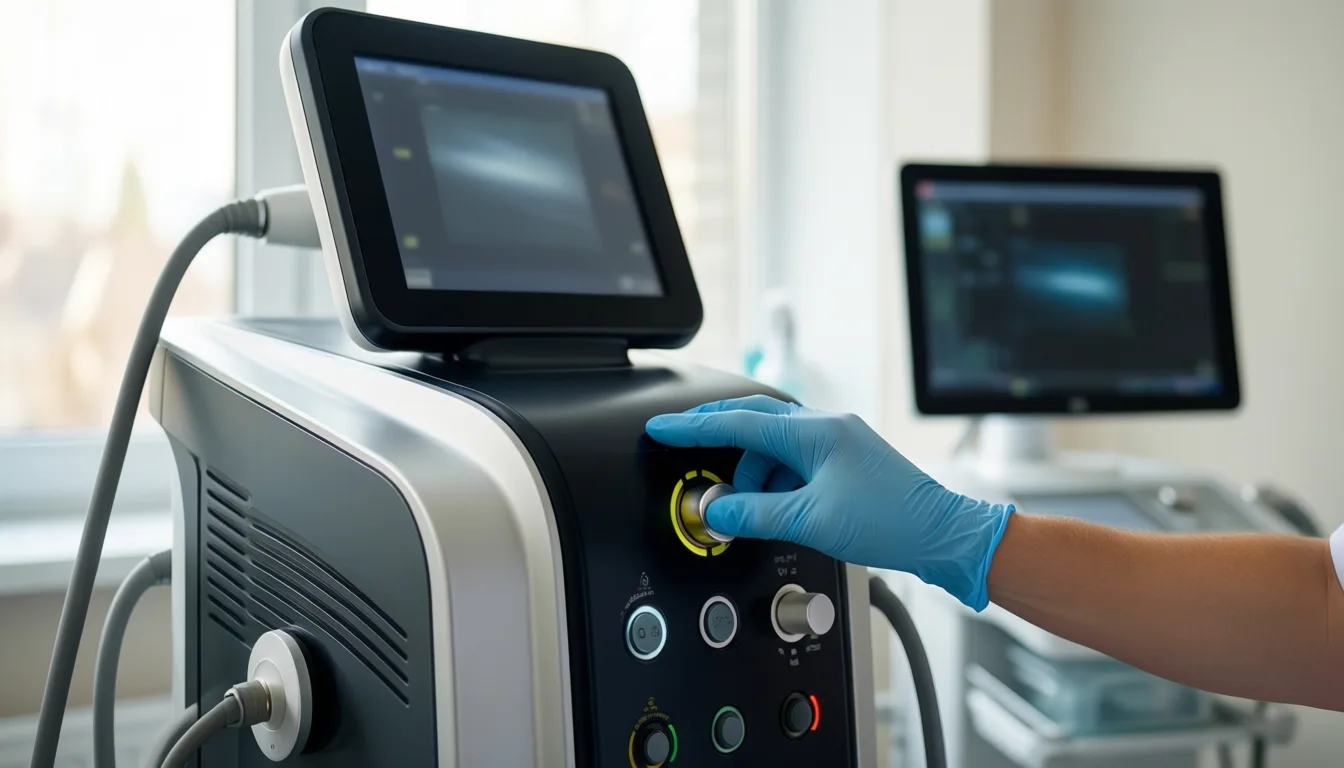
Energy-based devices span lasers, radiofrequency, ultrasound, and light — each delivering a different kind of controlled stress.
Why the evidence rating is moderate, not strong
Three things should temper enthusiasm. First, the size of the evidence base. Twenty-three studies across six distinct technology categories means most individual modalities are supported by only a handful of papers — sometimes in vitro, sometimes in animal models, sometimes in small human cohorts. A systematic review is only as strong as what it can find, and the authors are explicit that the literature in this area is scarce.
Second, the gap between clinical outcomes and cellular ones. A laser that smooths fine lines is doing something to the tissue — but the visible result can be driven by collagen remodeling, water content, or pigment changes without any meaningful shift in senescent-cell burden. The studies that look at both, the ones that matter most, are still a minority of the field.
Third, heterogeneity. The review groups together devices with very different physics: ablative and non-ablative lasers, monopolar and bipolar radiofrequency, focused ultrasound, red and near-infrared photobiomodulation. The dose, depth, and biological target vary enormously. A positive signal in aggregate does not mean every device in every clinic is delivering the same biological effect.

Treat device sessions like any optimization decision: define the outcome, set a review date, and don't extrapolate from a marketing claim.
How to read this if you're already booking sessions
For readers already spending on energy-based treatments — or weighing whether to start — the practical translation is straightforward. The biology is plausible. The early signal points in the right direction. The case that you are buying genuine cellular rejuvenation, rather than excellent surface remodeling, is not yet made.
That changes how to evaluate a provider's pitch. Claims that a device "reverses cellular aging" or "clears senescent cells" outrun what 23 mixed studies can support. Claims that a device produces measurable clinical improvement in age-related skin changes, with an emerging cellular rationale, are honest. The difference is worth noticing before you commit to a package.
It also reframes the longevity-stack question. If hormesis really is the shared mechanism, energy-based devices sit in the same conceptual family as exercise, sauna, and cold exposure — controlled stressors that ask the body to adapt. None of those need to displace the others, and none of them, on current evidence, are a substitute for sleep, sun protection, and the basics that drive most of how skin ages in the first place.
The most useful thing the Kelm and Murphrey review does is name the question out loud. For years, energy-based devices have been sold on appearance and bought on aspiration. Asking whether they touch the biology of aging — and being honest that the answer is maybe, and we need more work — is how this category earns its place in a serious longevity conversation. The next few years of research will decide whether the senescence story is a real mechanism or a premium marketing frame. For now, the responsible posture is interested, patient, and unwilling to pay for certainty that isn't there yet.
Frequently asked questions
How many studies did the 2025 systematic review include, and what types of devices did they cover?
The review included 23 original studies — six on lasers, eleven on light-based modalities, and six on other energy devices. Technologies examined included lasers, radiofrequency, ultrasound, photobiomodulation, photodynamic therapy, and intense pulsed light.
What is the mechanism the reviewers propose to explain how these devices might affect cellular senescence?
The reviewers propose hormesis — a controlled, sub-injurious stress that triggers adaptive repair pathways. Heat, light, or mechanical energy delivered at the right dose may push aged cells to re-enter healthier signaling states or be cleared, restoring the molecular activity that keeps younger skin resilient.
Does visible skin improvement after a treatment mean senescent cells were actually reduced?
Not necessarily. A laser that smooths fine lines can produce visible results through collagen remodeling, changes in water content, or pigment shifts without any meaningful shift in senescent-cell burden. Studies that measure both clinical and cellular outcomes are still a minority of the field.
Why do the authors rate the evidence as moderate rather than strong?
Three factors temper the findings: the evidence base is thin, with only 23 studies spread across six distinct technology categories; the gap between clinical and cellular outcomes means looking better doesn't confirm senescence was reduced; and the review groups together devices with very different physics, so a positive aggregate signal doesn't mean every device produces the same biological effect.
What does the review say about the cancer risk of using devices that deliberately injure skin to provoke repair?
The authors note that the devices appeared to minimize neocarcinogenesis, meaning they did not seem to be seeding new cancers while remodeling tissue — a question the reviewers considered worth raising given that these treatments deliberately stress the skin.
Sources
- The Impact of Lasers and Energy-Based Devices on Cellular Senescence: A Systematic Review. — Lasers in surgery and medicine
Join the conversation
Comments are moderated and reviewed before they appear. Be constructive — this is health information.
Add your comment