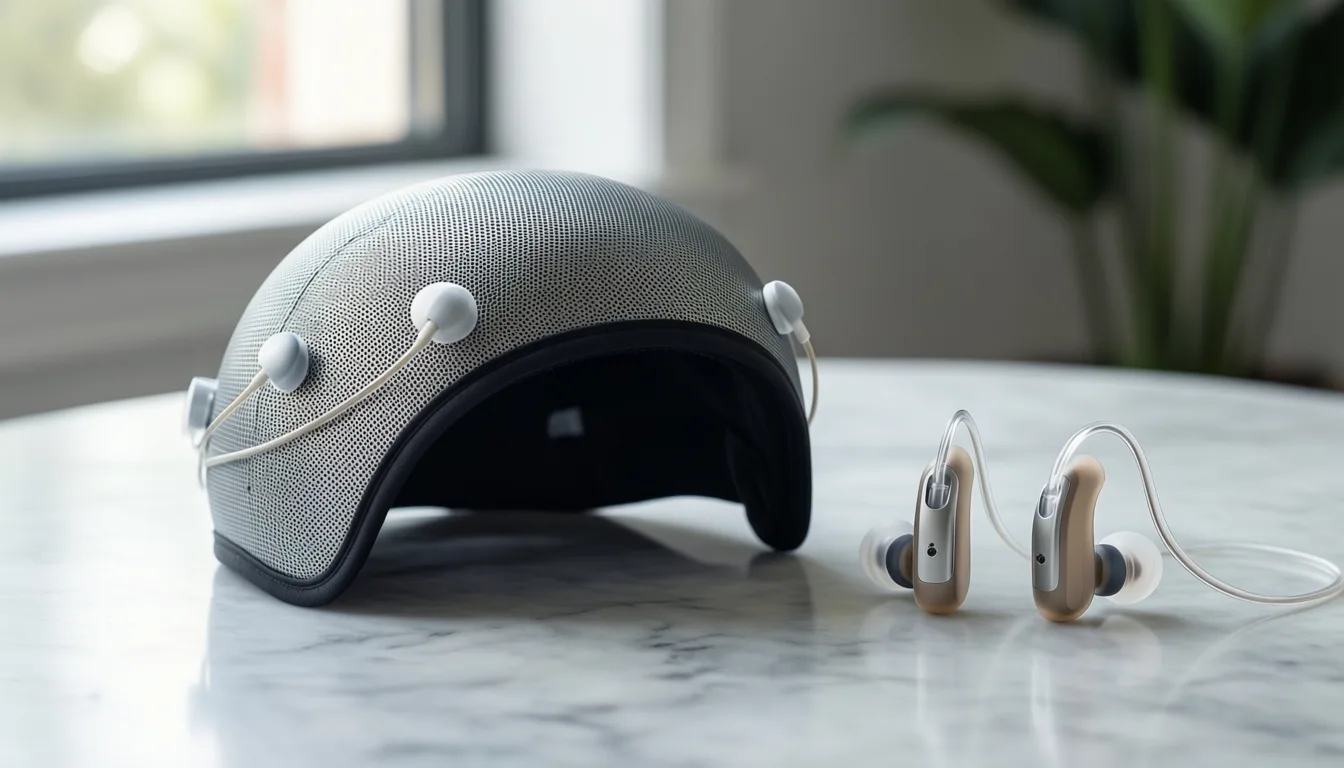
Hearing Loss and the Aging Brain: An EEG Window on Dementia Risk
A small new study finds that poorer hearing tracks with a specific resting-brain signature long linked to cognitive decline — early evidence, but it sharpens an already-compelling case.
The longevity conversation has spent years sprinting between cold plunges, peptides, and continuous glucose monitors, while one of the most boring interventions on the menu kept quietly outperforming the trend cycle. Hearing care. Not glamorous, not biohackable, not photogenic — but increasingly central to any serious conversation about protecting the brain you intend to live inside for the next forty years. A new exploratory study now adds a small but intriguing piece to that picture, suggesting the link between hearing loss and dementia risk may be visible in the resting electrical rhythms of the brain itself.
Hearing loss has been identified for years as one of the largest modifiable risk factors for dementia. That word — modifiable — is what makes it interesting to anyone optimizing for the long arc. You cannot edit your genome at brunch, but you can, in theory, address your hearing. What has been missing is a clear mechanistic story: how, exactly, does diminished hearing translate into a brain that ages less gracefully? A 2026 paper in Frontiers in Neuroscience takes a careful exploratory swing at that question, using resting-state EEG to look for neural fingerprints that connect the two.
The researchers recruited 62 community-dwelling adults, mostly in middle and later life, and measured three things at once: how well they could hear (via pure-tone-average testing, speech-in-noise performance, and self-reported difficulty), how their brains behaved at rest (oscillatory power in the alpha and theta bands, plus individual alpha frequency), and how their working memory held up. The premise: if hearing loss really is shaping the aging brain, you might see it written into the resting EEG signatures that neuroscientists already associate with pathological brain aging. The team reported small-to-moderate correlations across the board, with one relationship reaching statistical significance — greater pure-tone-average hearing loss was associated with lower alpha-band power at rest.
Why alpha waves matter
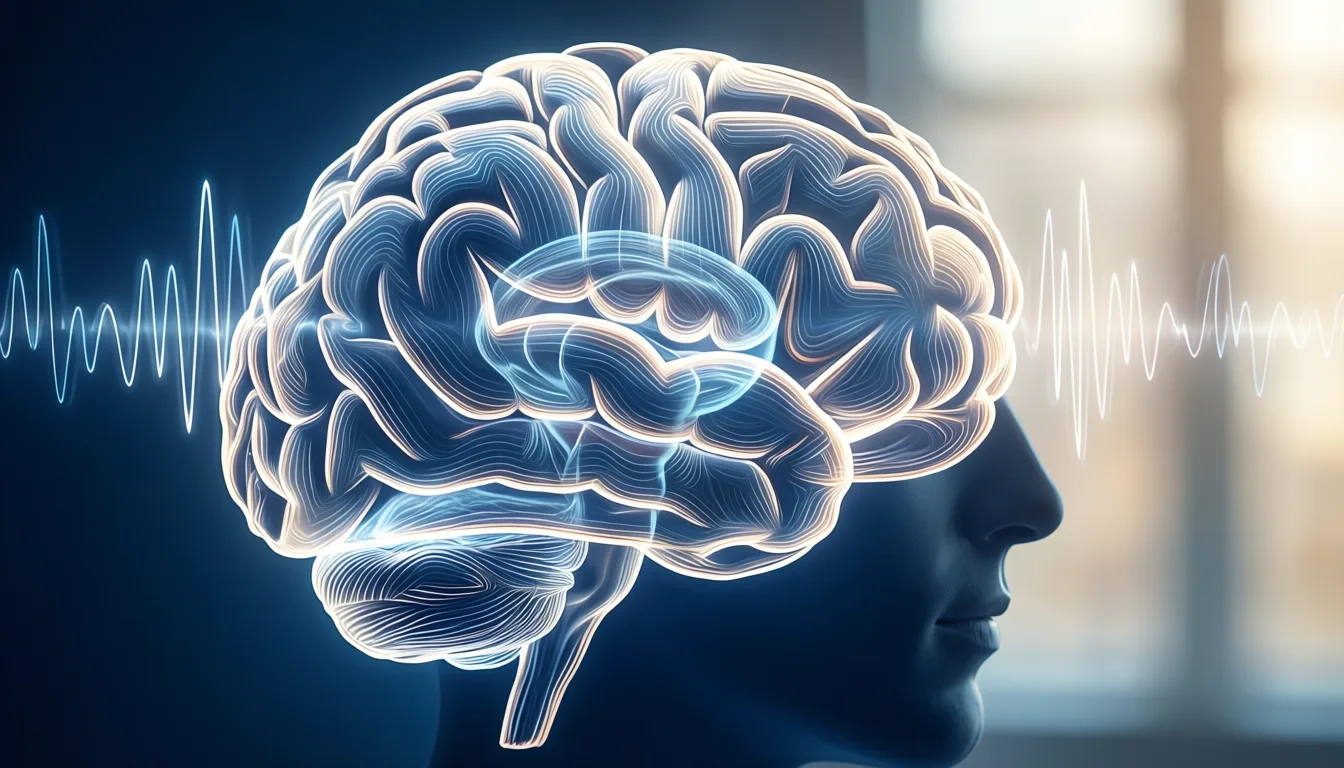
Alpha oscillations — the 8–13 Hz rhythm that dominates the resting brain — are not a wellness-influencer abstraction. They are one of the most studied signatures in human electrophysiology, and reductions in alpha power and slowing of the individual alpha frequency have been reported in older adults whose cognition is sliding toward impairment. Finding that people with worse measured hearing also show lower resting alpha power is, in plain terms, a hint that the same neural pattern flagged in cognitive aging research may track with the ears, too.
The keyword, though, is hint. The correlation in this exploratory analysis was modest (bivariate rho ≈ −0.25), the cohort was small, and the design cannot tell us whether hearing loss is driving the brain change, whether shared aging processes drive both, or whether something else upstream is pulling the strings. Speech-in-noise ability and self-reported hearing difficulty did not show the same significant link. This is a signal worth watching, not a verdict.
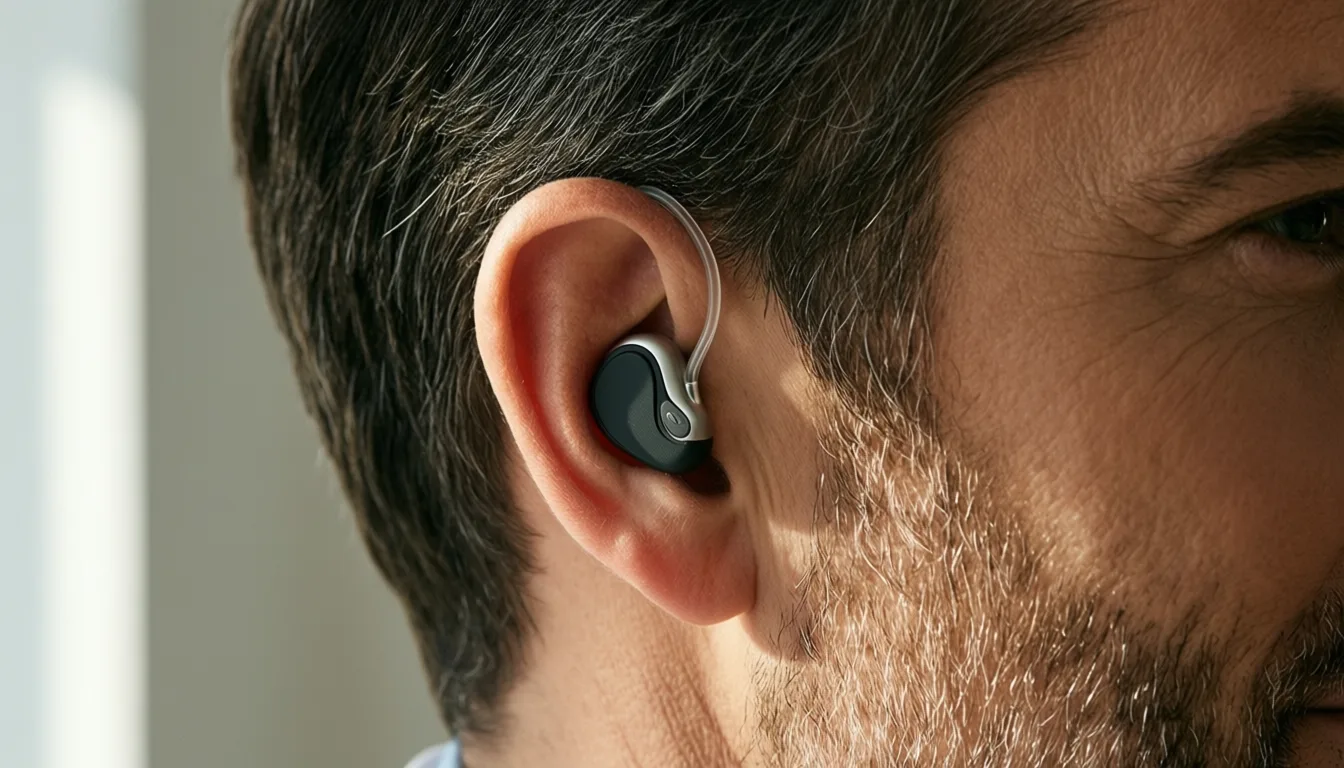
Hearing care has quietly become one of the most defensible moves in the brain-longevity playbook — even before the mechanisms are fully mapped.
You cannot edit your genome at brunch. You can, in theory, address your hearing.
The bigger picture this fits into
Step back and the appeal becomes obvious. Researchers have already established hearing loss as one of the most consequential modifiable contributors to dementia risk and have tied it to age-related declines in working memory capacity, as the authors of the new study note. What has been less clear is the neural choreography in between. If degraded auditory input subtly reshapes the brain's resting rhythms — pulling alpha power down in patterns reminiscent of pathological aging — that begins to sketch a plausible bridge from the cochlea to the cortex.
For the appearance-and-optimization reader, the message is unromantic but durable. The interventions with the strongest evidence for protecting how you look, move, and think at 70 tend to be the ones with the least marketing budget: sleep, resistance training, sun discipline, and — increasingly — taking your hearing seriously decades before you would expect to. Modern hearing aids are nearly invisible, over-the-counter options have lowered the friction, and the optics of "I take my brain seriously" age better than any nootropic stack.
- The finding: In 62 middle-aged and older adults, greater pure-tone hearing loss was significantly correlated with lower resting alpha-band power — an EEG pattern previously linked to pathological brain aging.
- The size: Correlations were small-to-moderate (rho roughly −0.05 to −0.25). Only one relationship reached statistical significance; speech-in-noise and self-reported hearing did not.
- The design: Exploratory and cross-sectional. It cannot establish that hearing loss causes changes in brain rhythms, only that the two appear to travel together.
- The context: Hearing loss is already considered one of the largest modifiable dementia risk factors. This adds a possible neural mechanism, not a new mandate.
- The move: Treat baseline hearing assessment as part of a long-horizon brain-and-aging routine, and discuss any concerns with a clinician — not a TikTok comment section.
How to read "early" evidence without overreacting
This is a textbook example of why "early" deserves its own register of language. The study is exploratory, modest in size, and the authors themselves frame it as a first look at whether resting EEG indicators of pathological brain aging map onto hearing ability. The honest takeaway is not treat your hearing loss to lower your alpha power and save your brain. It is closer to: a respected line of dementia-risk research now has a candidate neural signature worth chasing in larger, longitudinal cohorts.
For readers building a long-term plan, the practical layer hasn't changed much. Get a baseline hearing test. Notice if you are leaning in at restaurants, cranking podcasts, or losing consonants in noisy rooms. If hearing loss shows up, talk to a clinician about correction — not because one small EEG paper says so, but because the broader epidemiology has been pointing this way for a while, and the cost-benefit math on modern hearing aids is increasingly hard to argue with.
The glow-up framing here is almost too on-the-nose. The least flashy intervention in the room — wearing well-fitted hearing aids when you need them — may be quietly doing work that the more photogenic protocols cannot. New EEG research like this won't settle the question, but it does what good early science is supposed to do: tighten the thread between an established risk factor and the biology beneath it. The rest is patience, and a calendar reminder to book that hearing test you've been ignoring.
Frequently asked questions
What did the study actually find about hearing loss and the brain?
In a group of 62 middle-aged and older adults, researchers found that greater measured hearing loss was significantly correlated with lower resting alpha-band power on EEG. Alpha-band power reductions have previously been linked to pathological brain aging and cognitive decline. The correlation was small-to-moderate, and it was the only one of several EEG measures to reach statistical significance.
Why do alpha waves matter for brain health?
Alpha oscillations — the 8–13 Hz rhythm that dominates the resting brain — are one of the most studied signatures in human electrophysiology. Reductions in alpha power and slowing of individual alpha frequency have been reported in older adults whose cognition is sliding toward impairment, making them a recognized marker in cognitive aging research.
Does this study prove that hearing loss causes dementia?
No. The study was exploratory and cross-sectional, meaning it can only show that hearing loss and lower alpha power appear to travel together — it cannot establish that one causes the other. The authors themselves frame it as a first look at whether resting EEG indicators map onto hearing ability, not a definitive causal finding.
Why didn't self-reported hearing difficulty show the same link as the measured hearing test?
Speech-in-noise ability and self-reported hearing difficulty did not show the same statistically significant relationship with alpha-band power that the pure-tone-average hearing test did. The article describes this as part of why the finding should be treated as a signal worth watching rather than a verdict.
What practical step does the article recommend based on this research?
The article recommends treating a baseline hearing assessment as part of a long-horizon brain-and-aging routine. It suggests noticing early signs such as leaning in at restaurants or losing consonants in noisy rooms, and discussing any hearing loss with a clinician — grounding the recommendation in the broader epidemiological evidence on hearing loss as a modifiable dementia risk factor, not this single study alone.
Sources
- Exploring resting EEG correlates of age-related hearing difficulties. — Frontiers in neuroscience
Join the conversation
Comments are moderated and reviewed before they appear. Be constructive — this is health information.
Add your comment