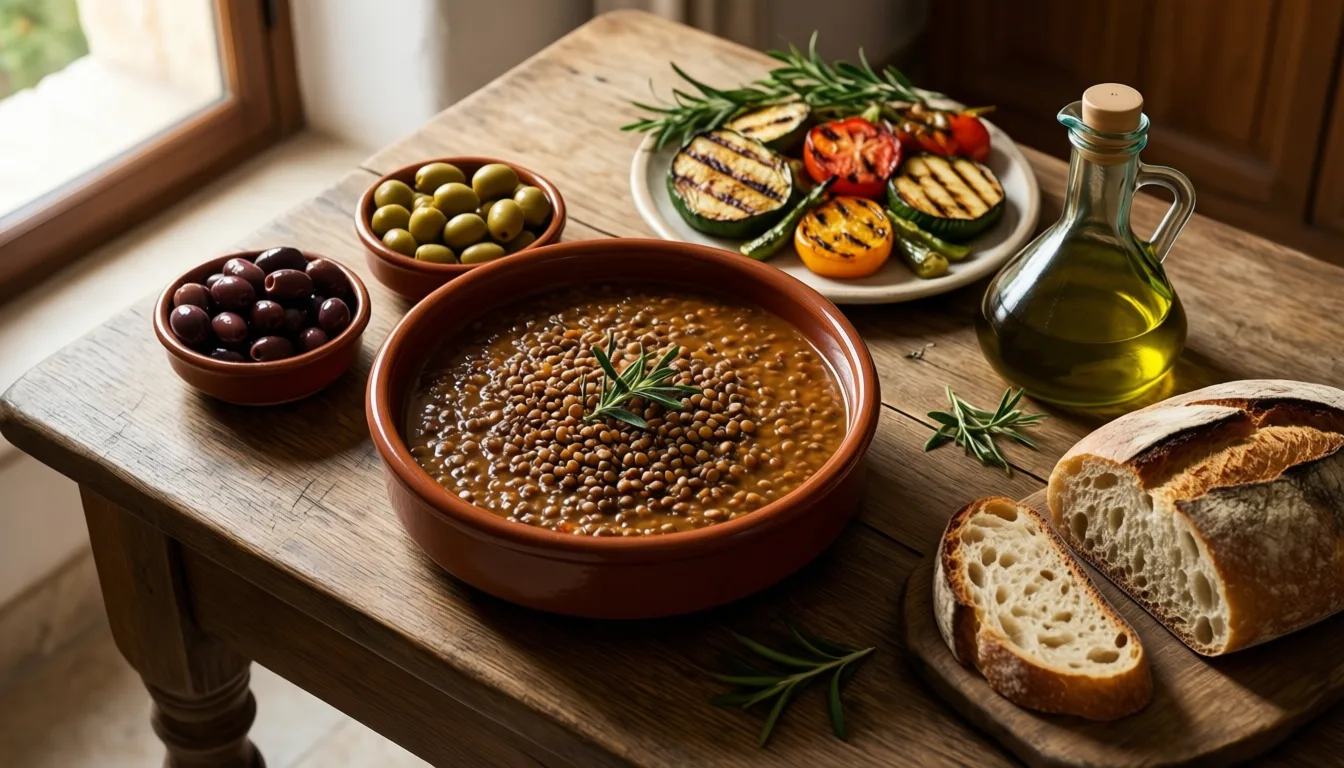
Plant-Forward, Periodically: A Metabolic Reset Hidden in Religious Fasting
A multi-omics study of Greek Orthodox practitioners suggests that cycling off animal products — even briefly — quietly rewires the blood chemistry linked to cardiometabolic risk.
For roughly half the year, observant Greek Orthodox Christians eat in a way most nutrition researchers can only dream of studying: they cycle, on a calendar set centuries ago, between ordinary omnivory and weeks of disciplined plant-forward eating — no meat, no dairy, often no fish. They are not on a diet. They are not optimizing biomarkers. They are keeping a religious practice. And in doing so, they have handed scientists something unusually clean: a natural, repeatable on-off switch for animal products in otherwise stable adult lives. A recent multi-omics study used that switch to look under the hood, and what it found suggests that even short stretches of plant-forward eating produce a coherent metabolic reset — modest, measurable, and pointed in a cardiometabolically favorable direction.
- The natural experiment. Greek Orthodox fasters who alternate between omnivory and animal-product restriction offer a rare within-person comparison of two dietary states.
- What shifts in the blood. Short-term restriction lowered several lipid classes and branched-chain amino acids — changes not seen in a non-fasting control group.
- A longevity-leaning signature. Post-restriction metabolic profiles aligned with patterns previously associated with decreased risk for all-cause mortality.
- Druggable echoes. About 23% of the proteins moved by restriction are considered druggable, with FGF21 among the largest movers.
- How to read this. Evidence is moderate and mechanistic — promising direction, not a prescription. Talk to a clinician before changing how you eat.
An accidental laboratory
Most dietary trials struggle with a basic problem: people are bad at sticking to assigned diets, and the people who do stick tend to differ from those who don't. Religious fasting traditions sidestep that. Practitioners adopt the same restriction at the same time, for reasons that have nothing to do with cholesterol or glucose, and then return — just as reliably — to their usual eating. The Greek Orthodox calendar, with its alternating fast and feast periods, effectively turns each practitioner into their own control.
That is the design researchers leaned on in a 2025 paper in npj Metabolic Health and Disease, which compared plasma metabolomic and proteomic profiles across dietary states in this population and against a non-fasting comparison group. The signal they were looking for was not weight loss or a single headline biomarker, but a pattern: which molecules move, in which direction, and whether they move together in a way that maps onto known cardiometabolic risk. Short-term restriction, they reported, drove reductions in lipid classes and branched-chain amino acids that were not detected in the control group.

Plasma metabolomics captures hundreds of small molecules at once, making it well-suited to spotting coordinated shifts rather than single-marker changes.
Why lipids and BCAAs matter
Two of the moved categories are worth dwelling on. Circulating lipids — the broad family that includes cholesterol-carrying particles and various fats in the blood — are central to cardiovascular risk modeling. Branched-chain amino acids (BCAAs: leucine, isoleucine, valine) are essential nutrients, abundant in animal protein, that have drawn attention in metabolic research because elevated levels tend to track with insulin resistance and type 2 diabetes risk in population studies. A coordinated downshift in both, after a defined dietary change, is the kind of pattern that catches a metabolic researcher's eye.
The authors went further, comparing the post-restriction profile against signatures previously linked to mortality risk in larger cohorts. The restriction state produced metabolic profiles associated with decreased risk for all-cause mortality. That is an association, not a clinical outcome — nobody followed these fasters for decades — but it is a meaningful direction of travel for a short-term intervention.
A natural on-off switch for animal products, kept for reasons that have nothing to do with biomarkers.
The protein layer
Beyond small molecules, the team profiled plasma proteins — the workhorses and messengers of physiology — and found that the dietary switch moved a substantial slice of them. Roughly 23% of the proteins whose levels shifted with restriction are considered druggable targets, meaning the pharmaceutical world already has, or could plausibly build, molecules that act on them. Among the largest movers was FGF21, a hormone that has attracted interest as a regulator of energy balance and metabolic stress, alongside seven others: FOLR2, SUMF2, HAVCR1, PLA2G1B, OXT, SPP1 and HPGDS.
Using Mendelian randomization — a genetic technique that helps probe whether an association is likely causal — the authors went one step further. They reported potentially causal effects of FGF21 and HAVCR1 on type 2 diabetes risk, of HPGDS on BMI, and of OXT on risk for lacunar stroke. The implication is intriguing: some of the proteins responding to a plant-forward window may be mechanistically tied to outcomes that matter, not merely along for the ride.
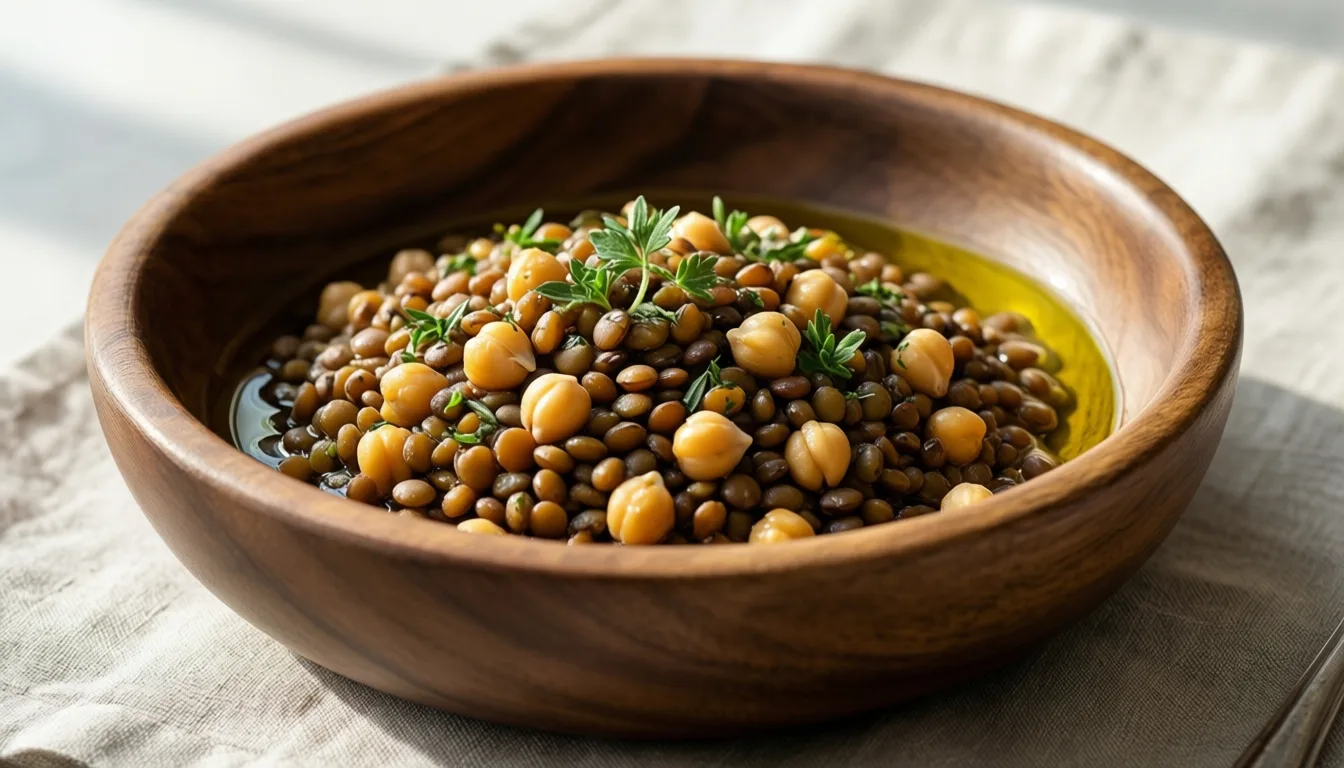
Lenten cooking in the Orthodox tradition leans on legumes, grains, vegetables and olive oil — a pattern that overlaps substantially with what nutrition science already labels Mediterranean.
What this is — and isn't
It is tempting, especially for readers who like a clean protocol, to translate this into a prescription: fast like a monk, four times a year, and watch your blood chemistry improve. The evidence does not yet support that leap. The study is observational in design, even if elegantly so; the fasting population differs culturally and behaviorally from the average reader; the time horizons are short; and metabolic shifts in the blood are not the same as long-term clinical outcomes. The editorial read here is moderate-evidence: a credible, mechanistically coherent signal that periodic plant-forward eating reshapes the metabolome in cardiometabolically favorable ways, worth taking seriously without overreading.
What the work does do — quietly but importantly — is push back against the framing that diets must be permanent to matter. The fasters in this study were not lifelong vegetarians. They moved in and out of animal-product restriction on a calendar, and their plasma chemistry moved with them. That cyclical pattern is unusual in modern nutrition research, and it hints that the body may respond to dietary structure, not just dietary identity.
The bigger pattern
For busy readers tracking the cardiometabolic literature, the takeaway is less about Orthodox practice specifically and more about what it reveals. Short, structured periods of plant-forward eating appear to produce a coordinated downshift in lipids and BCAAs, a measurable reshuffling of the plasma proteome, and a profile that — at the level of pattern, not promise — looks like the kind associated with longer, healthier lives. The mechanisms are starting to come into focus. The clinical translation, including whether discrete fasting-style windows can match the benefits of continuous Mediterranean-style eating, is still being written.
In the meantime, the most useful posture is the one this research itself models: curious, methodical, and respectful of the difference between a beautiful signal and a settled answer.
Frequently asked questions
What do Greek Orthodox Christians actually give up during their fasting periods?
During fasting periods, observant Greek Orthodox Christians restrict animal products — no meat, no dairy, and often no fish. Their traditional fasting cuisine leans on legumes, grains, vegetables, and olive oil, a pattern the article notes overlaps substantially with what nutrition science labels Mediterranean.
What specifically changed in participants' blood during the plant-forward fasting window?
The study found reductions in circulating lipid classes and branched-chain amino acids — leucine, isoleucine, and valine — during the restriction period. These shifts were not detected in a non-fasting comparison group, and the post-restriction metabolic profiles aligned with patterns previously associated with decreased risk for all-cause mortality.
Why do researchers pay attention to branched-chain amino acids in the first place?
Branched-chain amino acids are essential nutrients abundant in animal protein, and elevated circulating levels tend to track with insulin resistance and type 2 diabetes risk in population studies. A coordinated downshift in BCAAs alongside lipid changes after a defined dietary switch is the kind of pattern that, according to the article, catches a metabolic researcher's eye.
What does it mean that 23% of the affected proteins are considered 'druggable'?
The article explains that druggable means the pharmaceutical world already has, or could plausibly build, molecules that act on those proteins. Among the largest movers was FGF21, a hormone described as a regulator of energy balance and metabolic stress, along with seven others: FOLR2, SUMF2, HAVCR1, PLA2G1B, OXT, SPP1, and HPGDS.
Does this research mean people should adopt Orthodox-style fasting to improve their health?
The article explicitly says the evidence does not support that leap. The study is observational in design, the fasting population differs culturally and behaviorally from the average reader, the time horizons are short, and metabolic shifts in the blood are not the same as long-term clinical outcomes. The article characterizes this as a credible, mechanistically coherent signal worth taking seriously without overreading.
Sources
- Periodic dietary restriction of animal products induces metabolic reprogramming in humans with effects on cardiometabolic health. — npj metabolic health and disease
Join the conversation
Comments are moderated and reviewed before they appear. Be constructive — this is health information.
Add your comment