
The Quiet Cost of the Convenient Check-In: What Phone Follow-Ups Miss After a Heart Attack
A 101,199-patient Swedish registry analysis suggests telephone visits after myocardial infarction systematically skip the measurements that matter most for preventing the next event.
The phone call feels like progress. Two months after a heart attack, your cardiologist's office rings instead of asking you to drive in. You confirm your medications, describe how you're feeling, promise you've been walking. The visit is logged, the box is ticked, and your calendar stays intact. But a new analysis of more than 100,000 Swedish patients suggests that what didn't happen on that call — the blood pressure cuff, the cholesterol panel, the scale, the HbA1c — may matter more than what did.
- The signal is large and consistent. Across a 16-year Swedish registry, telephone follow-ups after myocardial infarction captured measured risk-factor data far less often than on-site visits.
- Objective measurements suffer most. Blood pressure, LDL cholesterol, weight and HbA1c showed the widest gaps; self-reported items like smoking and medication use were captured similarly by both modes.
- This is observational, not a verdict on telehealth. The data show what was recorded, not whether outcomes differ — but for secondary prevention, what isn't measured generally isn't managed.
- Practical move: If your post-MI follow-up is by phone, ask in advance how your numbers will be obtained — home cuff readings, a lab slip, a separate nurse visit — before the call replaces the measurement.
What the registry actually found
Researchers drew on SWEDEHEART, Sweden's national quality registry for ischaemic heart disease, and analysed 101,199 patients followed between 2006 and 2022 after a myocardial infarction. They compared how often the standard secondary-prevention variables were recorded at the 2-month and 1-year visits, depending on whether the visit happened in person or by telephone. Baseline characteristics between the two groups were broadly similar, which makes the contrast in data capture harder to dismiss as a sicker-vs-healthier artefact, according to the SWEDEHEART analysis published in BMJ Open.
At the 2-month mark, the proportion of missing systolic blood pressure was 2.4% for on-site visits versus 28.0% by telephone. Missing LDL cholesterol: 9.1% versus 32.6%. Missing weight: 20.1% versus 43.0%. For patients with diabetes, missing HbA1c climbed from 39.4% on-site to 69.4% by phone. Every one of those differences cleared the conventional statistical bar (p<0.0001), and the same pattern repeated at the 1-year visit, as reported by the Swedish investigators.
The items that held up under telephone follow-up were the ones the patient could answer directly: smoking status, physical activity level, and the current medication list, all with ≤2.1% missingness in either mode. In other words, conversations transferred cleanly across the line. Measurements did not.
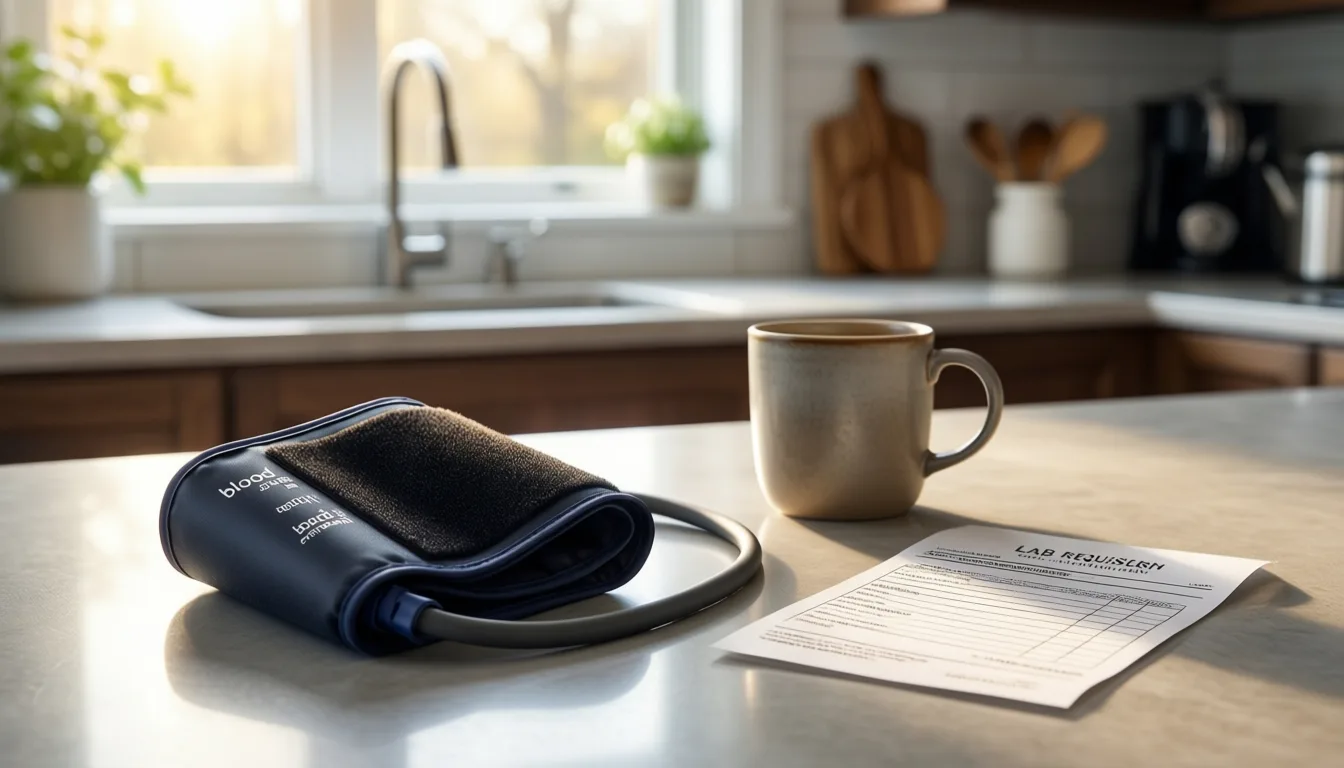
The objective numbers — pressure, lipids, weight, glycaemia — are precisely the levers secondary prevention pulls. They don't travel down a phone line on their own.
Why this matters for anyone optimising recovery
Secondary prevention after a heart attack is, mechanically, a numbers game. Guideline targets for LDL, blood pressure, body weight and glycaemic control exist because hitting them lowers the probability of a second event. A follow-up visit's job is partly emotional — reassurance, education, troubleshooting side effects — but its operational job is to compare today's numbers to those targets and adjust therapy. If the numbers aren't captured, the adjustment doesn't happen on schedule. The Swedish data don't tell us telephone patients had worse outcomes; they tell us telephone patients were less likely to have the data on which an outcome-improving decision rests.
That distinction matters. Telehealth's expansion through the pandemic was, on balance, a gain in access — particularly for people who would otherwise skip follow-up entirely because of travel, time, or stigma. The registry is observational, single-country, and reflects practice patterns rather than a randomised comparison of care models. It should not be read as an argument to roll back virtual cardiology. It should be read as a design brief: a phone call alone is not a clinical substitute for the cuff, the scale and the lab.
Conversations transferred cleanly across the line. Measurements did not.
What a well-designed remote follow-up looks like
The fix isn't to demand an in-person visit for every check-in. It's to make sure the measurement layer exists before the conversation happens. In practice, that can look like a validated home blood pressure cuff with readings logged in advance, a lab order completed at a local draw station a week before the call, a brief nurse-led weigh-in or point-of-care HbA1c bundled with the appointment, or a hybrid model where the call handles symptoms and medication review while a separate visit handles the objective panel. The registry analysis doesn't prescribe a model, but it makes the failure mode obvious: when the measurement step is implicit, it tends to disappear.
For readers managing their own recovery — or a family member's — the practical questions to ask before agreeing to a telephone follow-up are concrete. How will my blood pressure be obtained, and is my home device acceptable? Will there be a lab slip for an LDL and, if relevant, an HbA1c before the call? Is weight going to be self-reported or measured? If the answer to any of these is a shrug, the call is doing less than the chart will suggest.
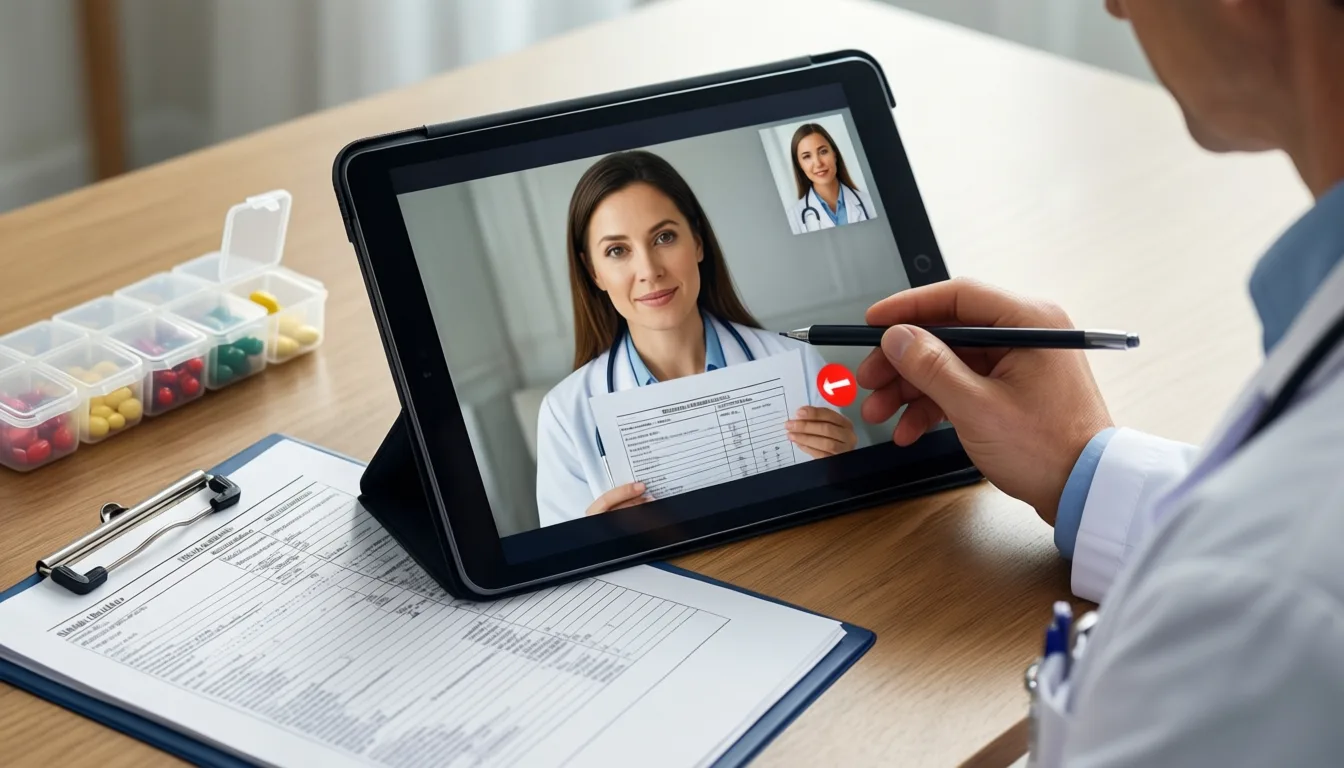
A well-designed remote visit pairs the conversation with a measurement pathway — lab draw, home cuff, or a brief in-person touchpoint — so the chart isn't missing the levers that drive prevention.
The bigger pattern
Virtual care will keep expanding because it solves real problems: access, cost, time. The lesson from Sweden isn't that it shouldn't — it's that the convenience layer needs a measurement layer underneath it, or the quality of the visit silently degrades. For executives accustomed to thinking in dashboards, the analogy is familiar: a metric you stop collecting is a metric you stop managing. After a cardiac event, the metrics worth managing are the ones a telephone, on its own, can't see.
Frequently asked questions
Which specific measurements were most likely to be missing during telephone follow-ups compared to in-person visits?
At the 2-month mark, missing systolic blood pressure was recorded in 28.0% of telephone visits versus 2.4% of on-site visits, missing LDL cholesterol in 32.6% versus 9.1%, missing weight in 43.0% versus 20.1%, and missing HbA1c in 69.4% versus 39.4% among diabetic patients. Every one of those differences was statistically significant, and the same pattern repeated at the 1-year visit.
Did telephone follow-ups affect self-reported information — like whether a patient was smoking or taking their medications — as much as they affected physical measurements?
No. Smoking status, physical activity level, and the current medication list all showed missingness of 2.1% or less in both telephone and on-site modes. The article summarizes this as: conversations transferred cleanly across the line, but measurements did not.
Does this study prove that patients who had telephone follow-ups had worse health outcomes after a heart attack?
No. The Swedish registry data show that telephone patients were less likely to have key risk-factor data recorded, not that their outcomes were worse. The article is explicit that the data reflect what was captured in the chart, not whether a difference in clinical outcomes was observed.
How large was the study, and where was it published?
The analysis covered 101,199 patients from SWEDEHEART — Sweden's national quality registry for ischaemic heart disease — followed between 2006 and 2022 after a myocardial infarction. It was published in BMJ Open.
What practical steps does the article suggest taking before agreeing to a telephone follow-up after a heart attack?
The article recommends confirming in advance how blood pressure will be obtained (for example, via a validated home cuff with readings logged beforehand), whether a lab slip for LDL cholesterol — and HbA1c for diabetic patients — will be completed before the call, and whether weight will be measured rather than self-reported. It also suggests asking what the escalation path is if a number comes back off-target.
Join the conversation
Comments are moderated and reviewed before they appear. Be constructive — this is health information.
Add your comment