
Telemedicine's Quiet Cost: When Virtual Visits Skip the Screening Conversation
New Israeli data suggest that patients seen mostly through telemedicine end up with a different preventive-care footprint than those seen in person — a structural blind spot worth watching.
Telemedicine was the breakout wearable of the pandemic — except the wearable was the clinic itself, suddenly portable, suddenly living inside a laptop camera. Five years on, the quantified-self crowd has mostly celebrated the convenience: fewer waiting rooms, more data, tighter feedback loops with a primary care physician. But preventive medicine — the unglamorous scaffolding of mammograms, colon-cancer stool tests and bone-density scans — was never really designed for a video call. A new Israeli cohort study suggests the modality of the visit may quietly shape whether those screenings actually get done.
The study, published in the Israel Journal of Health Policy Research, mined the electronic medical records of one Israeli HMO across 2020 and 2021 — the years when remote visits stopped being a novelty and became infrastructure. Researchers sorted eligible patients into three buckets based on how they actually used their primary care: a face-to-face group (more than 60% in-person encounters), a remote group (more than 60% telemedicine), and a mixed group for everyone in between. Then they asked a deceptively simple question: who got referred for mammography, fecal occult blood testing (FOBT) and DEXA bone-density scans — and who actually went and did them?
The referral numbers are the first surprise. For mammography, referral rates were 27.3% in the predominantly face-to-face group versus 29.8% in the remote group and 32.9% in the mixed group. For FOBT, the pattern repeated: 55.6% face-to-face, 60.3% remote, 58.7% mixed. In other words, patients whose care leaned virtual were more likely to walk away with a screening order in hand, not less. That cuts against the easy narrative that telemedicine is inherently a preventive-care desert.
The gap between an order and a result
The wrinkle — and the reason this paper matters to anyone serious about a quantified preventive stack — is that a referral is not a result. The Israeli authors explicitly distinguish between whether a screening was referred and whether it was performed, and they signal that the two diverge across modalities for all three tests in their cohort. The full abstract is truncated mid-sentence on the public record, so the precise performance percentages for each group are not reproduced here; the takeaway the authors flag is that modality appears to shape the entire screening pipeline, not just the click that generates the order. For biohackers used to thinking in funnels, this is a familiar shape: top-of-funnel intent is the easy metric; downstream conversion is where the system actually fails.
The mechanism is intuitive once you sit with it. A video visit can absolutely surface a screening prompt — many EHRs nudge the clinician with an on-screen alert the moment the chart opens. But the in-person visit bundles the order with a physical handoff: a printed slip, a walk past the imaging desk, a nurse who books the appointment before the patient leaves. Remove the building, and you remove the choreography. The order exists; the follow-through is now homework.

A referral generated in a video visit becomes the patient's homework — a different funnel than the in-person handoff.
A referral is not a result. Modality appears to shape the entire screening pipeline, not just the click that generates the order. On the Israeli cohort findings
What this is — and what it isn't
The evidence here is best described as moderate and directional. This is a retrospective cohort study at a single Israeli HMO covering 2020 and 2021 — pandemic years, when both clinical workflows and patient behavior were anything but steady-state. Modality assignment was based on how patients actually used the system, not random allocation, so the remote and face-to-face groups likely differ in ways the study cannot fully control for: age, comorbidity burden, digital literacy, distance from a clinic. Healthcare systems outside Israel — with different reimbursement, different EHR nudges, different screening logistics — may produce different funnels entirely.
What the study does support is a structural point that the digital-health boom has been slow to internalize: preventive medicine is a logistics problem as much as a clinical one, and changing the venue of the visit changes the logistics. The headline-friendly framing — "telemedicine causes fewer screenings" — is too strong for what the published abstract actually shows. The more accurate framing is that virtual and in-person care produce different preventive-care funnels, and the gap between order and completion is where the system leaks.
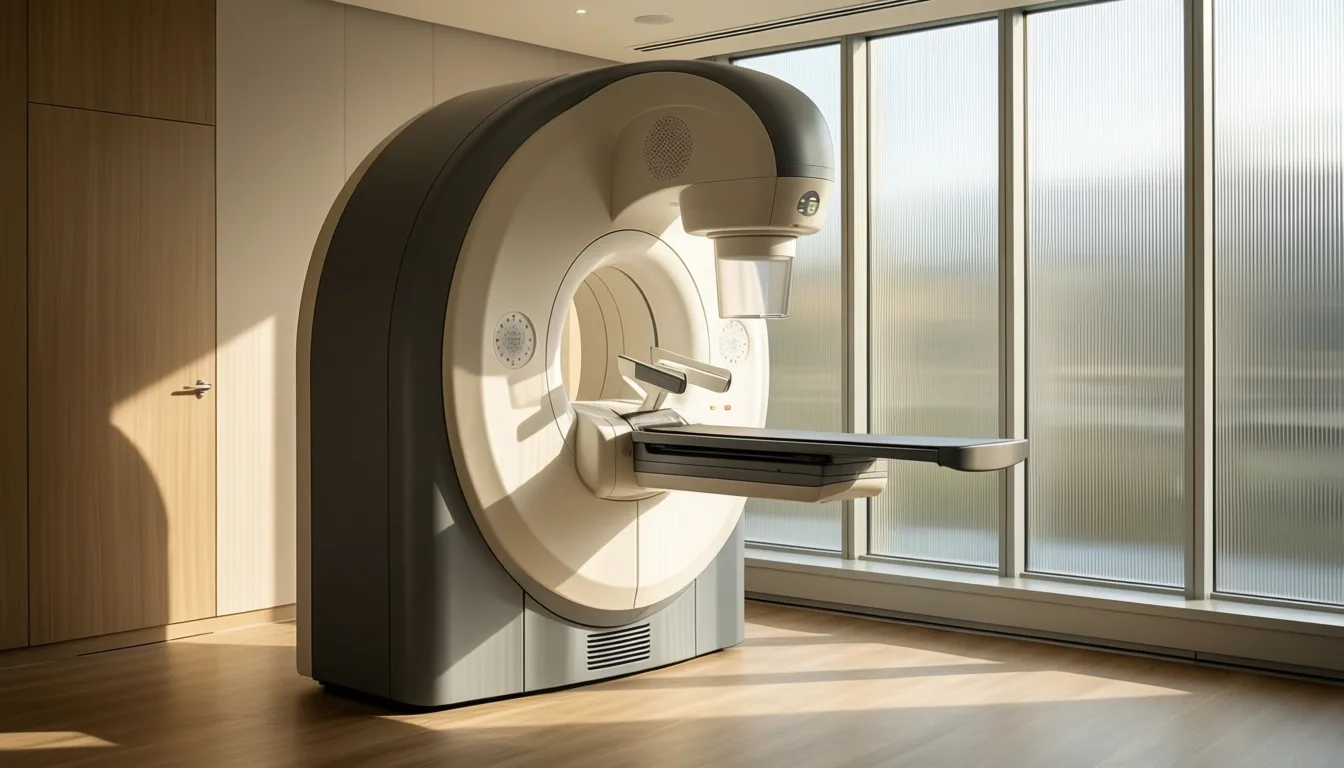
The screening exists. The question is whether the patient gets there.
What to watch next
For readers tracking the maturation of virtual primary care, the interesting frontier is not whether telemedicine "works" but whether the screening-completion gap can be engineered shut. The candidates are obvious if unproven: automated scheduling that books the mammogram inside the video visit itself; mail-out FOBT kits triggered the moment the order is signed; SMS nudges with a friction-free booking link; integration with retail imaging networks so a DEXA scan is as easy to schedule as a haircut. None of these are tested at scale against the modality gap the Israeli authors describe. They are hypotheses, not protocols.
The honest summary for an n-of-1 audience: if your primary care has shifted predominantly virtual, the cohort data suggest you may actually be slightly more likely to receive a screening referral — and that the meaningful variable is what happens after the video call ends. Talk to a clinician about which screenings are due for you, and treat the booking step as part of the visit, not an optional epilogue.
- Referrals tilted virtual. In the Israeli cohort, mammography and FOBT referrals were modestly higher in remote and mixed groups than in the face-to-face group.
- Performance is the leak. The authors flag that completion patterns diverge from referral patterns across modalities — the funnel matters more than the first click.
- Single-HMO, pandemic-era data. Findings are directional, not definitive, and may not generalize beyond Israel or beyond 2020–2021 conditions.
- Logistics, not just clinics. The in-person visit bundles the order with a physical handoff that video visits don't replicate by default.
- Owner-operate your screenings. If your care has gone virtual, treat scheduling the test as part of the appointment, and confirm with a clinician which screenings apply to you.
Frequently asked questions
Did telemedicine patients receive fewer screening referrals than in-person patients?
No — the study found the opposite. Mammography referral rates were 27.3% for the predominantly face-to-face group versus 29.8% for the remote group, and FOBT referrals were 55.6% face-to-face versus 60.3% remote, meaning patients whose care leaned virtual were modestly more likely to receive a screening order.
If telemedicine patients got more referrals, what concern does the study raise?
The authors distinguish between a screening being referred and a screening being performed, and they signal that these two things diverge across visit modalities for all three tests in their cohort. In other words, receiving a referral order does not mean the patient actually completed the screening.
Why might an in-person visit lead to better screening follow-through than a video visit?
The article explains that an in-person visit bundles the order with a physical handoff — a printed slip, a walk past the imaging desk, a nurse who books the appointment before the patient leaves. A video visit can generate the same referral order, but without that choreography, scheduling the test becomes the patient's homework rather than part of the visit itself.
How reliable are the study's findings, and do they apply broadly?
The article describes the evidence as moderate and directional. It was a retrospective cohort study at a single Israeli HMO covering only 2020 and 2021 — pandemic years when clinical workflows were not typical — and patients were not randomly assigned to visit modalities, so the groups may differ in age, digital literacy, and distance from a clinic in ways the study cannot fully control for. Healthcare systems with different reimbursement structures, EHR tools, or screening logistics may produce different results.
What practical step does the article recommend for people whose primary care has shifted to virtual visits?
The article recommends treating the booking step as part of the appointment itself rather than an optional follow-up, and confirming with a clinician which screenings are due.
Sources
- The Effect of Telemedicine on Preventive Medicine- A Case from Israel. — Israel journal of health policy research
Join the conversation
Comments are moderated and reviewed before they appear. Be constructive — this is health information.
Add your comment