VR Treadmills and Hospital-Stay Rescue: Engineering Out Age-Related Decline
Two new trials ask whether immersive treadmills and tech-enabled hospital protocols can blunt the quiet erosion of strength, balance and independence in later life. The evidence is early — but the design is sharp.
The aesthetic of aging well isn't a face cream — it's the way someone walks into a room at 78. Upright. Unhesitating. Picking up a grandchild without a calculation. That kind of presence is built in the unsexy substrate: balance, gait, reaction time, the brain-and-body conversation that quietly degrades from midlife on. Two new clinical trials — one strapping older adults into VR headsets on treadmills, the other wiring hospital rooms with multidomain tech protocols — are asking whether we can engineer that substrate back. The evidence is genuinely early. The questions are exactly the right ones.
For the looksmaxing reader who has optimized sleep, body composition and skin, the next frontier is less photogenic and more consequential: functional capacity. Falls are the headline outcome researchers track because they sit at the intersection of muscle, balance, vision, attention and processing speed — the same machinery that governs how confident, fluid and young a body looks in motion. A stumble at 70 isn't bad luck; it's usually the visible edge of a long, invisible decline.
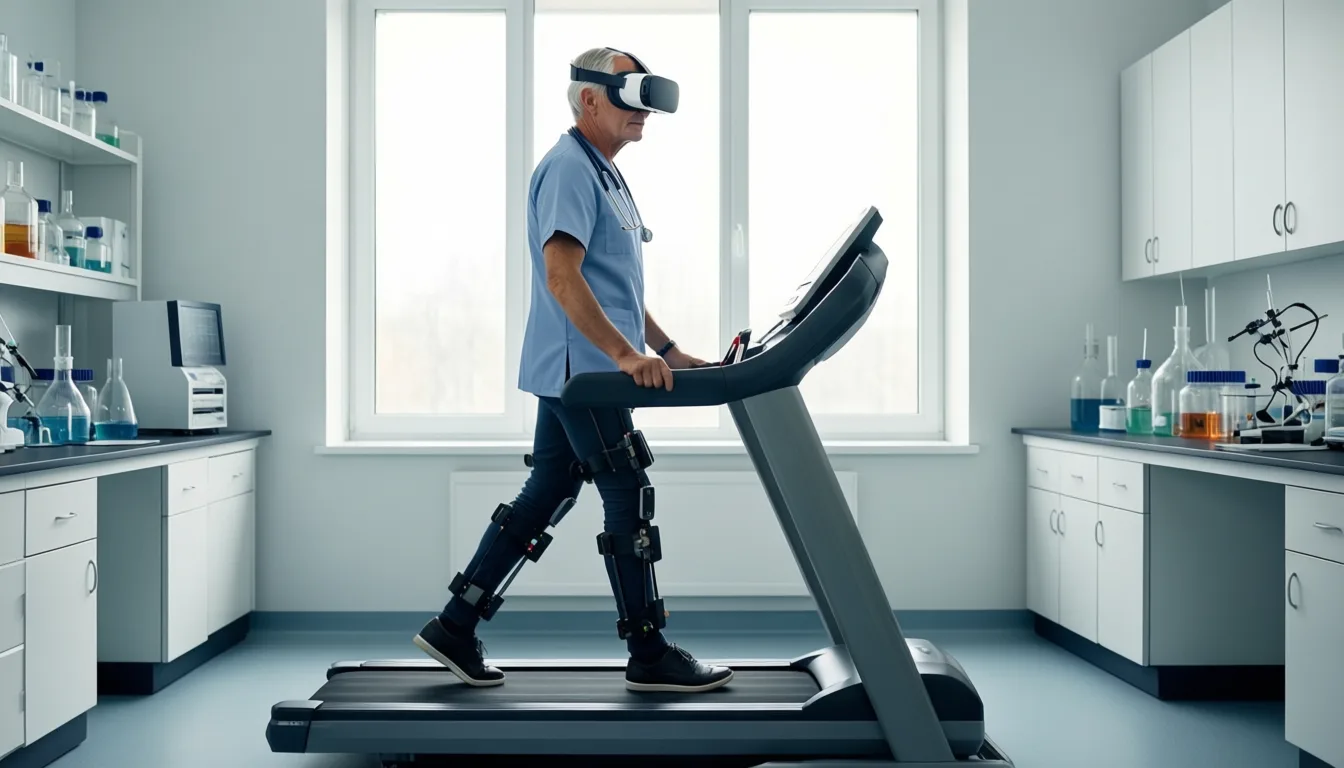
The first trial, run out of The University of Texas at Arlington, is testing a virtual-reality-infused treadmill program against motor-cognitive aging outcomes in older adults. The premise: walking is not just walking. Walking while navigating a simulated grocery aisle, scanning shelves, dodging a virtual cart and remembering a list recruits the prefrontal cortex, vestibular system and lower-limb motor control simultaneously — the same dual-tasking demand that real life imposes and that aging brains find increasingly expensive.
Why the treadmill goes virtual
Conventional balance training works. It also tends to plateau, because the gym version of "challenging" rarely matches the chaotic, attention-splitting demands of an actual sidewalk. The Arlington investigators argue, drawing on prior neurorehabilitation literature, that VR exercises that mimic real-life activities may extend training gains into daily living — the technical term is transfer, and it's the holy grail of rehab. If the cognitive load of the VR scene resembles cooking or shopping, the nervous system may generalize the gains in a way a stationary bike never can.
There's a second, more speculative thread woven through the protocol: inflammation. The investigators cite the hypothesis that immune-mediated neuroinflammation contributes to cognitive decline, and they are asking whether VR-infused exercise can ameliorate systemic and neuroinflammatory markers alongside motor-cognitive measures. That biomarker layer is what elevates this from a fall-prevention study to a healthspan study. It is also where the rating "Early" earns every letter — these are open scientific questions, not settled mechanisms.
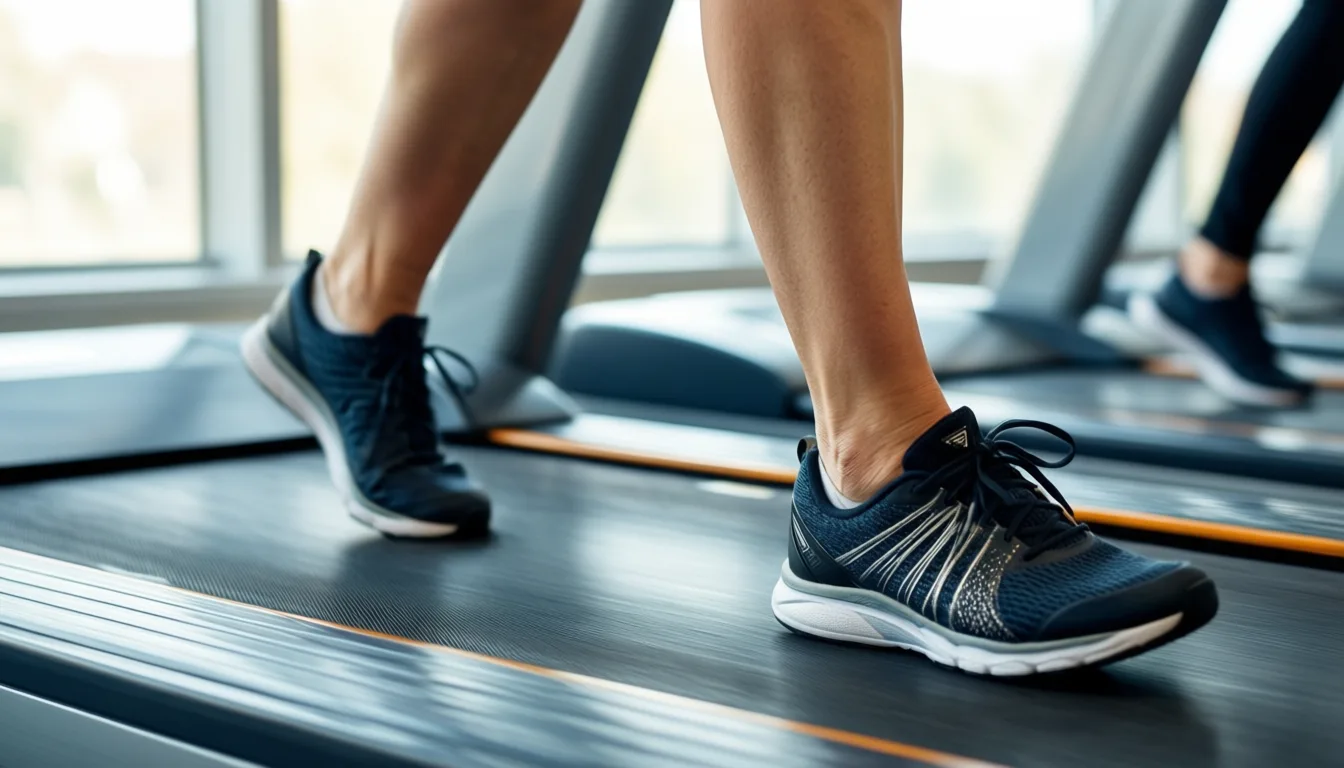
The unit of healthspan no one photographs: a confident step.
Walking while navigating a simulated grocery aisle is not exercise — it's the nervous system rehearsing the rest of life.
The hospital is where healthspan goes to die
If the VR study is about prevention upstream, the second trial is about damage control at one of aging's most predictable inflection points: the hospital admission. Bed rest is brutal on older bodies. Days of immobility, disrupted sleep, polypharmacy and cognitive understimulation produce a phenomenon clinicians call hospital-acquired disability — patients who walked into the ward and cannot, weeks later, climb their own stairs.
A team at the University of Milano Bicocca is testing whether a multidomain, multidisciplinary intervention enhanced by technology can blunt that decline. The protocol layers in-hospital MDI with three months of remote at-home support delivered via technology, and tracks functional and cognitive status at three and six months against usual care. The investigators are also explicitly studying the feasibility and acceptability of remote delivery after discharge — a quietly important question, because most hospital-based gains evaporate within weeks of going home.

The 72 hours after admission shape the next six months of independence.
What the looksmaxing reader should actually take from this
Neither trial has reported results. Both are testing interventions, not products you can buy. The honest read for anyone optimizing their long arc: the direction of travel in the science is converging on a few principles that are already actionable through ordinary training.
Train cognition and gait together, not separately. A treadmill while watching Netflix is not a dual-task — your brain has offloaded the walking. The VR work matters because it imposes attentional load on top of motion, which is what real life does. You can approximate this without a headset: walking on uneven terrain, novel routes, mid-conversation, or while doing serial subtraction is a real stimulus. Strength still anchors everything; reaction time and balance compound it.
Treat any hospitalization as a high-stakes window. The Milano trial design is built on a body of geriatric medicine showing that early mobilization, cognitive engagement and continuity of care after discharge meaningfully change trajectories. If you have a parent admitted, that is the moment to be the family member asking about mobilization protocols and post-discharge follow-up — not after they're home and deconditioned.
- Two early-stage trials are testing whether tech-enabled training can change the trajectory of motor-cognitive decline and hospital-acquired disability.
- The Arlington VR treadmill study targets the dual-task demand — walking plus cognition — that real life imposes and conventional training rarely replicates.
- The Milano hospital protocol couples in-hospital multidomain care with three months of remote post-discharge support, addressing the point where healthspan most often unravels.
- Inflammation is the wild-card mechanism the Arlington team is probing; biomarker results, if positive, would meaningfully reframe exercise-as-medicine.
- You don't need a headset to apply the principle — load cognition onto movement, train balance on novel terrain, and protect mobility hard during any hospital stay.
- Evidence rating: Early. Neither trial has reported outcomes. Treat this as direction, not prescription, and bring decisions to a clinician.
The aesthetic of aging well isn't a face cream. It's the way someone walks into a room at 78.
Frequently asked questions
What exactly does the VR treadmill study have participants do?
Participants walk on a treadmill while navigating a simulated environment — for example, scanning shelves in a virtual grocery aisle, dodging a virtual cart, and remembering a list. This dual-task design simultaneously recruits the prefrontal cortex, vestibular system, and lower-limb motor control, replicating the kind of divided-attention demands that real life imposes on older adults.
What is hospital-acquired disability, and why does the Milan trial focus on it?
Hospital-acquired disability is what clinicians call the decline that occurs when older patients lose functional capacity during a hospital stay due to immobility, disrupted sleep, polypharmacy, and cognitive understimulation — patients who walked into the ward and cannot, weeks later, climb their own stairs. The University of Milano Bicocca trial is testing whether a multidomain, technology-enhanced intervention begun in the hospital and continued remotely for three months after discharge can blunt that decline.
Have either of these trials produced results yet?
Neither trial has reported results — both are registered and recruiting or underway at the time of the article. The article is explicit that this is a story about study design, not evidence readers can act on immediately.
Why do the researchers think VR might produce better real-world gains than conventional balance training?
The Arlington investigators argue that conventional balance training tends to plateau because gym-based challenges rarely match the chaotic, attention-splitting demands of an actual sidewalk. VR exercises that mimic real-life activities may produce 'transfer' — a technical term in rehabilitation meaning the nervous system generalizes training gains into daily living — in a way a stationary bike cannot.
Can I apply the dual-task training principle without a VR headset?
According to the article, you can approximate the stimulus by walking on uneven terrain, taking novel routes, walking mid-conversation, or walking while doing serial subtraction — all of which impose attentional load on top of movement, which is the core principle the VR work is testing.
Sources
- Virtual Reality-Infused Treadmill Training on Aging-Related Outcomes — The University of Texas at Arlington
- Optimizing Prevention of Hospital-Acquired Disability Through Multidomain Interventions — University of Milano Bicocca
Join the conversation
Comments are moderated and reviewed before they appear. Be constructive — this is health information.
Add your comment