
Longevity
What Companion Dogs Are Teaching Us About Human Aging
The Dog Aging Project's Precision Cohort turns 1,000 family pets into a living laboratory for geroscience — and a useful mirror for the rest of us.
Press Enter to search · Esc to close
The Dog Aging Project's Precision Cohort turns 1,000 family pets into a living laboratory for geroscience — and a useful mirror for the rest of us.

Three 2025 papers are quietly reshaping the science of why we age — and where the next generation of interventions may aim. Here is what to know, and what to hold loosely.

Two new commentaries spotlight a single signaling molecule as a clean lever on age-related inflammation. The mouse data are striking. The human verdict is years away.

Two new studies sharpen the picture of mTOR as an aging lever — pointing toward more precise ways to dial it down than blunt suppression.

A new clinical clock called LinAge2 is trained to predict survival, not just guess your age — a quiet but meaningful shift for anyone paying for an epigenetic age test.

A new European synthesis maps the levers — personal, clinical, and environmental — that may compress the years we spend sick at the end of a longer life.

A new wave of reviews argues that aging biology — not individual diseases — is medicine's highest-leverage target. Heart failure may be the proving ground.

A new French trial is testing whether decades of exercise preserve a unified signature of biological youth — and population data on diabetes mortality suggests the stakes are higher than we thought.

Transcriptomic clocks are joining PhenoAge and GrimAge in a fast-maturing toolkit — and early longitudinal work hints that ordinary medications may nudge the dial.
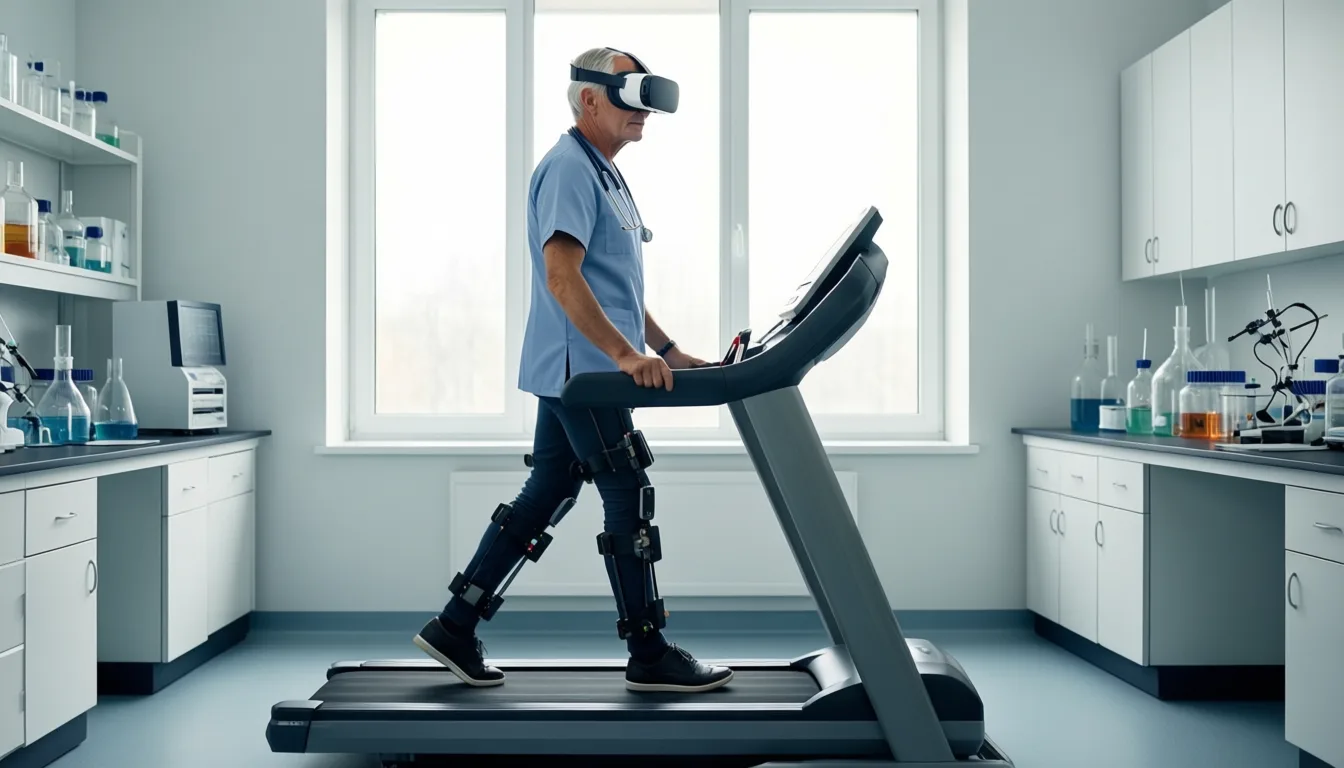
Two new trials ask whether immersive treadmills and tech-enabled hospital protocols can blunt the quiet erosion of strength, balance and independence in later life. The evidence is early — but the design is sharp.